Magnitude 3.2 earthquake rattles area southwest of Belen, no damage reported
A magnitude 3.2 quake struck southwest of Belen, with no damage or injuries reported. The shallow jolt came days after a smaller Abeytas-area quake.
A magnitude 3.2 earthquake shook the area southwest of Belen early June 14, with the U.S. Geological Survey placing the epicenter 8 kilometers west-northwest of Abeytas and about 14 miles southwest of Belen. No damage or injuries were reported, and no tsunami statement was issued.
The USGS logged the quake at 02:33 UTC on June 14, 2026, and listed the depth at about 10.2 kilometers. The agency’s event page identified it as a reviewed quake, meaning a seismologist checked the event before it was posted to the public map.
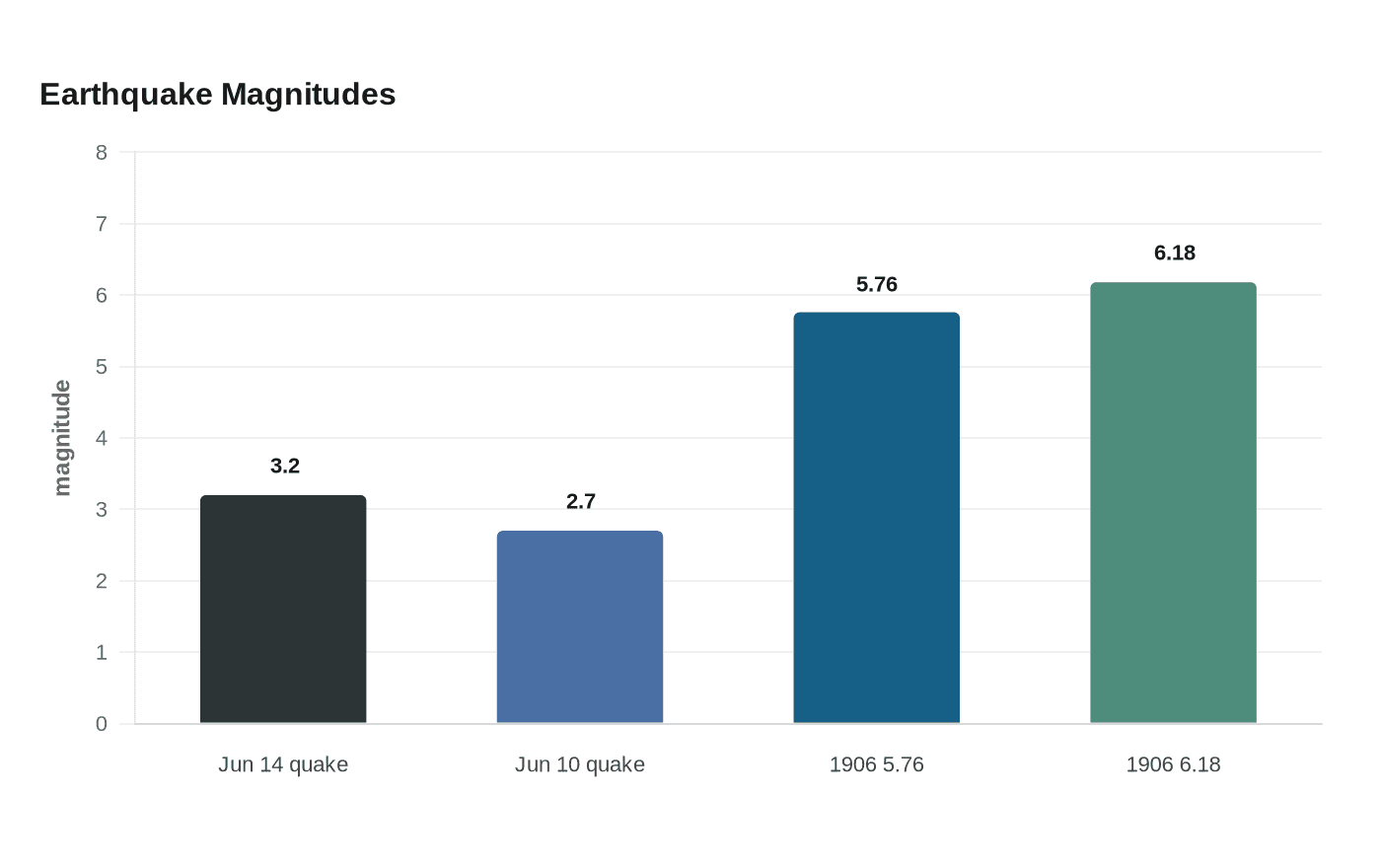
For Valencia County residents, the immediate impact was limited to a brief shake, but the location fits a part of central New Mexico that has produced repeated seismic activity. A magnitude 2.7 earthquake struck 3 kilometers northwest of Abeytas on June 10 and drew at least one felt report on the USGS Did You Feel It? system, suggesting the June 14 quake was part of a small cluster rather than an isolated jolt.
The New Mexico Tech Seismological Observatory, which monitors seismic activity in the state, says its network includes 21 mostly short-period sensors placed primarily around the Socorro Magma Body and in southeastern New Mexico. State geology materials note that many New Mexico earthquakes cluster in the Socorro seismic anomaly above a shallow magma body at roughly 19 kilometers depth, a reminder that the Rio Grande Rift remains one of the state’s most active geologic features.
Those same materials also point to the historical scale of shaking New Mexico has seen. Two of the state’s largest known earthquakes, estimated at magnitudes 5.76 and 6.18, struck near Socorro in 1906. Compared with those events, the June 14 quake was small, but its proximity to Belen and Abeytas puts it squarely on the radar for homeowners, businesses and infrastructure managers watching for any sign that local tremors are becoming more common.
This article was produced by Prism’s automated news system from verified source data, official records, and press releases, then run through automated quality and moderation checks before publishing. The system is built and supervised by the people who set the standards it runs under. Read our full AI policy.
Know something we missed? Have a correction or additional information?
Submit a Tip