Rio Communities pitches low taxes, growth potential to attract business
Rio Communities is betting that low taxes and highway traffic will turn a small commuter town into a business hub. The real test is whether that pitch brings jobs, retail and everyday services.
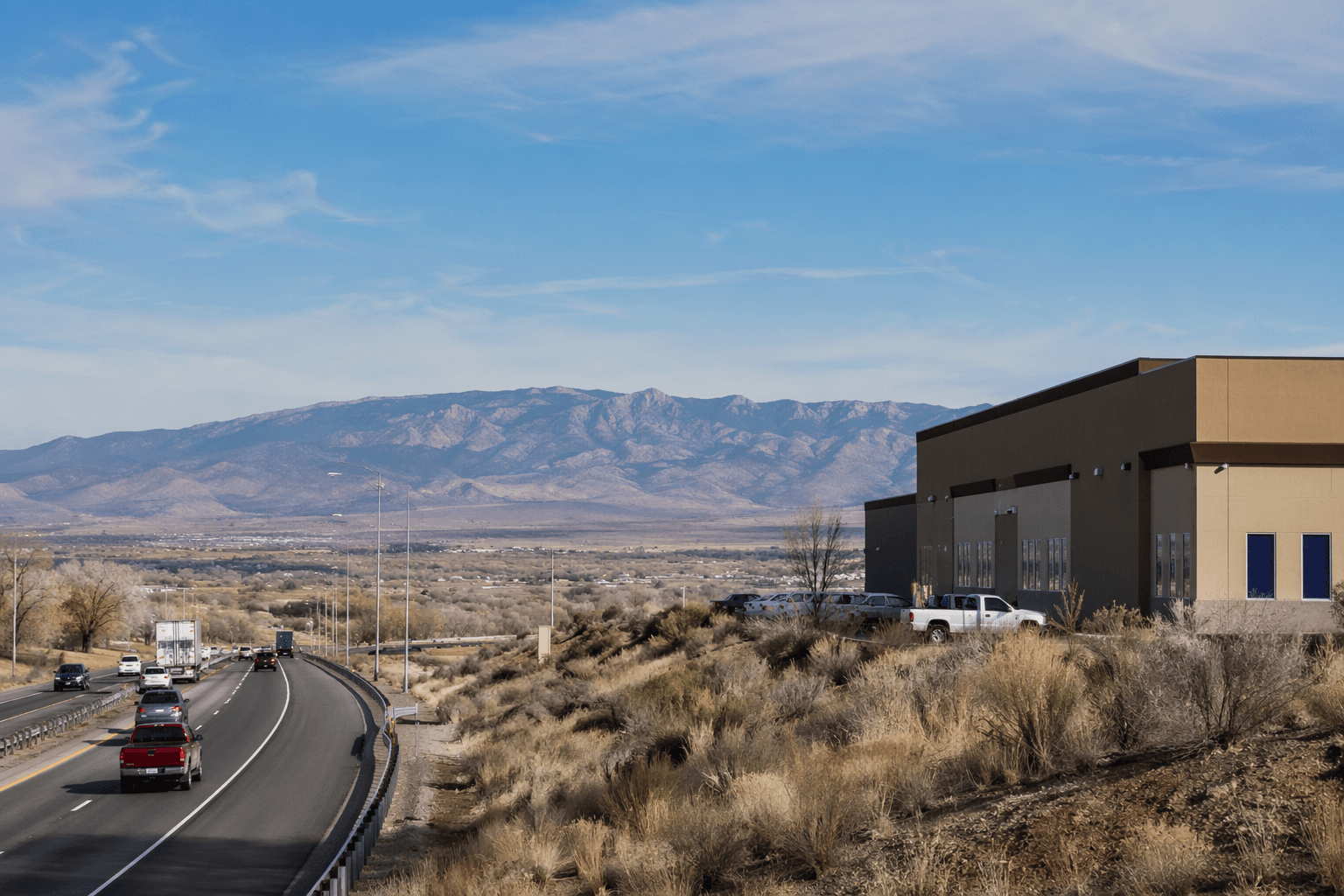
Rio Communities is leaning on a simple promise: keep taxes low, sit close to major travel routes, and make the east side of Valencia County a place where businesses can grow. The city’s own materials describe a community of nearly 5,000 people with a regional reach that goes well beyond its size, but the real question is whether that positioning is producing more than drive-through traffic and optimistic branding.
A small city with a regional sales pitch
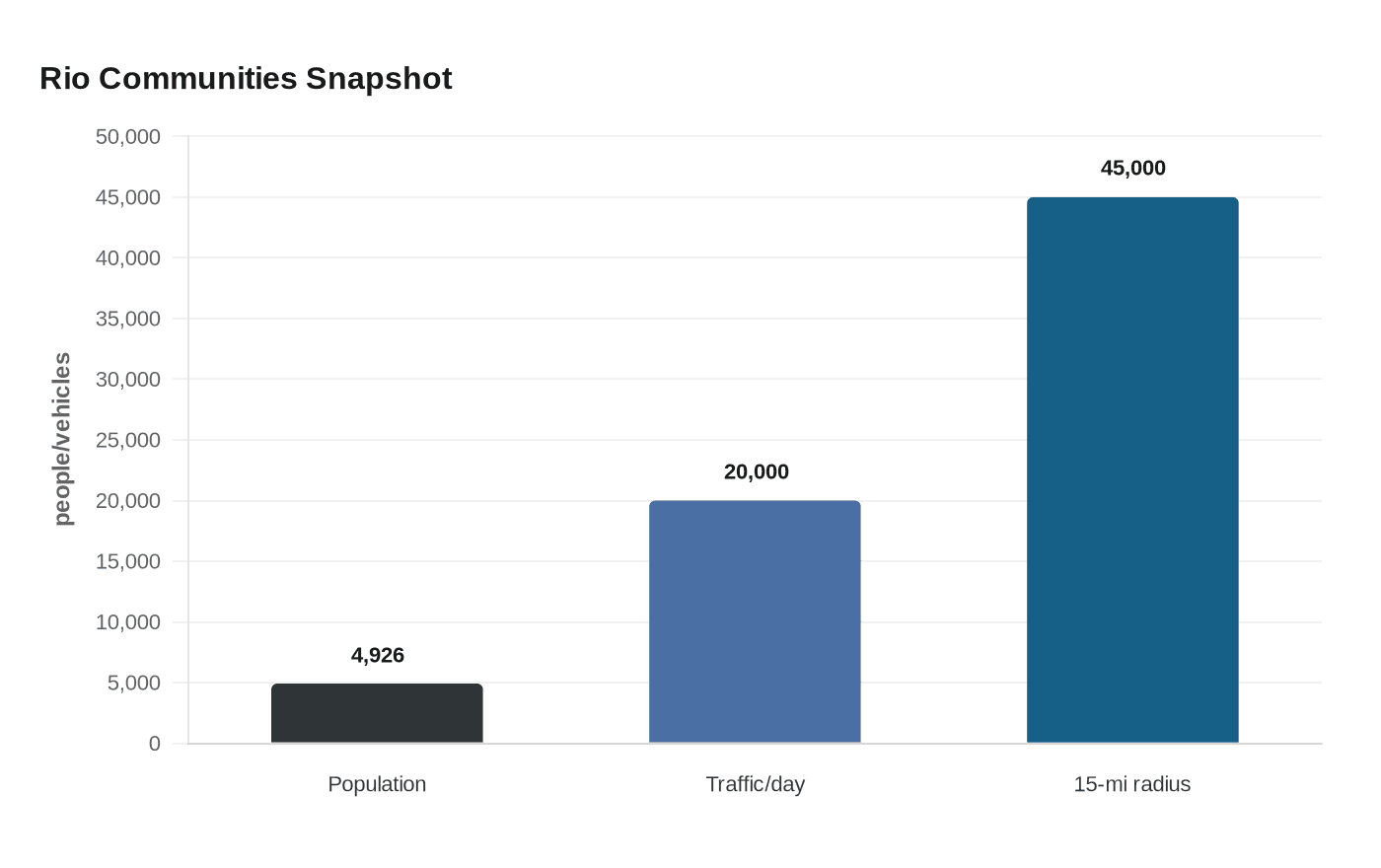
Rio Communities was incorporated on May 16, 2013, and Valencia County’s municipal listing places it on the east side of the Rio Grande in southeastern Valencia County. The 2020 census counted 4,926 residents, which confirms what the city’s own materials suggest: this is still a small municipality, not a sprawling suburban market. That scale matters because every retail decision, every service addition and every new employer has a bigger visible effect in a city this size than it would in Albuquerque or another larger metro-area town.
The city’s location is the centerpiece of its pitch. Rio Communities says it is close enough to Albuquerque to benefit from metro access, while still sitting about 45 minutes from the airport and downtown. That combination gives it an unusual economic identity: close enough for commuters, far enough to offer lower operating costs, and small enough that new development can still feel like a meaningful change in the local landscape.
The tax advantage is real, and it is central to the strategy
The most concrete part of the city’s business case is its tax structure. Rio Communities says its current gross receipts tax rate is 7.6875 percent, which it describes as lower than surrounding municipalities. The city’s municipal gross receipts tax ordinance was adopted on Aug. 27, 2013, so this low-tax positioning is not a new talking point. It has been part of the city’s policy identity since incorporation.
That matters because gross receipts taxes shape how businesses price goods and services, and where they decide to locate. A lower rate can be a real advantage for firms that sell locally and operate on thin margins, especially in a small market where a fraction of a percentage point can affect competitiveness. But tax policy alone does not create a commercial district. For Rio Communities, the question is whether the lower rate is enough to bring durable private investment, or whether it mainly helps the city advertise itself to firms that are already considering the Valencia County corridor.
Traffic counts point to opportunity, but also to a test
The city’s strongest traffic-related claim is that the New Mexico Department of Transportation reports more than 20,000 vehicles pass through the heart of Rio Communities every day. Rio Communities also says nearly 45,000 New Mexicans live within a 15-mile radius. Those numbers tell a clear economic story: this is not just a bedroom community tucked off to the side. It sits on a corridor where local errands, commuting patterns and pass-through travel overlap.
That overlap is the opportunity. If even a modest share of those vehicles turns into fuel purchases, restaurant stops, retail visits or service appointments, the city can capture spending that now leaks elsewhere. But traffic alone is not the same as local commerce. A road full of cars can also mean people moving through town without stopping, which is why the city’s business-friendly pitch will ultimately be judged by what opens along the corridor, not by how many vehicles cross it.
What the city is selling beyond taxes
Rio Communities’ attractions page shows that the city sees itself as part of a broader central New Mexico landscape, not just a place for housing and roads. The page points to Abo Ruins, the Salinas Pueblo Missions National Monument, Bosque del Apache and Whitfield Wildlife Conservation Area. That mix gives the city a tourism-adjacent identity that extends from heritage to wildlife to public lands.
Bosque del Apache National Wildlife Refuge, located in San Antonio, Socorro County, was established in 1939 and covers 57,331 acres. It is known for the tens of thousands of cranes, geese and ducks that winter there each year, and it draws wildlife observers, photographers, hunters and anglers. The Salinas Pueblo Missions National Monument preserves three Spanish mission sites and reflects early Spanish-Pueblo interactions in central New Mexico. Whitfield Wildlife Conservation Area adds another layer, with restored wetland and bosque habitat, free public access, and a role as a conservation and education site in the Valencia County area.
For Rio Communities, those places matter because they expand the city’s economic geography. Even if visitors are headed to Bosque del Apache or the Salinas missions, they may still pass through Rio Communities for food, fuel or supplies. That gives the city a chance to turn regional movement into local spending, especially if it can build a stronger service and retail base around the traffic it already has.
The affordability argument will rise or fall on daily reality
The low-tax pitch is only part of the affordability story. Households do not experience a city’s cost of living as a line in a municipal profile. They experience it through where they can shop, how far they have to drive for work or errands, and whether the local economy gives them enough options to keep more of their money close to home. A city with 4,926 residents and 20,000 daily vehicles passing through it has potential, but potential is not yet the same as a full set of local services.
That is the real economic reality check for Rio Communities. The city has size, traffic, tax policy and proximity on its side. What it still has to prove is whether those advantages are producing a stronger local business base, more daily conveniences and better household affordability for the people who actually live on the east side of the Rio Grande.
This article was produced by Prism’s automated news system from verified source data, official records, and press releases, then run through automated quality and moderation checks before publishing. The system is built and supervised by the people who set the standards it runs under. Read our full AI policy.
Know something we missed? Have a correction or additional information?
Submit a Tip