Valencia County extension intern offers summer food preservation tips
Peak-season tomatoes, chile and fruit can fill a pantry for less than winter groceries. Taylor Wright says now is the time to can, save money and cut waste.
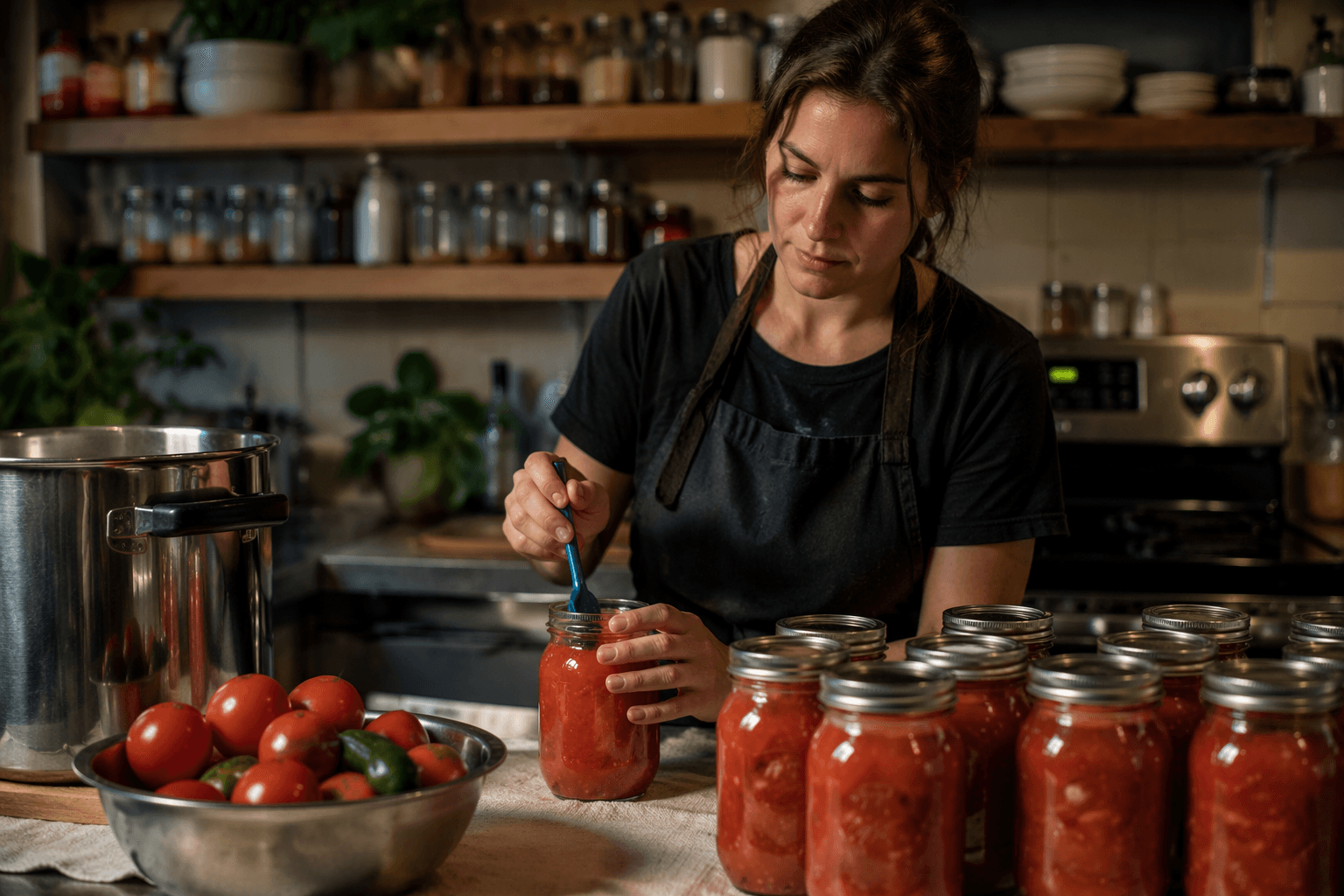
Peak-season produce can do more than feed a family today. In Valencia County, it can lower next winter’s grocery bill, keep good food from going to waste, and turn a backyard harvest or farmers market haul into meals that last for months. That is the practical message behind Taylor Wright’s summer column for the Valencia County Cooperative Extension Service: preserve now, when local tomatoes, chile and fruit are abundant, and you buy yourself cheaper shelves later.
Why summer preservation matters for household budgets
The basic economics are hard to ignore. Produce is usually at its best, and often at its most affordable, when it is in season and coming from local gardens, farms and backyard plots. Canning lets households stretch that moment of abundance into the rest of the year, which means fewer trips to replace costly out-of-season produce and less food slipping into the trash when a harvest comes in faster than a family can eat it.
That matters in a county where gardening and home food production are already part of daily life. Wright’s column is aimed squarely at families who want to make the most of summer’s bounty, and it frames preservation as a household skill with real financial value. A jar of tomatoes, salsa or fruit put up now can stand in for pricier store-bought versions later, especially when fresh produce is thin, transported farther, and more expensive in the cooler months.
Taylor Wright’s path back to Extension
Wright is not writing as an outsider looking in. Her June 11 column says she is returning for a second summer as an intern at the Valencia County Cooperative Extension Service, after learning a great deal about extension education and community outreach during the previous summer. A 2025 profile noted that she had been studying agricultural economics and agricultural business at New Mexico State University, with minors in business administration and marketing.
By June 2026, Wright had graduated from NMSU with a Bachelor of Science in agriculture, specializing in agricultural economics and agricultural business, along with minors in marketing and agricultural business management. She plans to continue her education with graduate work in agribusiness. That background gives her column its practical edge: she is looking at food preservation not just as a summer tradition, but as a way to connect family budgeting, food science and local agriculture.
What canning does, and why safety comes first
Wright describes canning as a preservation method that uses heat to destroy microorganisms and enzymes that cause food to spoil. That simple idea is at the center of a process that can protect both a pantry and a budget, but the method has to match the food. Summer fruit and vegetables may all look like candidates for jars, yet they do not all require the same treatment.
Water-bath canning is appropriate for high-acid foods such as fruits, jams, jellies, pickles and salsas. Pressure canning is needed for low-acid foods like meats, poultry, seafood and vegetables. New Mexico State University’s food-preservation guidance makes the safety line even clearer: pressure processing is the only safe way to can vegetables without adding acid, and low-acid canned foods must reach about 240 degrees Fahrenheit to prevent botulism.
New Mexico’s elevation adds another layer of importance. NMSU notes that all communities in the state are above sea level, and canning instructions have to be adjusted for altitude. Its tomato-canning guide says New Mexico communities range from about 3,000 to 10,000 feet above sea level, which means households cannot simply copy a generic recipe and assume it will be safe in Valencia County. The right temperature, pressure and processing time matter as much as the ingredients themselves.
How to choose the right method for the food you have
A few basic rules can keep the process on track:
- Use a water-bath canner for high-acid foods such as fruit, jams, jellies, pickles and salsa.
- Use a pressure canner for low-acid foods such as vegetables, meats, poultry and seafood.
- Do not treat vegetables as safe for water-bath canning unless acid has been added and the recipe has been tested for that method.
- Follow elevation-adjusted instructions, since New Mexico’s higher altitude changes how canning must be done.
- Use trusted NMSU guides for fruits, vegetables, tomatoes, pickled foods, green chile, salsa and high-elevation canning.
That last point matters because home canning is both a family tradition and a technical skill. The right recipe is not just a matter of taste. It is what keeps a summer pantry from becoming a food-safety risk.
Extension as a local resource, not just a classroom
Wright’s column also points readers toward the larger extension system behind the advice. The New Mexico Cooperative Extension Service describes itself as a federal-state-county partnership with staff in all 33 New Mexico counties, built around practical, research-based knowledge. In Valencia County, that network shows up in workshops, gardening education and food-preservation programming that fits the rhythm of the growing season.
The county office’s June 2026 events page listed a June 13 gardening workshop and a June 16 class called “Salsa from Seed to Seal,” a sign that canning and food preservation are not side topics but part of a broader summer agenda. The Valencia County Cooperative Extension Service also says residents can call 505-565-3002 to register for programs or sign up for the Valencia County Extension Newsletter.
That local presence is what gives Wright’s advice its reach. In Valencia County, food preservation is not only about filling jars. It is about keeping more of what families already grow, buy and harvest, and turning a short season of abundance into a longer season of stability.
This article was produced by Prism’s automated news system from verified source data, official records, and press releases, then run through automated quality and moderation checks before publishing. The system is built and supervised by the people who set the standards it runs under. Read our full AI policy.
Know something we missed? Have a correction or additional information?
Submit a Tip