Valencia County senior centers, meal programs offer daily support for older adults
Valencia County senior centers do more than serve lunch. They keep older adults fed, connected, and monitored daily before small problems turn into costly crises.

A daily safety net for older adults
For many Valencia County seniors, the nearest senior center is not just a place to eat. It is the place that makes the rest of the day manageable, with a hot meal, familiar faces, and a routine that can help older adults stay healthier and more independent.
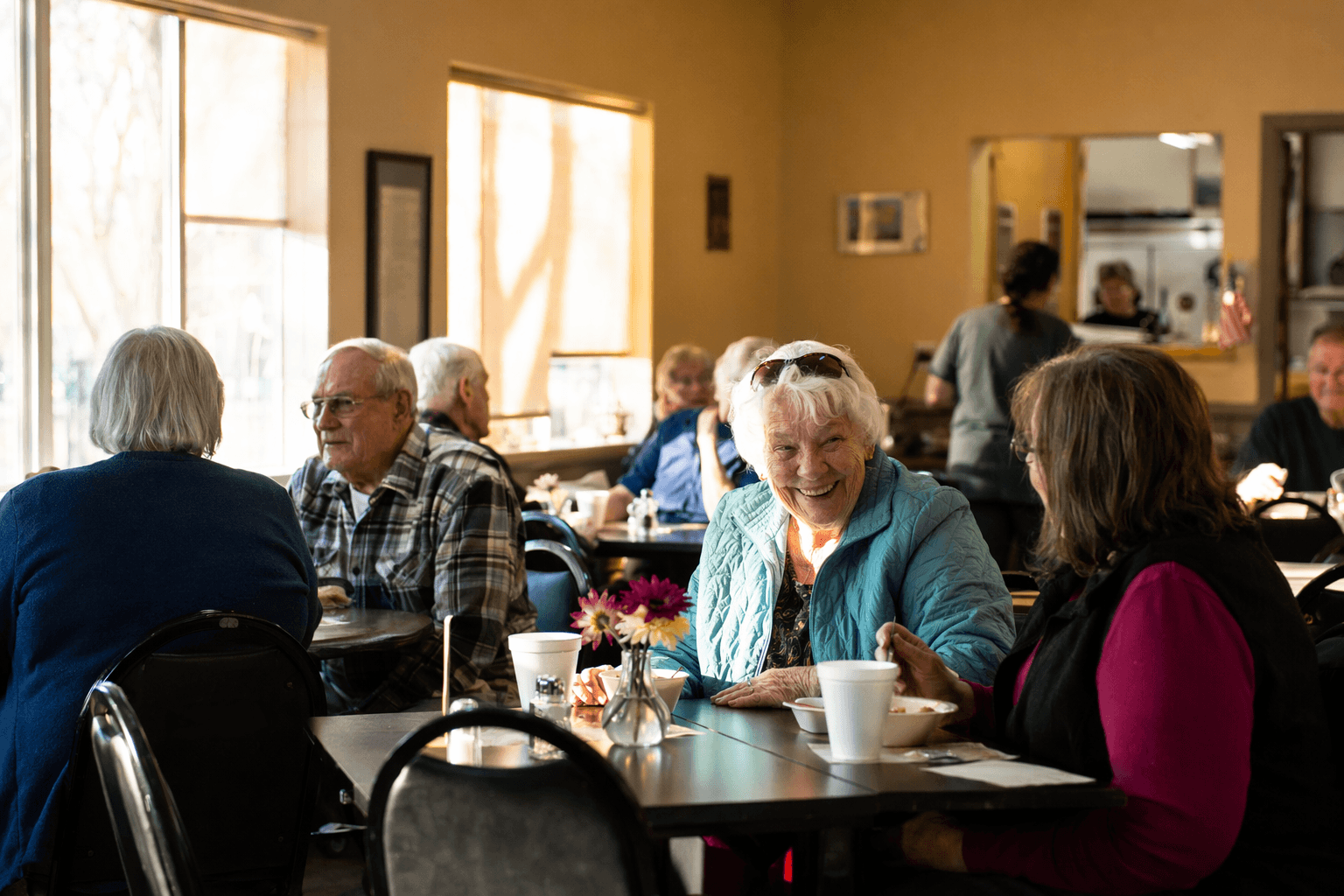
That matters in a county where age, distance, and mobility can quickly turn everyday tasks into barriers. The county Older Americans Program is built around that reality. It gives older adults a place to gather, and for those who cannot get there, it delivers meals to the door.
Where lunch is served
The county serves congregate meals at five locations:
- Belen Senior Center
- Del Rio Senior Center in Rio Communities
- Meadow Lake Senior Center
- Fred Luna Multigenerational Center in Los Lunas
- Bosque Farms Community Center
At most sites, lunch is served from 12 to 12:30 p.m. Monday through Friday. Bosque Farms has a longer serving window, from 12 to 1 p.m. on weekdays. That schedule matters because it creates a predictable mid-day anchor for people who may otherwise eat poorly, skip meals, or spend long stretches alone.
The centers are spread across Belen, Rio Communities, Los Lunas, and Bosque Farms, which gives residents more than one local access point in a county where driving can be difficult for older adults. For families trying to keep a parent or grandparent independent, proximity can be the difference between using a service and going without.
More than a hot plate
The meal program is only the most visible part of the county’s senior support network. The Older Americans Program also delivers meals Monday through Friday, and sometimes on weekends, for qualifying seniors who are physically unable to cook.
That home-delivery option is especially important because it does not treat need as a matter of income alone. The assessment looks at nutritional needs, diet restrictions tied to medical conditions, and whether a person can leave home safely. In practical terms, that means an older adult with a full kitchen may still qualify if they cannot reliably prepare food for themselves.
That detail is easy to miss, and it is one of the most important parts of the program. Families sometimes assume help is only for the poorest residents or only for people with the most visible limitations. The county’s approach is broader than that. It is based on whether a person can actually meet their daily nutritional needs.
Why the numbers matter
The county is not serving a small handful of people. The program provides between 580 and 600 meals a day, and about half of those meals are delivered to homes. That scale shows how deeply the service is woven into everyday life for older residents, especially those living on fixed incomes or dealing with health conditions that make meal preparation harder.
The need is not abstract. Feeding America data cited in the feature show that 12.5 percent of New Mexico adults age 60 and older faced the threat of hunger in the past 12 months. Against that backdrop, Valencia County’s meal program functions as a direct response to a real local risk. It is a food program, but it is also a health program, because steady nutrition affects energy, medication management, recovery, and the ability to remain at home.
A county official described Valencia County as having a lot of senior hunger, a blunt assessment that helps explain why these centers matter well beyond lunchtime. For many households, the difference between using the program and missing it is not inconvenience. It can mean the difference between a stable day and a worsening health problem.
The quiet benefit families sometimes overlook
Senior centers do something else that is harder to measure but just as important: they create regular contact. For older adults who live alone, a weekday meal is also a reason to get dressed, leave the house, and see other people. For those who receive meals at home, the delivery itself can serve as a regular check-in that helps spot trouble early.
That kind of routine can help prevent bigger problems from building up unnoticed. If a senior is eating less, losing strength, missing medications, or becoming less able to drive, a center visit or delivery route may be one of the few consistent touchpoints in the day. In that sense, the county’s senior network works like a low-cost form of preventive care.
The social side matters just as much as the food. The feature described these centers as places that help older adults get through the day with less isolation. That is not a small benefit. Loneliness can make health problems worse, and isolation can keep people from asking for help until they are in crisis.
What caregivers need to know
The biggest risk for families is assuming a loved one would not qualify, would not want to go, or would somehow be taking help meant for someone else. The county’s own criteria show otherwise. Eligibility for home-delivered meals depends on need, not appearances, and even seniors who seem physically comfortable at home may still qualify if they cannot safely prepare meals.
Caregivers should pay attention to a few practical realities:
- A senior who skips meals, eats irregularly, or relies on packaged food may be a candidate for help.
- A senior with diabetes, swallowing problems, or other diet restrictions may need the tailored support this program can provide.
- A senior who no longer drives safely across the county may be better served by a nearby congregate site or by home delivery.
- A senior who seems increasingly isolated may benefit from the daily structure and social contact of a center meal.
Those are not minor quality-of-life issues. They are the kinds of gaps that can lead to higher food costs, more skipped meals, avoidable health declines, and longer trips for care if families wait too long to act.
A resource built for everyday independence
Valencia County’s senior centers and meal program are most valuable because they are ordinary. They do not require a crisis to matter. They are there on weekdays, in several parts of the county, offering a predictable meal, a chance to see others, and a way to keep older adults fed whether they can travel or not.
For a county with an aging population and real concerns about hunger, that makes the program one of the most practical parts of the local safety net. It is not just about lunch. It is about keeping older neighbors healthier, steadier, and at home longer.
This article was produced by Prism’s automated news system from verified source data, official records, and press releases, then run through automated quality and moderation checks before publishing. The system is built and supervised by the people who set the standards it runs under. Read our full AI policy.
Know something we missed? Have a correction or additional information?
Submit a Tip