Coal mining shaped Vinton County’s towns, roads and rail lines
Coal still marks Vinton County’s map, from Moonville’s tunnel and Zaleski’s railroad roots to Vinton Furnace ruins and abandoned mine lands.
Drive through Vinton County and coal is still visible in the way the county is arranged. The old rail routes, the surviving furnace ruins near Lake Hope, and the mapped abandoned underground mines show how mining shaped where people settled, how roads connected them, and which places became lasting town centers around McArthur, Hamden, Wilkesville and Zaleski.
Coal built the county’s first durable map
Vinton County was formed on March 23, 1850, from Gallia, Athens, Hocking, Ross and Jackson counties, and the new county began with a combined population of 9,353. That origin matters because the county’s early growth came during the same period that coal, iron and timber were tying southeastern Ohio into a broader industrial economy.
The Vinton County Convention and Visitors Bureau keeps a dedicated history page on coal mining, which is a useful signpost for understanding the county today. Coal was not just one industry among many. It helped decide where people lived, where local hubs developed, and which settlement names still matter when you drive the back roads now.
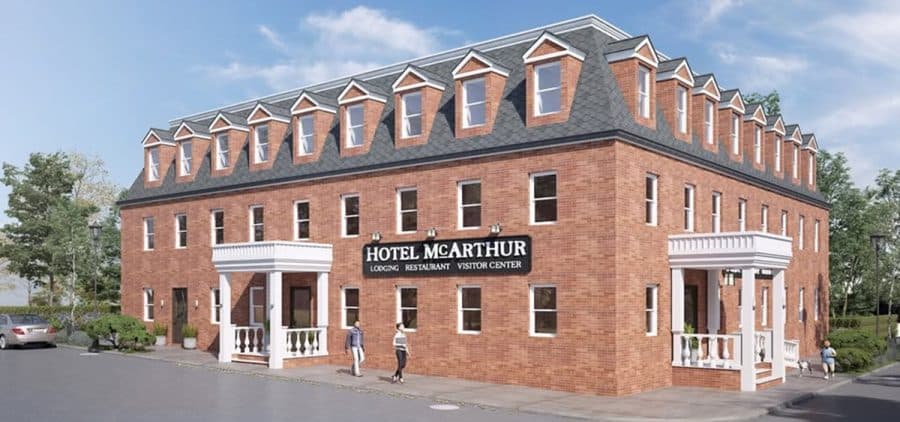
In a county built around small towns and unincorporated places, mining pushed some locations into prominence while leaving others as crossroads. McArthur, Hamden, Wilkesville and Zaleski all sit inside that pattern. Even after the mines disappeared, the county layout continued to reflect the routes and stop points that grew up around extraction and hauling.
The Jackson coalfield reached into Vinton County
The Jackson coalfield extends into Vinton County, and local coalfield histories describe its heyday as running from roughly 1875 to 1925. That was the period when the field moved from a modest beginning, described as dating to about 1800 to 1820, into a major industrial engine in southeastern Ohio.
That coalfield also used all three major mining methods: shaft, slope and drift. Each method left different physical traces and different community patterns behind, from deeper underground workings to hillside entries and surface-connected openings. Those patterns matter because they explain why some mine sites sat close to rail lines while others followed the contours of ridges and valleys.
The labor behind that coal was rugged and highly manual. Ohio coal mines in the 19th and early 20th centuries used animals including mules, horses, oxen, goats and dogs to haul coal, a reminder that the county’s industrial past depended on a work force and a transport system that were far from modern in scale or speed.
Rail lines helped create towns that still anchor the county
Moonville shows how closely rail and coal were linked. The town was founded in 1856 when the Marietta and Cincinnati Railroad arrived, and it became an abandoned coal mining town whose railroad tunnel is the last major standing structure of Moonville.
Zaleski’s origins also tie back to 1856 and the Marietta & Cincinnati Railroad. That connection is more than a historical footnote, because it shows how rail access helped determine where settlements took root and why some locations grew beyond a simple stop on a map. In Vinton County, rail service was part of the coal economy, not separate from it.
That legacy still shapes the roads and place names residents use every day. Towns such as McArthur, Hamden, Wilkesville and Zaleski remain the county’s working points of reference, while Moonville survives in memory, a tunnel and the industrial logic that created it. The old railroad corridor is one of the clearest ways to read how coal shaped the county’s human geography.
What remains on the ground
Vinton Furnace is one of the most important surviving coal-era sites in the county. The furnace operated from 1854 to 1883, and in 1875 it was converted to use coke fuel. Nearby, the Belgian Coke Oven Ruins preserve a set of 24 Belgian coke ovens, a rare and tangible reminder of the fuel-processing side of the region’s industrial economy.
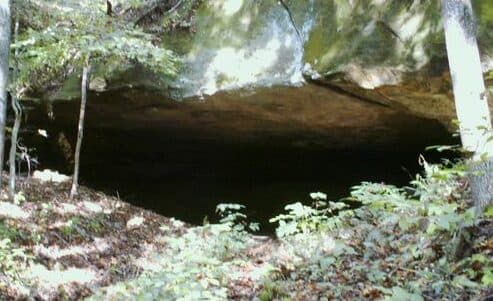
The physical landscape also carries the imprint of mines that no longer operate. The Ohio Department of Natural Resources maps abandoned underground mines in Vinton County, which shows that coal history is not just a matter of archived records or old photographs. It is still part of the land itself.
Lake Hope State Park sits inside this layered landscape, where public recreation and industrial remnants coexist. The park’s wooded setting can make the old economy easy to miss, but Vinton Furnace and the coke ovens nearby keep that past in view. In Vinton County, the transition from extraction to recreation did not erase the earlier footprint; it simply placed it inside a new use of the same ground.
Why the county’s coal past still matters now
Vinton County is often discussed through its forests, parks and rail-trail recreation, but the coal story explains why the county developed where it did. The roads, town centers, abandoned mine lands and surviving industrial ruins all point back to an era when extraction and hauling organized daily life.
That broader interpretation places Vinton County inside the Little Cities of Black Diamonds story, the southeastern Ohio coal region that rose around mining communities and then changed as the mines faded. In Vinton County, the evidence is still visible in Moonville’s tunnel, Zaleski’s railroad roots, Vinton Furnace’s coke ovens and the underground mine maps that still sketch the county’s subsurface past.
Local-history references tied to Douglas L. Crowell, Samuel Finley Vinton, S. W. Ely and Emmett A. Conway help preserve that record, along with county and state histories that keep the coal era connected to place names and settlement patterns. For anyone trying to understand Vinton County as it exists now, the coal layer is not optional background. It is part of the county’s working map, and the traces are still there to read.
This article was produced by Prism’s automated news system from verified source data, official records, and press releases, then run through automated quality and moderation checks before publishing. The system is built and supervised by the people who set the standards it runs under. Read our full AI policy.
Did this article answer your question?