Discover Vinton County serves as local events and tourism hub
Discover Vinton County is more than a tourism page: it doubles as a county calendar, visitor desk, and small-grant source for residents and local businesses.
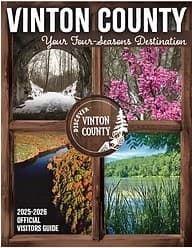
In a county of 12,800 people spread across 412.4 square miles, Discover Vinton County is trying to be more than a marketing page. The official visitors center wants to be the place where families check the month’s events, local groups post their gatherings, and small businesses find a visible boost. That makes the hub a practical tool for daily life in McArthur and beyond, not just a stop for outsiders headed into the Hocking Hills region.
A shared bulletin board for the county
The strongest part of Discover Vinton County is its events calendar, because it gives the county one public place to see what is happening across villages, townships, attractions, and community spaces. The site does not just list events for visitors to browse; it also invites organizations to submit their own gatherings, which turns the calendar into a countywide bulletin board rather than a one-way promotion page.
That matters in a small, spread-out county where local information can easily get lost. The events page tells users, “Looking for an activity or event while in town? Look no more,” and that promise reflects the site’s real value: it helps residents track what is happening this month without having to search across scattered flyers, social posts, and word-of-mouth posts. For a county with limited population density, a central calendar can make the difference between a well-attended event and one that barely gets noticed.
The office behind the website
Discover Vinton County is not only a digital presence. It describes itself as the official Vinton County Visitors Center, and its contact page gives it a clear physical footprint at 104 W. Main St. in McArthur, Ohio 45651. The office also lists public hours of Monday through Friday, 9 a.m. to 4 p.m., and Saturday, 10 a.m. to 2 p.m., along with the phone numbers 740-978-2510 and 740-978-6990 and the email address info@discovervintoncounty.com.
That kind of access matters because tourism and community information work best when people can actually reach someone. A resident planning a weekend outing, a club organizing a fundraiser, or a small shop trying to get listed in front of visitors has somewhere concrete to turn. In that sense, the visitors center functions as a real-world information desk for the county, not just a brand name on a screen.
The site’s messaging also makes room for local pride. Its “Dear Locals” page says tourism in Vinton County “has been on the rise” and that the office wants residents to feel “valued and connected.” That is an important distinction in a place where tourism often gets framed as something done for outsiders. Here, the pitch is that residents should see themselves as part of the audience too.
How small grants can shape local opportunity
Discover Vinton County also plays a quieter economic role through its mini-grant program. The application says the office offers a limited number of grants to tourism-related businesses and organizations that want to attract visitors, improve experiences, and strengthen the local tourism economy. Even in a modest funding pool, that can have a ripple effect in a county where many projects depend on small budgets and volunteer labor.
The policy goal is bigger than a single event or attraction. By directing support toward tourism-related groups, the office is trying to improve the experience people have once they arrive, which can help local events grow and make it more likely that visitors stay longer or return. In a county where small business visibility and community programming are closely tied to tourism, that kind of support can influence everything from foot traffic to local identity.
Tourism built around place, not just scenery
Discover Vinton County’s broader pitch is rooted in the county’s landscape. The site highlights parks, lakes, trails, hiking, horseback riding, and local attractions, including Lake Alma, Lake Hope, and Lake Rupert. The county visitor bureau also says Vinton County has the second-largest state forest in Ohio, a fact that helps explain why outdoor recreation sits at the center of the tourism strategy.
Just as important, the county is being framed as part of the Hocking Hills region while still keeping its own identity. That balance matters because Vinton County is not trying to compete only as a scenic drive-through destination. It is trying to be an affordable, authentic place to spend time, with enough natural assets and local experiences to justify a longer stay and enough community texture to make the trip feel distinct.
The tourism office’s message reflects that approach. Instead of separating visitor appeal from community value, it treats them as connected. Parks and trails bring people in, but local events, businesses, and public spaces help define whether the county feels worth returning to.
A countywide system that depends on coordination
A separate county tourism bureau reinforces that bigger picture. Its stated vision is to be a leader within the Hocking Hills region by developing and marketing Vinton County as an authentic and affordable tourist destination, while also encouraging tourism-related businesses and nonprofits to explore volunteer and marketing opportunities. Taken together, that suggests a broader local tourism ecosystem in which Discover Vinton County serves as a front door and calendar, while other county efforts help shape the message.
The scale of the county makes that coordination especially important. The U.S. Census Bureau lists Vinton County’s 2020 population at 12,800 and its 2025 estimate at 12,645, numbers that underline how small and lightly populated the county remains. In a place that size, one clear hub for events, visitor information, and small-business support can carry real weight.
That is the larger story of Discover Vinton County: it is not only trying to attract visitors, but also to give residents a usable public space, help local groups get seen, and connect tourism growth to community life. In a county built on small-town relationships and scattered destinations, that kind of hub can become part of the local infrastructure itself.
This article was produced by Prism’s automated news system from verified source data, official records, and press releases, then run through automated quality and moderation checks before publishing. The system is built and supervised by the people who set the standards it runs under. Read our full AI policy.
Did this article answer your question?