Lake Rupert offers boating, fishing and hiking in Wellston Wildlife Area
Lake Rupert is a 327-acre public lake near Hamden with no horsepower limit, nine miles of shoreline and state-managed access for fishing, boating and hiking.
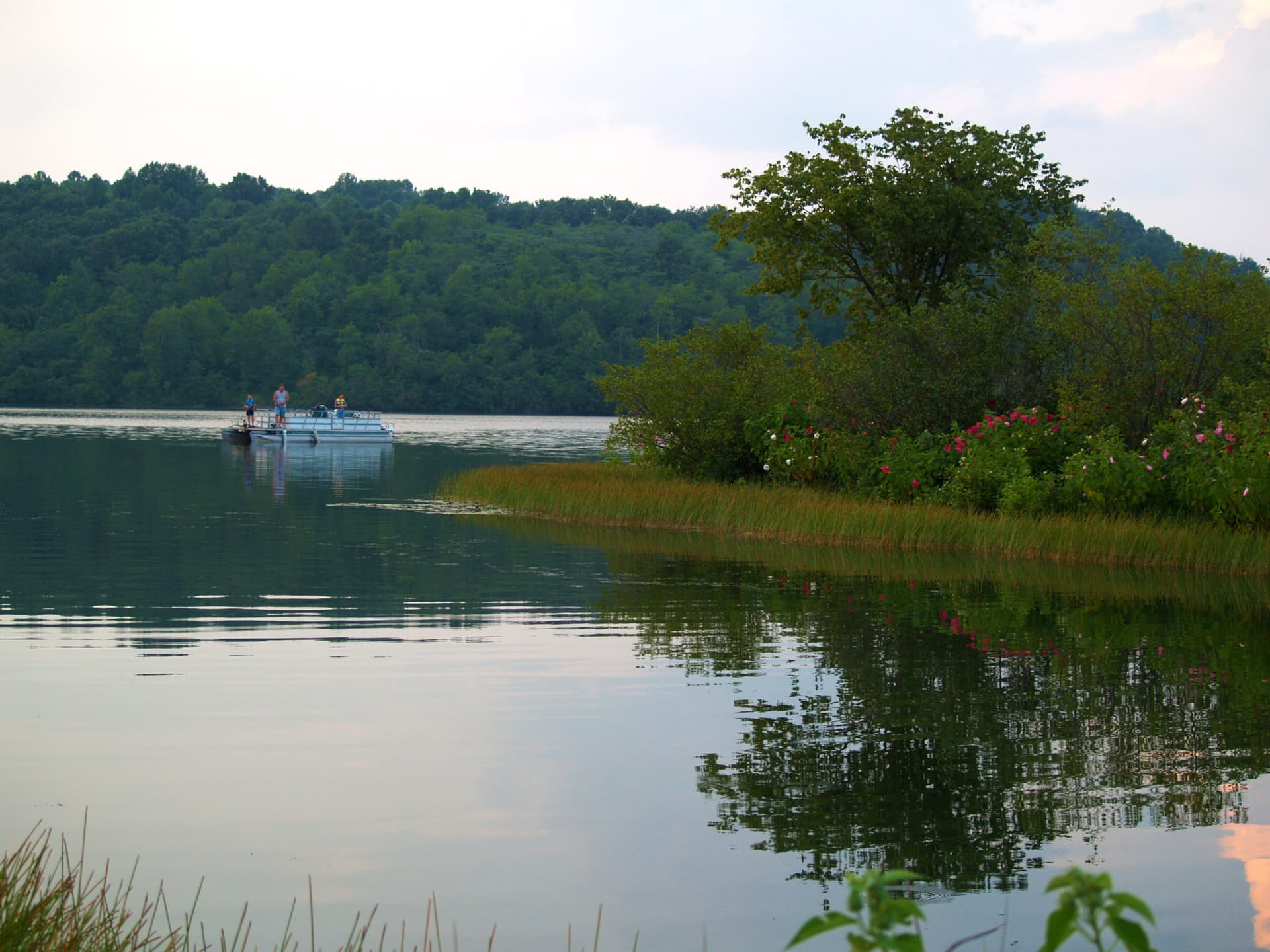
Lake Rupert is one of the most useful public waters in Vinton County because it is more than a scenic basin tucked into the woods. The lake sits inside the 1,446-acre Wellston Wildlife Area, and it gives local families a place to fish, paddle, hike and launch a boat without leaving the county. Built first as a water-supply project and later folded into the state wildlife system, it now functions as both infrastructure and recreation.
Where Lake Rupert sits
The lake is in Clinton and Richland townships, about one mile north of Hamden, along State Route 683 and a half mile north of the State Route 93 intersection. That location matters because it puts the water within easy reach of Hamden, Wellston and the surrounding rural communities that rely on nearby public land for outdoor access. Vinton County describes itself as one of Ohio’s most rural counties and says it is more than 80 percent wooded, which makes Lake Rupert part of a broader landscape of forests, streams and wildlife habitat rather than an isolated park-like site.
The surrounding Wellston Wildlife Area reinforces that setting. The property includes lake, woods, grassland, streams, marsh, forest and brush, a mix of habitats that supports hiking, birding, hunting, boating and fishing in the same public area. Acquisition of the wildlife area began in 1918, so the land has been assembled and managed for more than a century.
How the lake became a public resource
Lake Rupert’s origin story is tied to local civic needs. In 1969, the lake was built through a cooperative effort between the Ohio Department of Natural Resources and the City of Wellston to provide water for the city and recreation for the public. A decade later, in 1979, the ODNR Division of Wildlife received ownership of the area from the city.
That history explains why the lake remains a public asset rather than a private development. The state owns and manages more than 150 wildlife areas across Ohio, and Lake Rupert fits squarely into that system. For Vinton County residents, the practical result is straightforward: the lake is not just a place to visit, it is a managed public water with rules, maps and access points designed for regular use.
What you can do there
The main activities at Wellston Wildlife Area are kayaking, boating, hunting, hiking, birding and fishing. Lake Rupert is the centerpiece for the water-based part of that list, while the surrounding acreage supports the trail and wildlife side of the site. Because the area combines open water with woods and grassland, a single trip can be built around a morning on the lake and an afternoon on foot.
This is one of the reasons the site matters in a county where outdoor recreation is part of daily life, not just vacation planning. A public lake with adjoining wildlife land gives residents a low-barrier option for a quick trip after work, a family outing on the weekend or a simple place to put in a kayak close to home.
Boating rules and lake size
Lake Rupert covers 327 acres at normal pool, has nine miles of shoreline and reaches a maximum depth of 24 feet. Those numbers describe a modest-sized lake, large enough for boating and fishing but small enough that its shoreline and access points remain central to how people use it. The lake permits boating, there is no horsepower limit and motorboats must operate at no-wake speed.
That combination tells boaters what to expect before they arrive. Bigger engines are allowed, but the no-wake rule keeps the surface calmer and helps reduce conflict between fishing boats, small craft and paddlers. For families bringing a canoe, kayak or small fishing boat, the lake’s rules make it easier to share the water with limited congestion and a relatively simple operating standard.
Fishing, stocking and lake management
Fishing is not an afterthought at Lake Rupert. ODNR manages inland waters through fish surveys, lake mapping, fish stocking and research projects, and Lake Rupert sits inside that system. The lake’s fishing resources include a printable fishing map, structure coordinates, fish stockings and surveys that focus on channel catfish, crappie and largemouth bass.
The broader statewide picture shows why that matters. Ohio has more than 112,536 acres of public fishing water in more than 170 reservoirs of 25 acres or larger, and Lake Rupert is part of that network of managed public fisheries. That means the lake is not simply left to chance; it is monitored, mapped and stocked as part of a deliberate public program.
Maps, access points and practical planning
ODNR’s lake map resources are especially useful here because they show depth contours, fishing access, fish attractors, parking, boat ramps and restrooms. For a small public lake, those details matter as much as the scenic setting. They tell anglers where to fish deeper water, help boaters find a ramp and make it easier for families to plan a short visit without guessing where to park or launch.
State GIS records also identify the site as Lake Rupert, or Wellston Reservoir, and include boundary, contour, depth-point and stream-channel data. That level of mapping shows how closely the lake is tracked by the state and how firmly it sits inside Ohio’s public-water system. It also gives local users a clearer picture of the lake’s shape, structure and access before they leave home.
Why it matters in Vinton County
In a county that leans heavily on woods, wildlife land and outdoor recreation, Lake Rupert is one of the clearest examples of a public resource that still serves a daily purpose. It brings together water supply history, state management and practical recreation in one place, near Hamden and within reach of the communities that live closest to it.
For Vinton County, that is the value of Lake Rupert: a state-managed lake with real access, clear rules and a long record of public use, sitting in the middle of the county’s wooded landscape where it can keep doing the quiet work of serving both anglers and boaters.
This article was produced by Prism’s automated news system from verified source data, official records, and press releases, then run through automated quality and moderation checks before publishing. The system is built and supervised by the people who set the standards it runs under. Read our full AI policy.
Did this article answer your question?