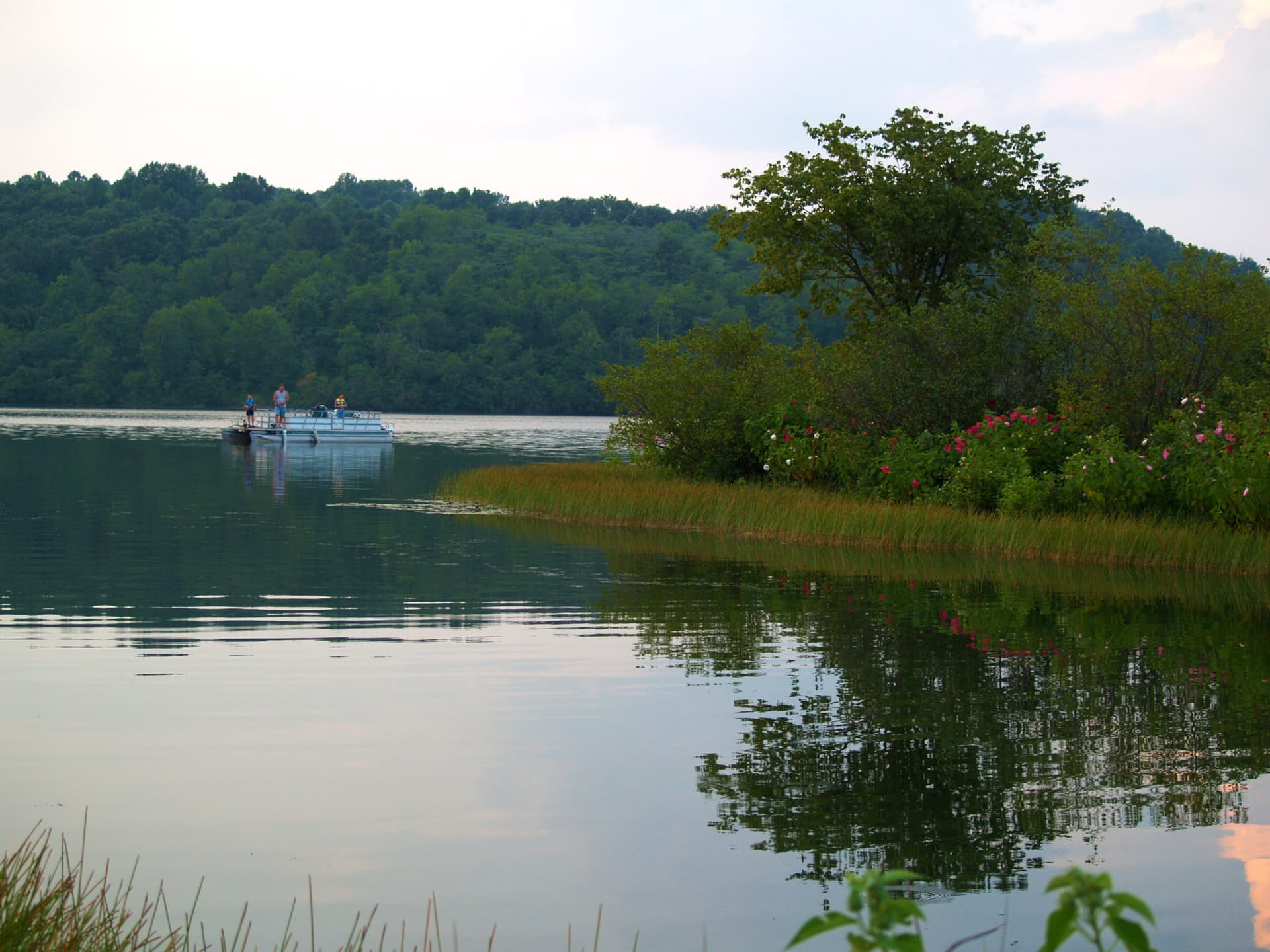
Richland Furnace State Forest offers hunting and APV trails in Vinton County
Richland Furnace State Forest is where Vinton County’s hunting, APV riding, and land stewardship meet visible iron-era ruins, old ore pits, and clear visitor rules.

Richland Furnace State Forest is one of the clearest places in Vinton County to see how public land is managed and used today. The Ohio Department of Natural Resources runs it under a multiple-use concept that combines wildlife habitat improvement, recreation, watershed protection, forest products, and aesthetics, and the same ground is open to hunting and APV riding. That mix makes the forest more than a historic name on a map: it is a working state forest with seasons, rules, and visible traces of the iron industry that shaped this part of southern Ohio.
Public use on a working state forest
The forest sits in the wooded hills of northern Jackson and southern Vinton counties, which gives it the feel of an Appalachian edge landscape rather than a single-county park. The land is managed for several purposes at once, so visitors see both public access and active stewardship in the same place. Wildlife habitat improvement sits alongside recreation, watershed protection, forest products, and aesthetics, a combination that explains why hunting and off-road access are allowed here while the land is still treated as a managed forest.
That public-use model matters for local readers because it shows how one tract of state land can serve several needs at once. Hunters use it for seasonal access to public ground, while trail riders use it for designated APV riding. The forest is not simply preserved and closed off; it is opened, regulated, and maintained as part of the state forest system.
APV riding has a narrow, seasonal lane
Richland Furnace is one of four APV recreational areas operated by the Ohio Division of Forestry. The other state forest APV areas are Maumee, Pike, and Perry, and the same trail standards apply across that system. At Richland Furnace, the APV area is limited to vehicles 62 inches wide or less, which keeps the trail network focused on smaller off-highway machines rather than full-size vehicles.
The allowed machines include ATVs, side by sides, dirt bikes, and dual sport motorcycles, as long as they fit the width rule. Riders also need a State Recreational Vehicle Registration with the Bureau of Motor Vehicles, so this is not a casual ride-in destination. The APV trails at Pike, Perry, and Richland Furnace close during the winter and reopen in April, which makes the system seasonal by design. ODNR reopened the Richland Furnace APV area on April 9, 2026, along with Pike and Perry, underscoring that the riding season is managed rather than open-ended.
For riders, the practical takeaway is simple:
- Keep vehicles at 62 inches wide or less.
- Carry State Recreational Vehicle Registration from the BMV.
- Expect winter closures and an April reopening window.
- Stay within the designated APV area rather than treating the forest as open riding ground.
The iron industry is still visible in the landscape
Richland Furnace’s value is not limited to recreation. The forest preserves ground that still shows the long industrial history of the Hanging Rock Iron Region, a district that covered about 1,800 square miles. Union Furnace, built in 1826, was the first furnace in that region, and by 1856 there were 65 furnaces there producing 105,500 tons of pig iron in Ohio. By the time of the Civil War, Ohio had 69 iron blast furnaces and was producing more than 100,000 tons of iron each year.
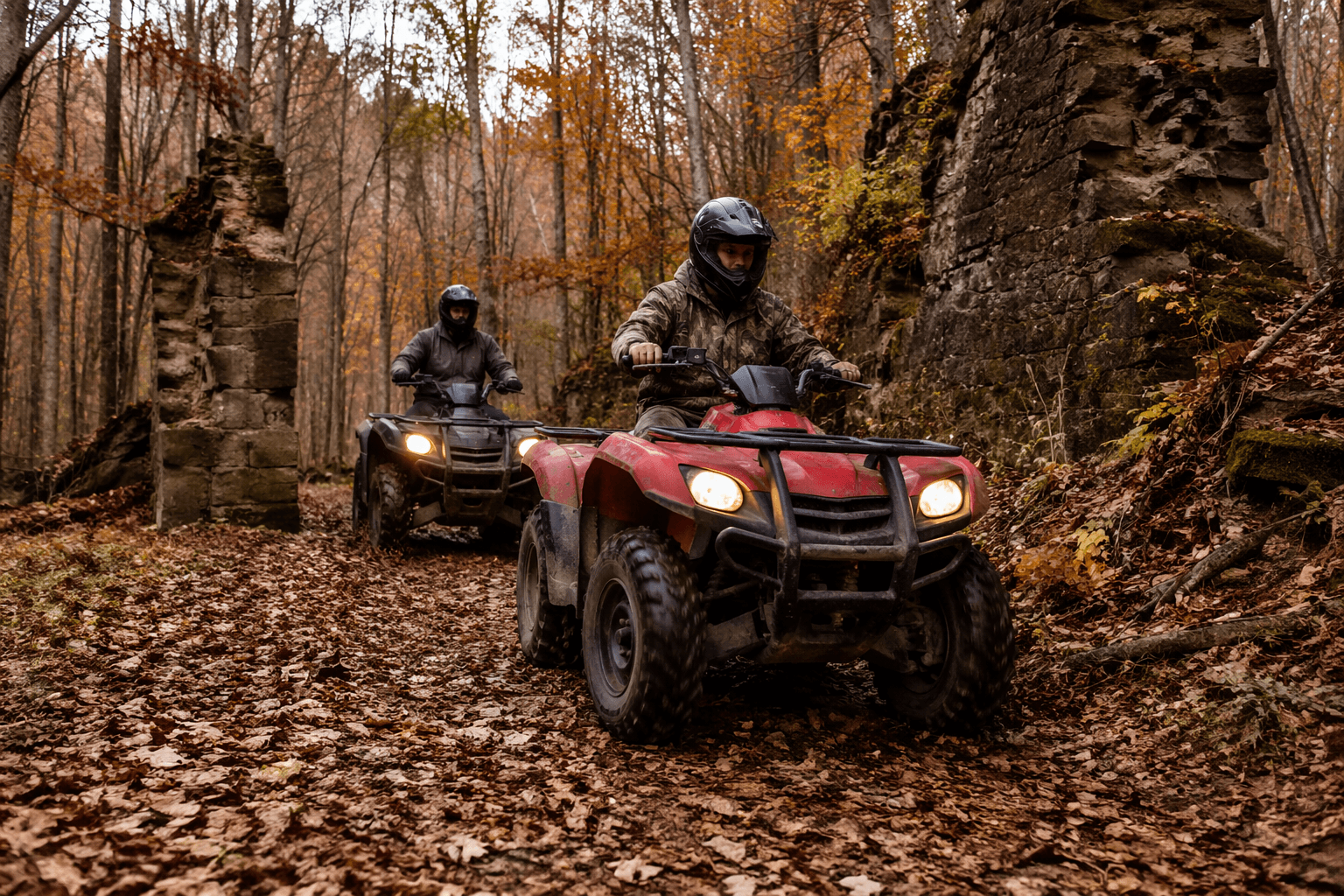
Richland Furnace itself was built in 1854, during the period when the region’s iron works were still expanding. The furnace worked with local ore, limestone, charcoal, and steam power, the same combination that defined much of the region’s iron production. Later, when ore from Missouri and the Lake Superior region became dominant near the end of the 19th century, the local industry faded. The forest now sits on ground that once supported one of those industrial sites, so the land’s present conservation use is layered directly on top of its past production role.
The old furnace remnant still stands on private property just north of the state forest near Vinton Township Road 6. The ore pits remain visible near the ridges, and the site still carries evidence of the work that once happened here. Local history materials also connect the site to the ghost town of Richland and identify it as Cincinnati Furnace, which helps explain why the forest feels like a landscape archive as much as a recreation area.
A land holding divided, then managed again
The modern forest also reflects a long land-management story. The Richland Furnace Company once held the land and the nearby Superior Wildlife Area as one 5,000-acre property. The two were divided in the 1930s, and the forest’s earliest land acquisition came later, when ODNR purchased 1,908 acres in 1948. That sequence shows how a former industrial holding became part of the public land base piece by piece rather than all at once.
The same ground also contains flint outcrops used by Native Americans before European arrival. That detail broadens the story beyond 19th-century iron production and places the forest in a much older human history. Visitors moving through the woods are not just seeing a state forest built from a former furnace site; they are crossing a place that carried value long before iron, logging, and state ownership.
Visiting rules that shape the experience
Richland Furnace is open daily from 6 a.m. to 11 p.m., giving hunters, riders, and other visitors a clear daily window. Forest-road speed is 30 mph unless posted otherwise, a rule that matters on roads shared by different users and by people unfamiliar with the terrain. Open fires are limited to grills, fire rings, or portable stoves, and those fires must be attended at all times.
Ohio’s open-burning rules can also affect plans in unincorporated areas during March, April, May, October, and November between 6 a.m. and 6 p.m. That means anyone planning to cook or burn outdoors should treat fire rules as part of the visit, not an afterthought. In a place where public use, timber management, and habitat work overlap, those limits help protect both the forest and the people using it.
Richland Furnace State Forest is easiest to understand when it is seen as a managed working landscape, not just a scenic holdover. Hunting, APV access, old ore pits, flint outcrops, and furnace remnants all sit inside the same public land story, and that is what gives the forest its current importance in Vinton County.
This article was produced by Prism’s automated news system from verified source data, official records, and press releases, then run through automated quality and moderation checks before publishing. The system is built and supervised by the people who set the standards it runs under. Read our full AI policy.
Did this article answer your question?