May frost blamed for brown foliage on Vinton County trees, gardens
Brown leaves on Vinton County trees and gardens are sending landowners to extension offices, but the latest cold snap mostly burned tender new growth, not whole plants.
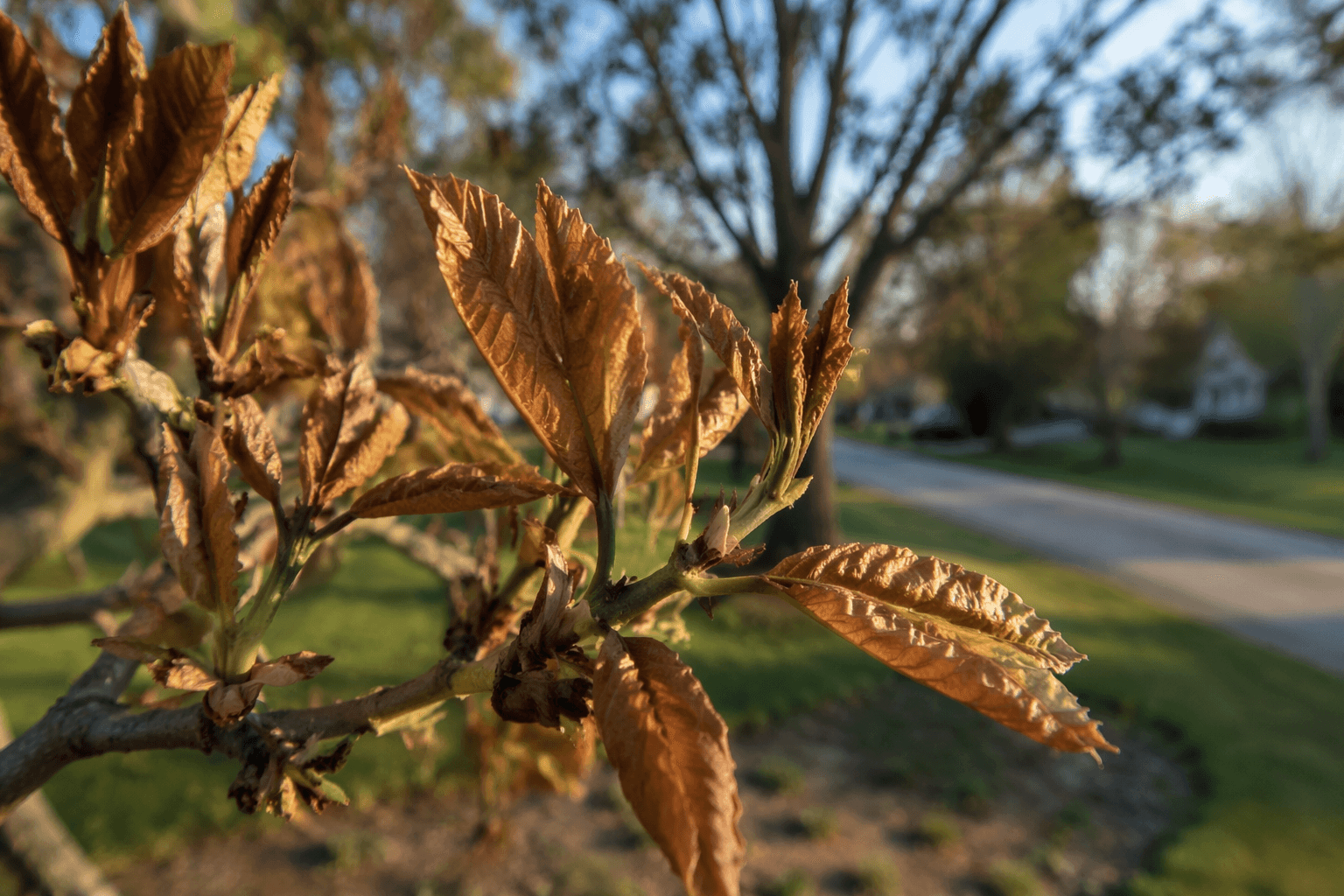
Brown, shriveled foliage is showing up on Vinton County trees and gardens, but the damage is looking more like a frost bruise than a pest outbreak. For the past two weeks, extension offices across southern Ohio have been hearing from residents worried that insects, disease or herbicide drift were killing their plants.
The culprit in the cases described was a cold snap earlier in the month. Weather station data at the Jackson Agricultural Research Station showed the last frost fell on May 3, when the temperature dropped to 26.69 degrees. That lines up with National Weather Service spring frost guidance showing that 32 degrees can still arrive late in the season, including as late as May 25 in Cincinnati, May 16 in Columbus and May 21 in Dayton, depending on topography, location and even where the thermometer sits.
The damage has a familiar look. Young leaves at the top of the canopy were hit hardest, and frost caused the cells in tender plant tissue to freeze, thaw and burst. That is why affected leaves can turn brown or black, look limp or shriveled, and appear wilted even when the tree itself is still alive. Ohio State University Extension says tender plants can be damaged by a light frost in the 33-36 degree range and killed by a freeze or heavy freeze at 32 degrees or 28 degrees.
For most trees, the outlook is better than the foliage suggests. The damage reported was scattered and mostly limited to new growth, so many trees should recover, drop the dead leaves and push out fresh foliage as the season continues. Recent Ohio State University Extension reporting noted that northern red oak foliage was expected to recover, while black walnut new growth and wild grape showed heavier injury.

The key distinction is between woody plants and herbaceous plants. Trees and shrubs may lose some of their newest leaves and still rebound, but herbaceous plants with green, fleshy stems are more likely to die back if frost wipes out the above-ground portion and, in some cases, the roots. If an entire canopy were killed, the tree could face short-term setbacks while it regrows.
Vinton County residents looking for the most practical next step are being pointed to the Vinton County Extension Office and Ohioline, Ohio State University Extension’s information resource. In a county where a single cold morning can make healthy growth look dead, the difference between cosmetic injury and lasting loss comes down to timing, species and whether the plant is still alive beneath the brown leaves.
This article was produced by Prism’s automated news system from verified source data, official records, and press releases, then run through automated quality and moderation checks before publishing. The system is built and supervised by the people who set the standards it runs under. Read our full AI policy.
Did this article answer your question?