Ranger Station Mound reveals Vinton County’s ancient Indigenous past
Ranger Station Mound is Vinton County’s clearest link to the land before settlement, and its protection shows how fragile that record has always been.

Ranger Station Mound is the kind of place Vinton County can drive past without realizing it is standing on one of the county’s oldest human-made landmarks. In the Zaleski State Forest area, the mound marks a prehistoric Indigenous presence that predates the county by centuries and still survives as one of only three earthworks left from a larger landscape. Its story is not just about age. It is about what has been lost, what has been protected, and why the county’s pre-settlement history still matters now.
What Ranger Station Mound is
The Ohio Department of Natural Resources identifies Ranger Station Mound as Historic Site #18 and describes it as a prehistoric Native American Adena burial mound. The site sits less than 2,000 feet west of Raccoon Creek, a location that fits the way the Adena used the land for hunting, foraging and access to fish and mollusks from the nearby stream. That setting is a reminder that the county’s earliest landmarks are not tied to furnaces, rail lines or ghost towns, but to Indigenous earthworks built long before those later eras arrived.
The mound is also the tallest of the surviving Zaleski mounds, rising about 14.4 feet. It remains tree-covered and, by local archaeological descriptions, relatively close to its original form. That matters because so many prehistoric sites disappear not all at once, but piece by piece, until only a fragment of the original landscape is left to explain what was once there.
The larger Zaleski Mound Group
Ranger Station Mound was once part of the Zaleski Mound Group, which originally included six earthworks. Three of those mounds were destroyed before the group was listed on the National Register of Historic Places in 1974, leaving Ranger Station Mound, Markham Mound and Methodist Church Mound as the surviving pieces of the group.
The other two survivors sit in very different settings. Markham Mound is on private property, and Methodist Church Mound is behind the Zaleski United Methodist Church. Those locations help show how scattered the remaining record has become. What once read as a connected prehistoric landscape is now preserved in separate places, each with its own limits on visibility and access.

That is part of what makes Ranger Station Mound stand out. It is not only one of the few remnants of the group. It is the largest remaining mound, and the one most clearly tied to the county’s public forestland and state-managed interpretation.
Why the site matters now
The mound’s value is not abstract. It shows how much of Vinton County’s earliest history survives only because the land was eventually treated as something to protect rather than something to dig through or flatten. ODNR notes that in the mid-19th century, people cut into the mound’s side to create a cold cellar, and at least one burial was removed and given to a local physician. That detail is hard to overstate: the site did not arrive in the present untouched. It endured a period when people saw it as a practical earthwork instead of a sacred and archaeological resource.
That history gives the mound present-day significance beyond its age. It is evidence of a civilization that shaped the land here, and it is also evidence of how easily that record could have been erased. For Vinton County residents, the site is a direct link to a pre-European past that is often invisible in daily life, even though it sits in plain view within the county’s public landscape.
The Ranger Station Mound marker adds another layer. It says the mound may mark the burial of an important person because it covered more area than nearby mounds. The same marker notes that some archaeologists think Adena society may have been led by a chief or a shaman. The marker also dates the Adena culture broadly to roughly 800 B.C. to 100 C.E. Taken together, those details turn the mound from a simple earthen rise into a clue about leadership, ritual and social structure among the people who built it.
How the site is protected
The strongest formal protection for the Zaleski Mound Group comes from its listing on the National Register of Historic Places in 1974. The National Park Service says the National Register was created under the National Historic Preservation Act of 1966 to coordinate and support public and private efforts to identify, evaluate and protect America’s historic and archaeological resources. That framework is the reason the mounds are not treated as ordinary landscape features.
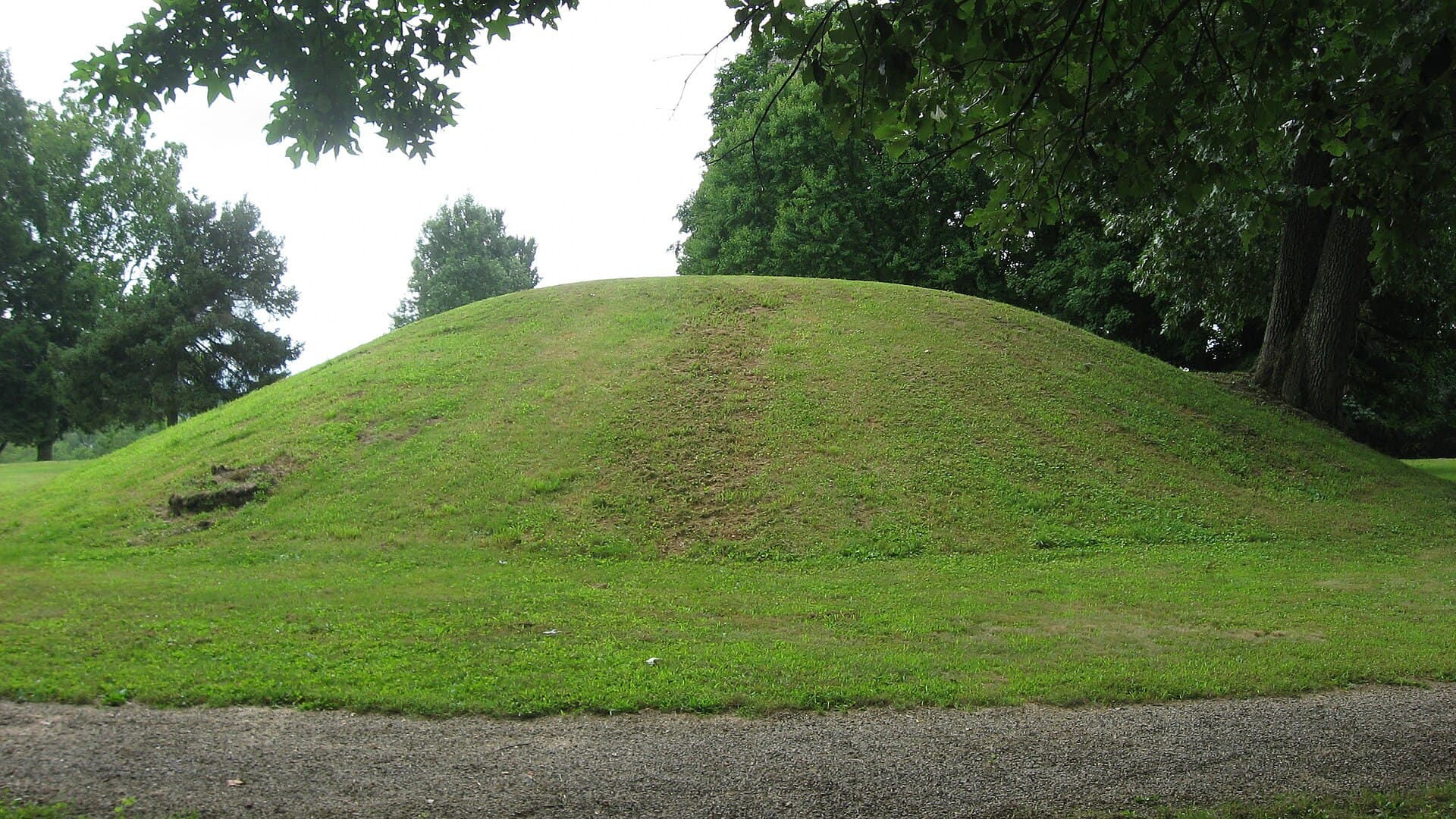
At the state level, ODNR’s stewardship of the Zaleski State Forest area gives the mound an additional layer of recognition. The site is not preserved because time somehow left it alone. It is preserved because institutions acknowledged that the remaining earthworks had value, and because later protection made it harder for development, neglect or casual disturbance to finish what earlier digging had begun.
That matters for public understanding too. A site can be formally protected and still remain socially invisible if people do not know what it is. Ranger Station Mound is exactly the kind of place that can disappear into the woods of memory unless it is named plainly as an Adena burial mound and recognized as part of the county’s oldest documented history.
What respectful interpretation should look like
Public access to a site like Ranger Station Mound should begin with restraint. The point is not to turn the mound into a spectacle or a decorative stop. It is to treat it as a protected archaeological resource, one that deserves careful interpretation and minimal disturbance. That means reading the site as evidence of an Indigenous past, not as a curiosity detached from the people who built it.
Respectful interpretation also means telling the whole story, including the damage that occurred before preservation took hold. The cold cellar cut into the mound and the removal of a burial are not side notes. They are part of why preservation exists at all. Any public understanding of the site should include that tension between use and protection, because the mound survives in the gap between the two.
For Vinton County, that makes Ranger Station Mound more than a historical marker in the woods. It is a reminder that the county’s oldest history is still on the land, still vulnerable, and still worth naming clearly before it slips any further into invisibility.
This article was produced by Prism’s automated news system from verified source data, official records, and press releases, then run through automated quality and moderation checks before publishing. The system is built and supervised by the people who set the standards it runs under. Read our full AI policy.
Did this article answer your question?