Superior Wildlife Area blends timber harvest, habitat, and hunting access
Hunters now use Superior Wildlife Area as a working forest, where marked harvest areas, logging roads, and furnace-era ruins shape what Vinton County can do on 2,442 acres northwest of Wellston.

Hunters are the main users of Superior Wildlife Area right now, and the 2,442-acre tract in Richland Township works very differently from a park built for picnics and paved strolls. The land northwest of Wellston is managed for public hunting, timber, and habitat, so the first thing visitors need to know is simple: this is a working forest, not untouched wilderness. Its marked harvest areas, foot access on logging roads, and surviving Richland furnace remnant all shape how the property should be used this season.
What Superior Wildlife Area is today
Superior Wildlife Area sits about eight miles northwest of Wellston, on land managed in partnership with Superior Land Group, LLC and the ODNR Division of Wildlife. That partnership matters because the site is not being held as a frozen preserve. It is being actively shaped for wildlife habitat, forest products, and access, which gives local hunters and wildlife watchers a very different experience from the county’s more familiar recreation spots.
The area’s day-to-day value comes from how it can be used. Logging roads provide foot access through much of the property, and the timber harvest areas are marked off for safety. That means the land is open, but not casual in the way a city park is casual; the boundaries and changing conditions reflect a forest that is still being worked.
What the forest offers now
The woods here are described as mostly wooded, with oak, hickory, yellow poplar, and maple among the dominant trees. That mix is not just a catalog of species names. It creates the kind of layered cover that hunters and wildlife managers look for, with mature canopy in some places and younger growth in others.
The habitat mosaic matters because harvest activity has also opened room for blackberry and raspberry growth, along with young trees. Those changes support game species named by the Division of Wildlife, including deer, squirrel, ruffed grouse, and wild turkey. For residents deciding whether Superior is worth a trip, that is the practical answer: the property is not just historic, it is biologically active and built to hold game.
This is also why the land does not function like a simple scenic escape. Timber work, regrowth, and wildlife habitat are all part of the same landscape. If you go there, you are looking at a forest in motion, one where the conditions underfoot and the cover overhead are the result of ongoing management rather than a fixed natural setting.
How timber work changes access and safety
Superior’s access rules are tied to its identity as a managed forest. Harvest areas are marked for safety, and that is not a minor detail. Those markings signal where timber operations are active or where visitors should be cautious, which is especially important on a property where foot travel often follows logging roads rather than formal trails.
That setup helps explain why the site fits Ohio’s broader state-forest philosophy. ODNR says Ohio state forests are managed for multiple uses, including wildlife habitat improvement, recreation, watershed protection, forest products, and aesthetics. Superior reflects that same logic on a smaller, more visible scale: the land is expected to produce habitat and timber, while still remaining open to the public.
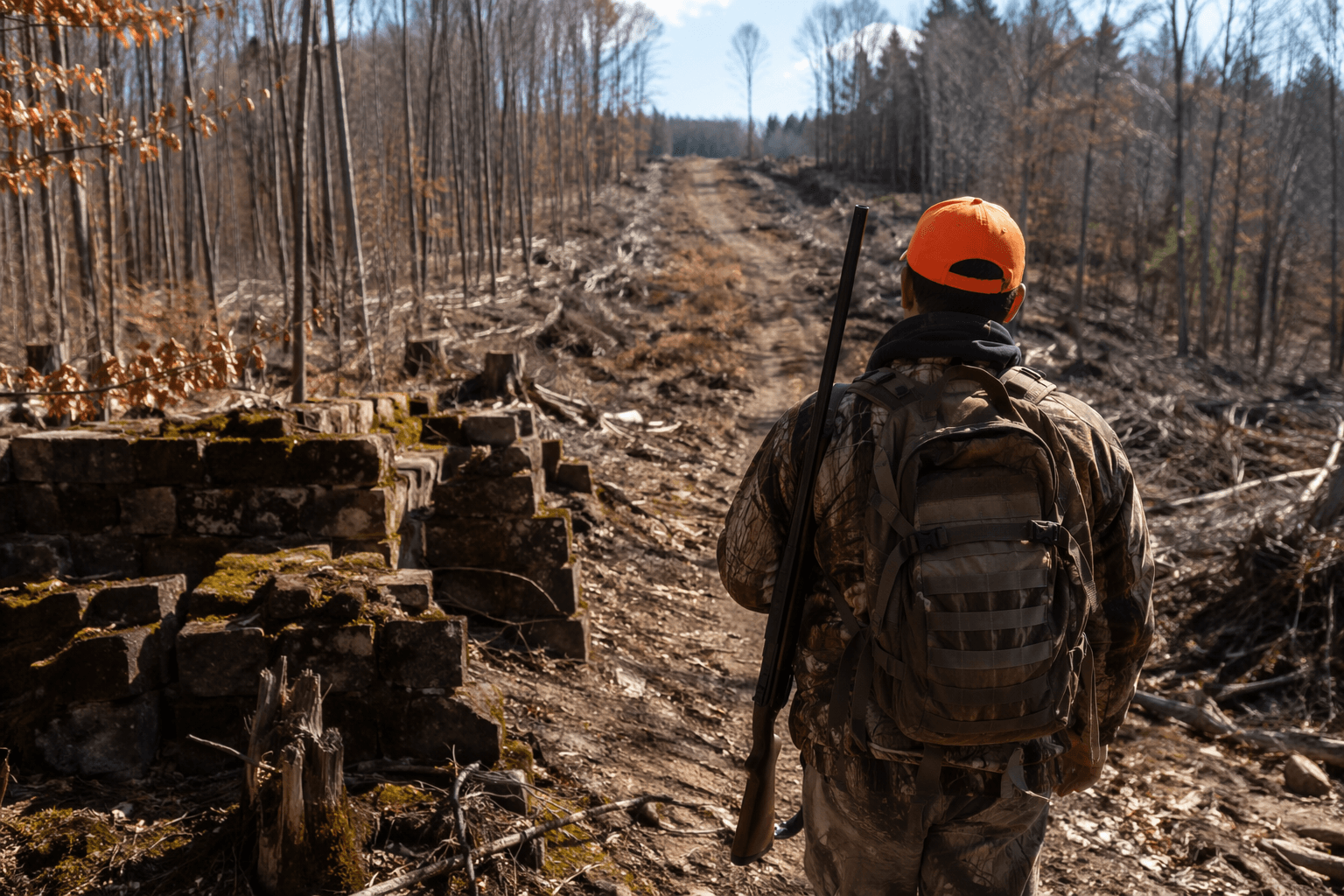
For hunters, that multiple-use model is a practical advantage. The forest edges, young cuts, and mature stands create different pockets of cover, and the road network makes much of the property reachable on foot. For everyone else, the same system means the place deserves the same respect you would give any active work site on public land.
Why the furnace history still shapes the site
The surviving stone remnant of the old Richland furnace sits south of the parking lot at Township Road 13, and it is more than a relic tucked into the trees. ODNR says the furnace-era company town once employed up to 450 people, a scale that shows how central iron production once was to this corner of Vinton County.
Superior Wildlife Area and Richland Furnace State Forest were once part of a single 5,000-acre holding owned by the Richland Furnace Company, then divided in the 1930s. That split is still legible on the ground today. ODNR’s Richland Furnace materials say the town of Richland is largely gone, though traces of former homes can still be detected, which makes the area feel less like a remote patch of woods and more like a landscape where industry, settlement, and regrowth overlapped.
That history also explains why restoration is part of the present mission. The wildlife area includes work to restore soil damaged by illegal off-road vehicle use while preserving the historic iron furnace and its surroundings. In other words, the same ground that once supported industrial extraction is now being cared for as habitat and public land, with the old furnace standing as a visible marker of what came before.
How it fits with Richland Furnace State Forest
Superior does not stand alone. It is tied to Richland Furnace State Forest, which is managed for multiple uses, open to public hunting, and includes one of ODNR Forestry’s four APV areas. Together, the two properties broaden what this corridor offers and make the landscape feel more continuous than the old property lines suggest.
Ohio has 24 state forests covering more than 200,000 acres, so Richland Furnace sits inside a larger public-land system built around timber, habitat, and recreation. In that context, Superior’s opening was meant to “reunite” the historic land holding and expand opportunities for wildlife enthusiasts. The phrase is apt because the public is not just being given access to woods; it is being given access to a working landscape whose past and present still meet at the same ridge lines, roads, and stone remains.
For Vinton County, that makes Superior Wildlife Area a different kind of public asset. It is a place where hunting access, timber management, habitat recovery, and furnace history all occupy the same ground, and where the county’s industrial past still helps shape how the land can be used now.
This article was produced by Prism’s automated news system from verified source data, official records, and press releases, then run through automated quality and moderation checks before publishing. The system is built and supervised by the people who set the standards it runs under. Read our full AI policy.
Did this article answer your question?