Vinton County warns residents as Ohio cyclosporiasis cases rise
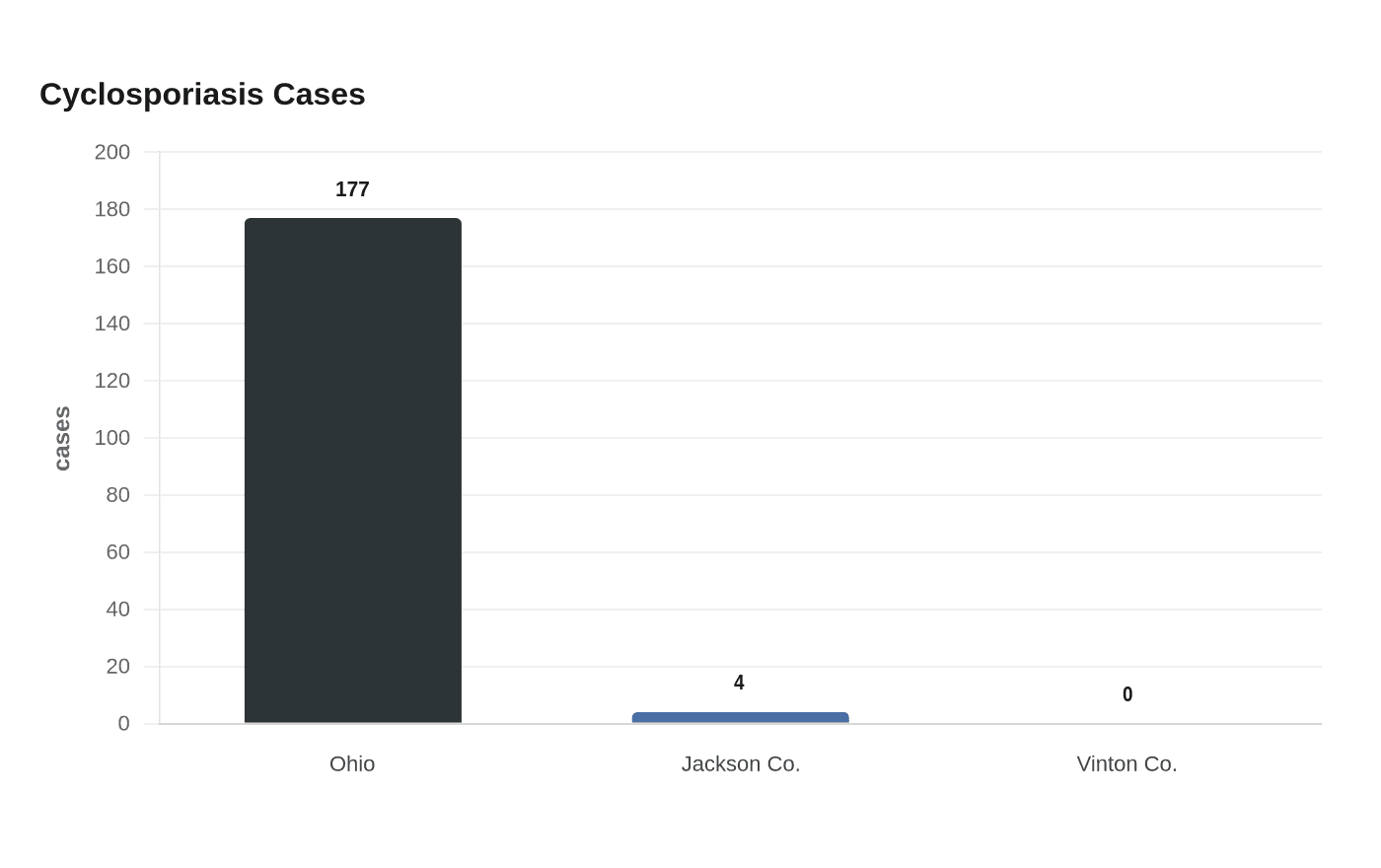
Vinton County had no confirmed cyclosporiasis cases, but Ohio had 177 by July 2. Health officials say the parasite can spread through contaminated produce and relapse after seeming better.

Ohio’s cyclosporiasis count climbed to 177, the Vinton County Health Department had not confirmed any local cases, and Jackson County health officials investigated four lab-confirmed illnesses since June 29. The outbreak remains active, the source has not been identified, and investigators are working with neighboring states and federal partners to look for a common food source.
Cyclosporiasis is a gastrointestinal illness caused by a microscopic parasite that is usually spread through contaminated produce. The Ohio Department of Health said 171 of the state’s 177 cases were reported in June, mostly after June 20, and 28 Ohioans had been hospitalized. ODH Director Bruce Vanderhoff said there had been no deaths in Ohio connected to the outbreak.

The illness most often causes watery diarrhea, but it can also bring bloating, cramping and loss of appetite. Symptoms usually begin about one week after infection and can last from a few days to more than a month without treatment. Symptoms may seem to get better and then return, which can make people think they are past the worst of it when they are not.
Health officials are urging anyone who gets sick to call a health-care provider, since cyclosporiasis can be treated with trimethoprim-sulfamethoxazole, or TMP-SMX, and dehydration can become a problem. Cyclosporiasis is nationally notifiable, and public health agencies monitor cases year-round to catch outbreaks tied to a common food source. In Ohio, local health departments are required to use the CDC Cyclosporiasis National-Hypothesis-Generating Questionnaire when they follow up on cases.
Wash hands with soap and water before and after preparing raw fruits and vegetables. Rinse produce thoroughly under running water, scrub firm fruits and vegetables with a clean brush, and refrigerate or eat cut or cooked produce promptly. Past U.S. outbreaks have been linked to imported fresh produce including bagged salads, cilantro, basil, raspberries, snow peas and green onions, and it can also be picked up from contaminated food or water while traveling outside the United States.
This article was produced by Prism’s automated news system from verified source data, official records, and press releases, then run through automated quality and moderation checks before publishing. The system is built and supervised by the people who set the standards it runs under. Read our full AI policy.
Did this article answer your question?