Apex proposes task force to address mental health, youth suicide, access barriers
Apex is weighing a new mental-health task force as youth suicide, access gaps and rising emergency calls strain Wake County families.

Apex is moving toward a new mental-health task force at a time when youth suicide, sadness and access barriers remain stubborn problems across Wake County. The question for families is whether the Peak Resilience and Wellbeing Task Force will produce measurable change before 2028 or become another advisory panel that generates reports but little else.
The town already has a response structure in place. Apex Police Department’s Crisis & Advocacy Response Team, known as CART, uses a co-response model that pairs a crisis counselor with an officer. The town says mental health is not a police specialty, yet CART also notes that NAMI estimates about 20% of 911 calls involve mental health and says Apex’s overall call volume is rising 3% to 5% each year.
That matters in a county where the need is already clear. Wake County’s 2022 Community Health Needs Assessment identified mental health as one of its top three priorities for 2022-2025, alongside housing and access to healthcare. The county assessment drew input from nearly 1,073 residents and organizational leaders, showing that the concern runs well beyond any single town or agency.
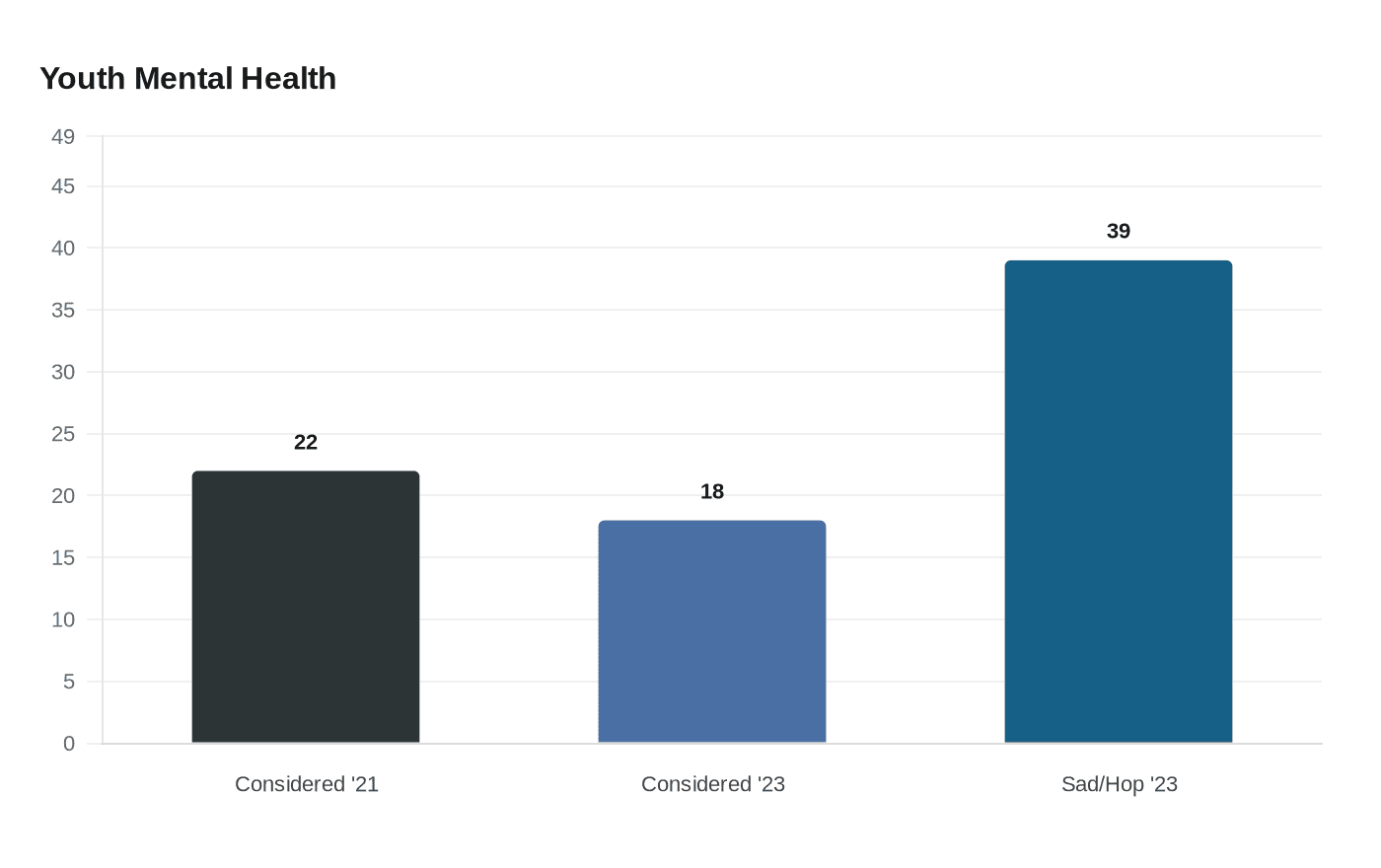
The stakes are especially high for young people. North Carolina recorded 72 suicide deaths among children ages 10 to 18 in 2023, and those deaths increased 4% from 2014 to 2023. Firearms were the most common method. State survey data show some improvement since the pandemic peak, with 18% of high school students saying they seriously considered suicide in 2023, down from 22% in 2021, but 39% still reported feeling sad or hopeless. NC Child says the share of young people diagnosed with anxiety and depression has more than doubled since 2016, and about 4 in 10 high school students still reported persistent sadness or hopelessness last year.
Apex’s task force would enter a crowded but strained system. Live Well Wake estimates the county had 487 mental health facilities and 2,254 providers in 2024, but the presence of providers has not eliminated waits, referral gaps or crisis response demands. Wake County’s broader network already includes WakeBrook, WakeMed Health and Hospitals, UNC REX Healthcare, Alliance Health, Advance Community Health and Duke Raleigh Hospital, yet local leaders continue to grapple with who gets help quickly and who falls through the cracks.
The town has used short-term task forces before. In 2020, Mayor Jacques K. Gilbert launched the Mayor’s Substance Misuse Task Force as an eight-person, community-led effort focused on how substance misuse affects families, law enforcement and the wider community. Apex’s council-manager government gives policy authority to the elected Town Council and mayor, while the council appoints the town manager to run operations, making the task force’s influence dependent on how far council members choose to carry its recommendations.
For Wake County families, the test is simple: whether Apex uses this effort to expand access, improve crisis response and produce concrete changes before 2028, or whether it stops at workshops and recommendations.
This article was produced by Prism’s automated news system from verified source data, official records, and press releases, then run through automated quality and moderation checks before publishing. The system is built and supervised by the people who set the standards it runs under. Read our full AI policy.
Did this article answer your question?