Cary Family Hospitalized After Early-Morning House Fire Destroys Home
A popping sound from the garage jolted the Han family awake on Belhaven Road before 2 a.m., and their Cary home was fully engulfed by the time they got out.

Tae Sik Han and his family escaped with their lives, but little else. A fire that tore through their home in the 1200 block of Belhaven Road in Cary just before 2 a.m. on April 3 left behind what Han described to WRAL as a "nightmare": refrigerators, televisions, and furniture reduced to melted shells. Han, his wife, and their high-school-aged son were all taken to area hospitals, primarily for smoke and gas inhalation. Their dog also made it out.
The chaos of the escape was immediate and terrifying. Han recalled being separated from his family in the darkness and smoke, fearing the worst before a voice cut through: "I heard my kid screaming outside of the house, 'I am here. I am here!'" he told WRAL. Han said he had nearly turned back inside to search for his son before that cry reached him.
Cary Fire and Cary Police responded to the 1200 block of Belhaven Road to find the home fully engulfed. Investigators spent roughly 10 hours working the scene, concentrating their origin-and-cause examination on the garage. A gas-powered minivan was parked inside at the time the fire started, and both Han and neighbors reported hearing a popping sound before flames erupted. Neighbor Roger Fox told WRAL the explosion-like sound preceded flames larger than anything he had witnessed.
No confirmed cause had been issued as of initial reporting, but the garage-origin focus is significant. Federal fire data shows that fires starting in residential garages tend to be larger and spread farther than fires beginning anywhere else in a home, precisely because garages concentrate flammable materials: vehicle fuel, stored gasoline containers, oily rags, and increasingly, lithium-ion battery chargers for power tools and e-bikes. An attached garage that ignites can overwhelm a home's interior in minutes, well before a sleeping family has time to react.
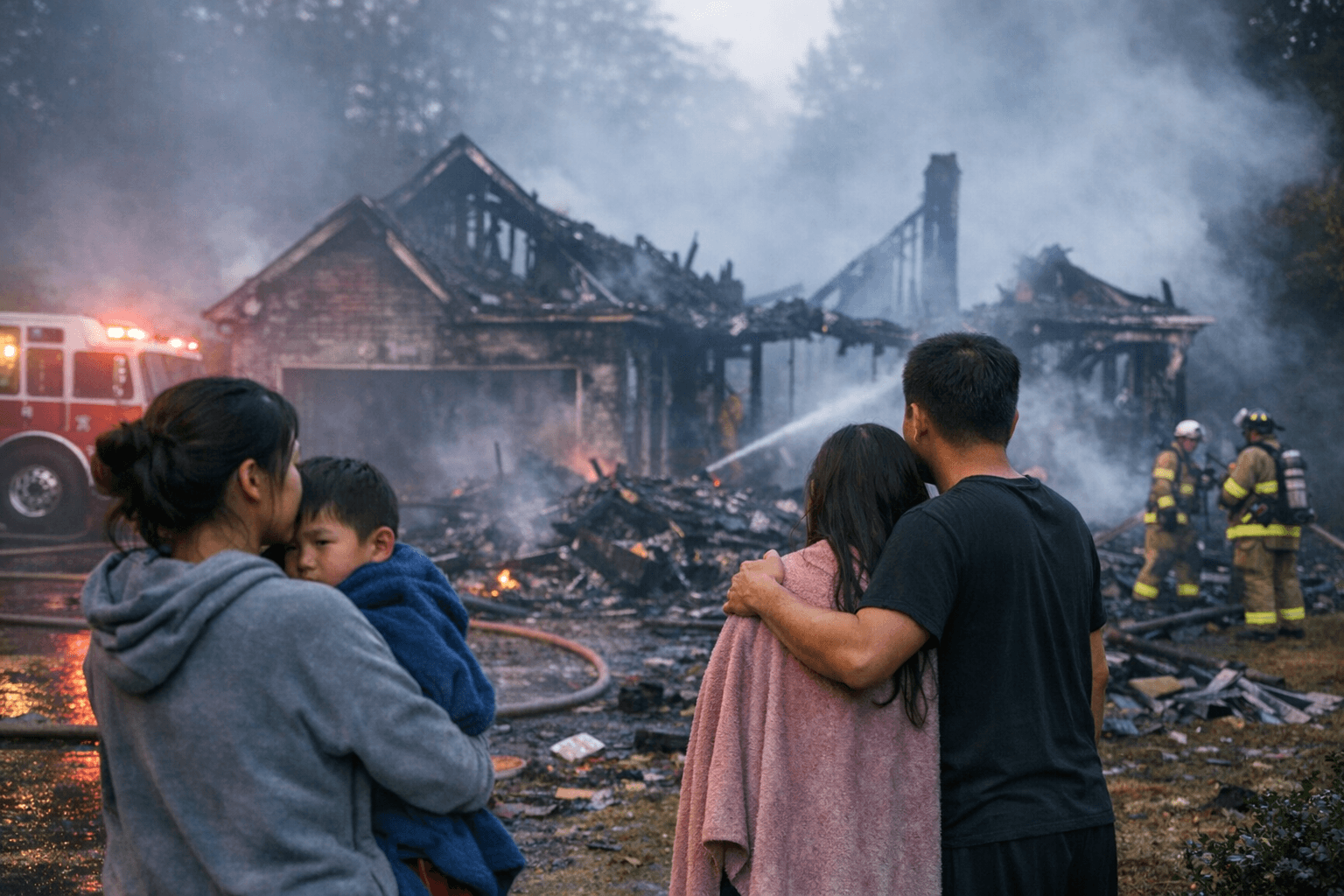
What likely kept this from becoming a fatal fire was speed: neighbors said Cary crews arrived in roughly five minutes. That rapid response, combined with the family's ability to evacuate, meant smoke inhalation rather than burn injuries drove the hospitalizations. Police told WRAL no one was seriously hurt.
Han told WRAL the home is a total loss: "It's completely burned down and melted. The refrigerator, TV, all of the stuff, is melted down." The family now faces the layered work of insurance claims, temporary housing, and replacing belongings that no policy can fully account for. Fire safety officials consistently point to three measures that change outcomes in garage fires: working smoke detectors mounted inside the garage and adjacent living spaces, a household evacuation plan practiced in the dark, and up-to-date home inventory documentation stored digitally off-site so insurance claims can be filed without relying on memory.
Cary fire investigators are expected to release a formal cause determination after completing their origin-and-cause analysis.
This article was produced by Prism’s automated news system from verified source data, official records, and press releases, then run through automated quality and moderation checks before publishing. The system is built and supervised by the people who set the standards it runs under. Read our full AI policy.
Did this article answer your question?