Cary invites residents to weigh in on upcoming budget process
Cary residents weighed taxes, trash fees and utility costs as the town opened FY2027 budget talks at the Senior Center.
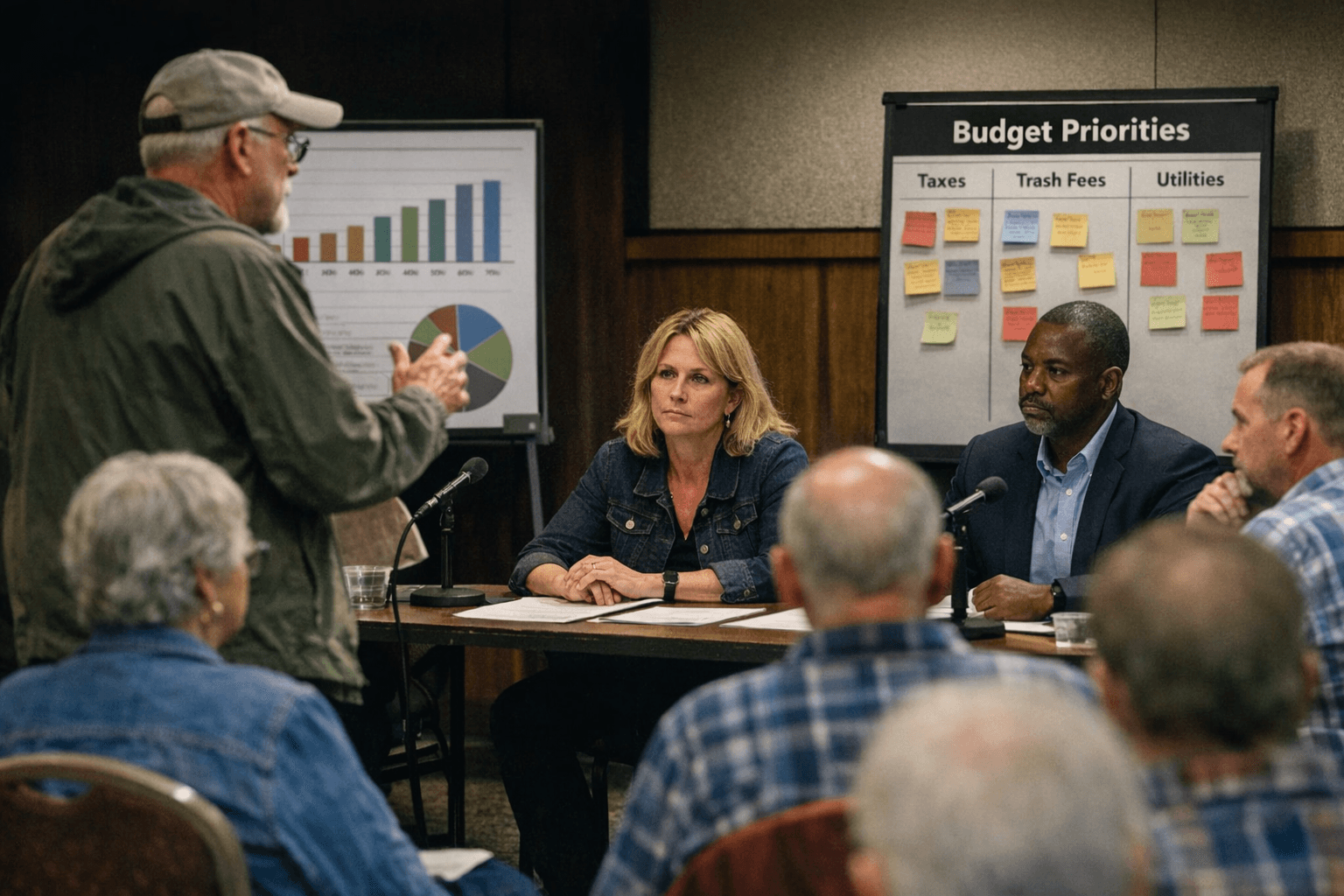
Cary residents got a direct look at how next year’s budget could affect their bills and services, from taxes and trash pickup to utility rates and street upkeep. Town leaders held a Budget Open House on Tuesday, April 7, at the Cary Senior Center ballroom, giving people a chance to drop in from 3 to 7 p.m. without an RSVP and speak with staff before the FY2027 budget is finalized for July 1, 2026.
The town said the event included a repeating budget presentation and interactive booths staffed by departments across Cary. Residents could ask how budget decisions are made, what drives spending, and which priorities are likely to shape the coming fiscal year. That matters in Cary, where the budget is not just a bookkeeping document. It is the plan that helps determine the tax rate, the solid waste fee, utility charges and the level of service residents see on their streets, in their parks and at town facilities.
The open house also came after a difficult stretch for town leadership. Former Town Manager Sean Stegall was placed on administrative leave on November 20, 2025, after concerns that surfaced in an emergency council meeting on December 15. The N.C. Office of the State Auditor first contacted Cary on November 25, 2025, and Mayor Harold Weinbrecht issued a statement on January 12 after the auditor shared concerns with Wake County District Attorney Lorrin Freeman. Freeman then asked the North Carolina State Bureau of Investigation to help examine the matter. WRAL also reported questions around a 2023 hotel expense and a land purchase near Cary Elementary School that cost more than $1 million.
That backdrop gives the budget outreach more weight than a typical civic open house. Cary’s own finance materials show how much is at stake: the town adopted a $510.9 million budget for FY2026, with a tax rate of $0.34, a solid waste fee of $26 per month and a 4% utility rate increase. Town officials have said budget work includes goal-setting, funding sources, revenue and expenditure forecasts, and operational studies, all of which can affect what residents pay and what services they receive.
Cary says the budget process is a year-round effort, with quarterly reports to council and additional chances for public input through public hearings, Cary 311 and Public Speaks Out during council meetings. The April 7 open house was one step in that larger calendar, but not the last chance for residents to push for changes before the FY2027 plan is locked in.
Sources:
Know something we missed? Have a correction or additional information?
Submit a Tip