Revised Raleigh plan could raise downtown parking rates by August 1
Downtown Raleigh drivers could face higher meter, garage and monthly parking costs by August 1, with on-street rates rising 25 cents an hour under the revised plan.

Downtown Raleigh parking could get pricier in every major category if the City Council signs off on a revised plan that would take effect August 1, 2026. Under the latest proposal, most on-street spaces would rise from $1.25 an hour to $1.50, non-event garages would jump from $2 an hour and a $14 daily maximum to $3 an hour and a $21 daily maximum, and event garages would climb from $3 an hour and a $15 daily maximum to $4 an hour and a $24 daily maximum. Monthly parking would also rise from $125 to $135.
City officials say the higher rates are tied to a parking system that manages about 11,000 downtown spaces and still faces a multi-million-dollar gap between revenue and operating needs. That shortfall covers maintenance, security, operating costs, payment processing and debt tied to deck loans. Staff first laid out a range of options in a March work session, then brought a revised version back after Council and community feedback.
The city’s newer plan appears to back away from some of the most unpopular ideas. It no longer calls for ending free parking on nights and weekends, and it would keep employee parking vouchers for small businesses. Raleigh also would continue its two-hour free parking pilot in five city-owned downtown decks, including the City Hall Parking Deck, Moore Square Deck, Blount Street Deck, Wilmington Street Station Deck and City Center/Red Hat Parking Deck, through June 30, 2026.
That pilot has become a major part of the debate over whether parking should be treated as a downtown economic tool. City data says the program began on November 15, 2024, and produced roughly a 28% monthly increase in hourly vehicle usage. A Downtown Raleigh Alliance survey found 88% of respondents were more likely to visit downtown because of the free parking, while 91% of storefront businesses said it had a positive impact on business health. Support for making the pilot permanent was also strong, with 95% of community respondents and 97% of storefronts in favor.
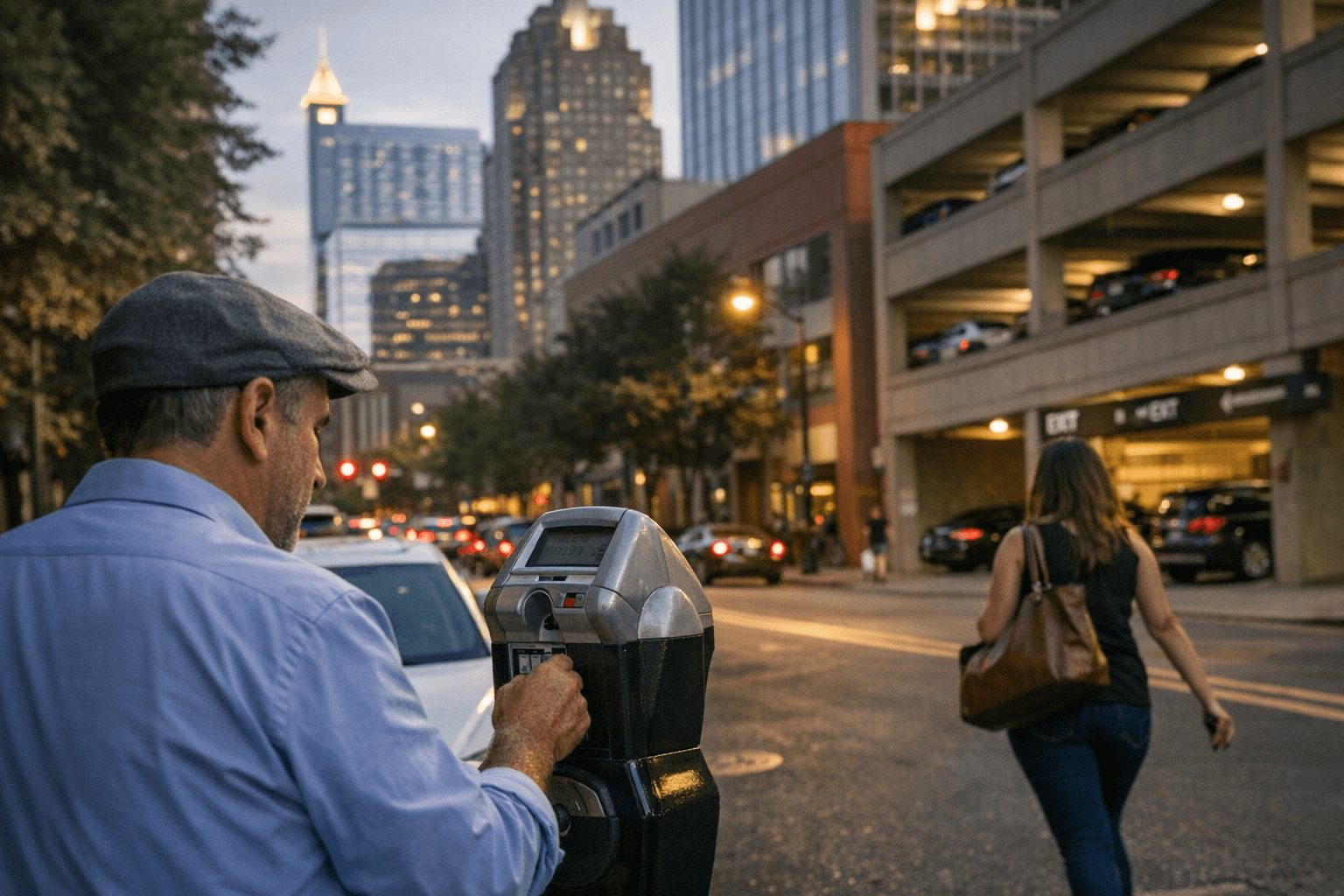
That history is part of why downtown business owners have pushed back against sharper rate increases. A higher meter rate may sound modest, but the difference adds up for workers who park every day, restaurant customers who stay a few hours, and small businesses that rely on steady foot traffic. The city’s revised package would also generate less money than some earlier ideas, with WRAL reporting up to $5 million a year in new revenue, while The News & Observer reported the city expected nearly $1.8 million, still well below the parking program’s roughly $8 million deficit.
The city’s argument is straightforward: downtown parking is scarce, costly to run and in need of a more sustainable funding model. The counterargument from merchants and commuters is just as clear: higher rates can make downtown more expensive to visit at the very moment Raleigh is still trying to strengthen its core. If the Council approves the plan, August 1 will be the first test of which side of that equation downtown Raleigh feels first.
This article was produced by Prism’s automated news system from verified source data, official records, and press releases, then run through automated quality and moderation checks before publishing. The system is built and supervised by the people who set the standards it runs under. Read our full AI policy.
Did this article answer your question?