Dorothea Dix Park blends Indigenous, enslaved and Raleigh history
Dix Park is Raleigh’s 308-acre civic battleground, free to visit but shaped by Indigenous land, enslaved labor and a $52 million public takeover.
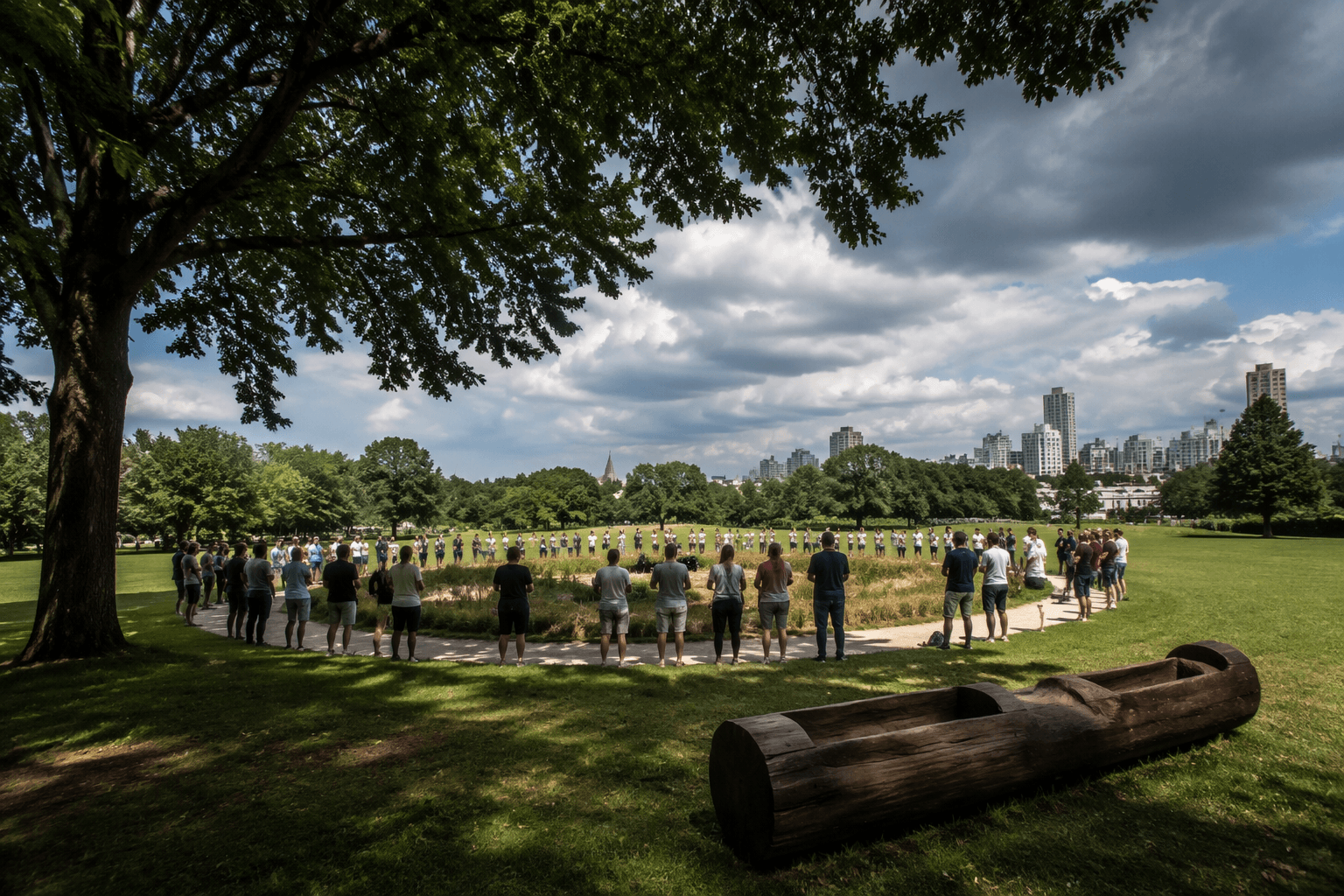
Dix Park is not just a big green space on Raleigh’s edge. It is a 308-acre public asset where Indigenous history, enslaved African American labor, mental-health history and downtown redevelopment all sit on the same ground, and every decision about its future affects who the park is really for.
A park built on layered land
The park’s own land acknowledgment places Raleigh on the border of Tuscarora and Siouan territory and says Native American communities used the land for more than 14,000 years for family life, nourishment, stewardship, justice, ceremony and healing. The history materials also say Indigenous people crossed the site for hunting, gathering and possible cultivation long before the city existed.
That history is inseparable from the plantation era. For roughly 150 years, the land was part of Spring Hill Plantation, worked by enslaved African Americans. The park’s history booklet says English colonists claimed the land in the mid-18th century and developed it as a plantation using the forced labor of generations of enslaved Africans, then sold parts of the plantation to the state during the Civil War to establish North Carolina’s first mental health hospital.
That is why Dix Park carries more weight than a typical city park. It is a public landscape, but also a record of who controlled land, whose labor built wealth, and how Raleigh’s growth was tied to institutions that held immense power over vulnerable people.
What visitors find today
The park’s home page describes Dix Park as “a park for everyone” and says it is free to visit seven days a week. It also calls the property Raleigh’s premier urban park, a 308-acre destination where natural beauty, deep-rooted history and boundless potential come together.
That mix matters on the ground. The park includes the largest adventure playground in the Southeast, along with open lawns, walking routes, event space and the kind of scale that is rare this close to downtown Raleigh. Because the land is not a preserved wilderness but a repurposed former institutional campus, it also invites a different kind of visit: one that blends recreation with reflection.
Interpretive signage and historical walking-tour material help make that possible. The park’s Cultural Interpretation Plan says cultural interpretation is meant to create opportunities for people to connect with a site and its history, and that places like Dix Park matter for what they were in the past and what they are today. In practice, that means a visitor can picnic, walk, attend a program or simply cross the grounds while also learning about the Indigenous, plantation and hospital eras layered into the site.
How the park took shape
The modern park began with a major public land transfer. In July 2015, the City of Raleigh bought the Dorothea Dix property from the State of North Carolina for $52 million. The purchase included the 308-acre site and 85 buildings totaling about 1.2 million square feet.
Planning for the park followed in 2017, when the City of Raleigh and the Dix Park Conservancy worked with Michael Van Valkenburgh Associates and other consultants on the master plan. A 2019 implementation plan said the master plan was presented for City Council review and laid out phase planning for the park, showing that the project was never just a single design exercise but a staged public commitment.
The master plan materials describe a site with mature oak trees, rolling topography, more than 80 buildings in varying condition, a former municipal landfill and a degraded Rocky Branch Creek corridor. They also envision six distinct but interconnected landscapes: the Creek, the Central Park, the Community Park, the Lake, the Athletic Park and the historic core tied to the former hospital campus.
That complexity is part of the park’s appeal and its challenge. Every landscape choice has to work with existing structures, older environmental damage and a site history that cannot be separated into neat categories.
Why the stakes are so high
The City of Raleigh’s 2030 Comprehensive Plan Update says the Dorothea Dix Campus purchase offers an extraordinary opportunity to create a transformational public park that will contribute to the revitalization of downtown Raleigh, nearby neighborhoods, the Triangle region and the state. That is a broad public promise, but it also places heavy responsibility on the city and its partners.
The park is being built through a public-private partnership with the Dix Park Conservancy, and the partnership is meant to balance community aspirations with long-term sustainability. City planning materials say the city was poised to take over responsibility for 85 buildings totaling more than 1 million square feet, a reminder that the park is also a major stewardship burden, not just a design opportunity.
Local politics have shaped that process. WRAL reported in 2019 that Raleigh leaders approved the master plan after more than a year of discussion, public comment and revisions. That drawn-out process reflects the fact that Dix Park is not a blank slate. It is one of the few places in Wake County where debates about preservation, programming and growth are happening on land that already holds so many meanings.
A living cultural site, not a static memorial
The park’s public identity keeps evolving through events that make its histories visible. In August 2023, the Dix Park Conservancy announced a third annual inter-tribal pow wow for Aug. 26, 2023, bringing together North Carolina tribal members for dancing, music, food, vendors and community gathering. That kind of program turns the park into an active cultural venue, not just a place where history is explained on signs.
In February 2023, ABC11 reported on efforts to record the untold Black history at Dix Park, including the fact that the site had once been home to dozens of enslaved people. Speakers involved in that effort said the goal was to uncover the land’s origin stories so people could understand how they are connected to the site.
That work matters because the park’s future will be measured by more than lawns and playgrounds. Dix Park is becoming one of Raleigh’s defining public places precisely because it holds Indigenous memory, the trauma of slavery, the legacy of the state’s first mental health hospital and the ambitions of a fast-growing capital city in the same frame.
This article was produced by Prism’s automated news system from verified source data, official records, and press releases, then run through automated quality and moderation checks before publishing. The system is built and supervised by the people who set the standards it runs under. Read our full AI policy.
Did this article answer your question?