House Fire on Long Neck Court Displaces Raleigh Family, HVAC Area Investigated
A Dec. 15 house fire on Long Neck Court in Raleigh damaged the interior of a home and left a family temporarily displaced after responders determined the blaze began in and around the home's HVAC unit. No injuries were reported, but the incident underscores local concerns about equipment maintenance, fire prevention, and support for households affected by residential fires.
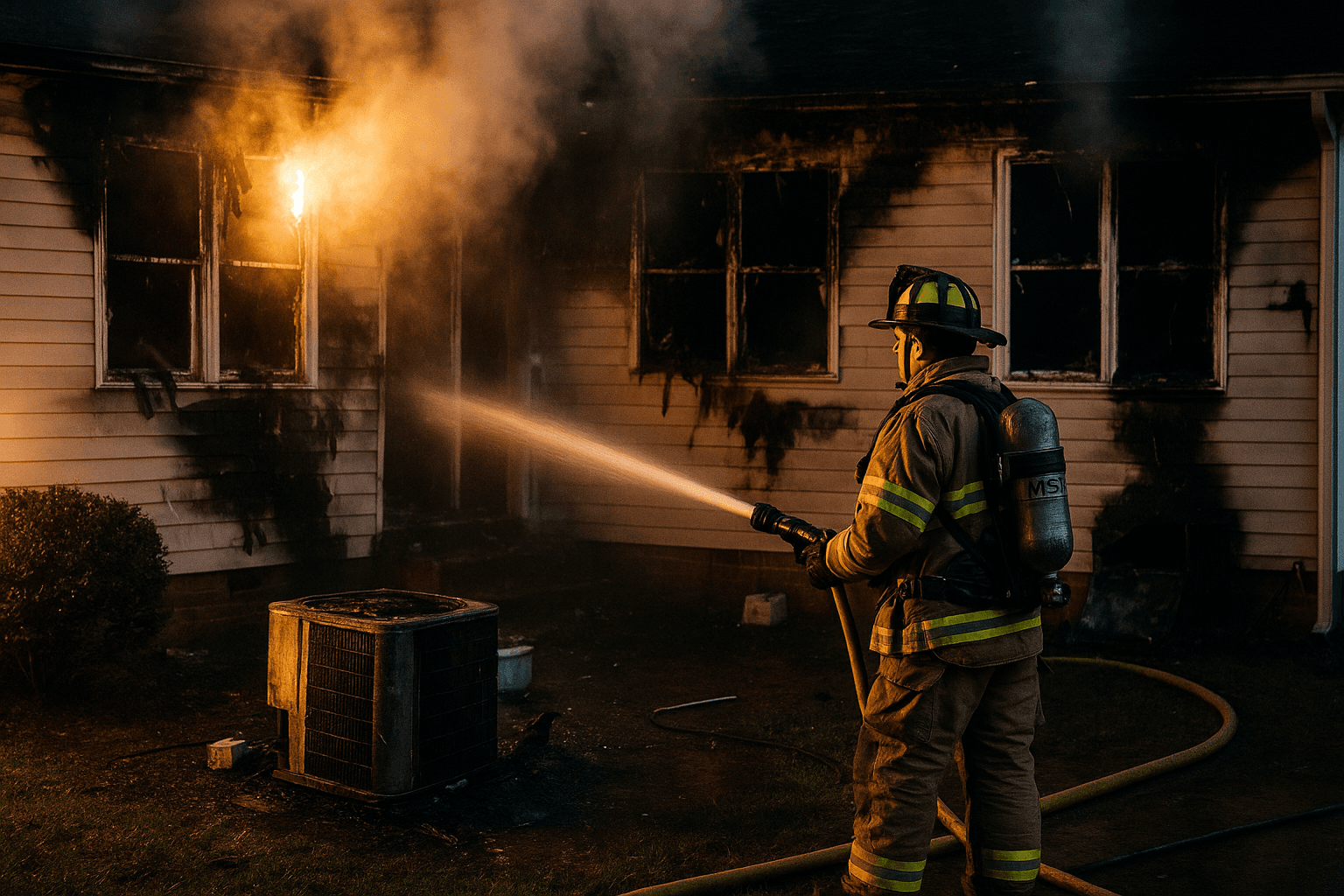
Fire crews responded to a residential blaze on Long Neck Court in Raleigh on December 15 after initial reports indicated the fire originated in and around the home's HVAC unit. First responders contained the flames and extinguished the fire, and Raleigh Fire Department officials reported that the interior sustained mostly water and smoke damage. No injuries were reported. The family affected by the fire has been displaced and is staying with friends while investigators examine the HVAC area as a potential origin point.
The immediate impact on the household is displacement and property damage that is likely to require significant cleanup and repair. Water used to suppress the fire contributed to interior damage in addition to smoke infiltration, compounding restoration needs. Because the incident involved mechanical systems rather than an obvious external ignition source, the investigation focuses on the HVAC area to determine whether equipment failure, electrical issues, or maintenance lapses played a role.
For Wake County residents this event highlights two practical concerns. First, routine inspection and maintenance of heating and cooling systems matter for both safety and long term costs. Homeowners and landlords should confirm that HVAC units are professionally serviced according to manufacturer and code recommendations, and that electrical connections and clearances meet local standards. Second, functional smoke detection and an evacuation plan remain essential even when a fire appears to begin in utility areas, since smoke and water damage can quickly make a home uninhabitable.
At the institutional level this fire raises questions about outreach and enforcement. Local fire authorities and building inspectors can reduce future risk through targeted education about HVAC safety, clearer guidance on maintenance expectations, and timely review of any inspection records tied to affected properties when investigations indicate equipment involvement. City and county emergency services should also ensure transparent communication about investigation findings and about available assistance for displaced families, including guidance on insurance claims and recovery resources.
Raleigh residents should take the incident as a reminder to document maintenance of critical systems, to test smoke alarms regularly, and to review emergency plans with household members. The fire department's ongoing investigation will determine cause and any recommendations to prevent similar incidents in the community.
This article was produced by Prism’s automated news system from verified source data, official records, and press releases, then run through automated quality and moderation checks before publishing. The system is built and supervised by the people who set the standards it runs under. Read our full AI policy.
Did this article answer your question?