Knightdale residents worry again after new uranium warning in water tests
Knightdale’s latest water notice says the most recent uranium test was safe, but Ashley Hills North’s annual average still sat above the warning level.

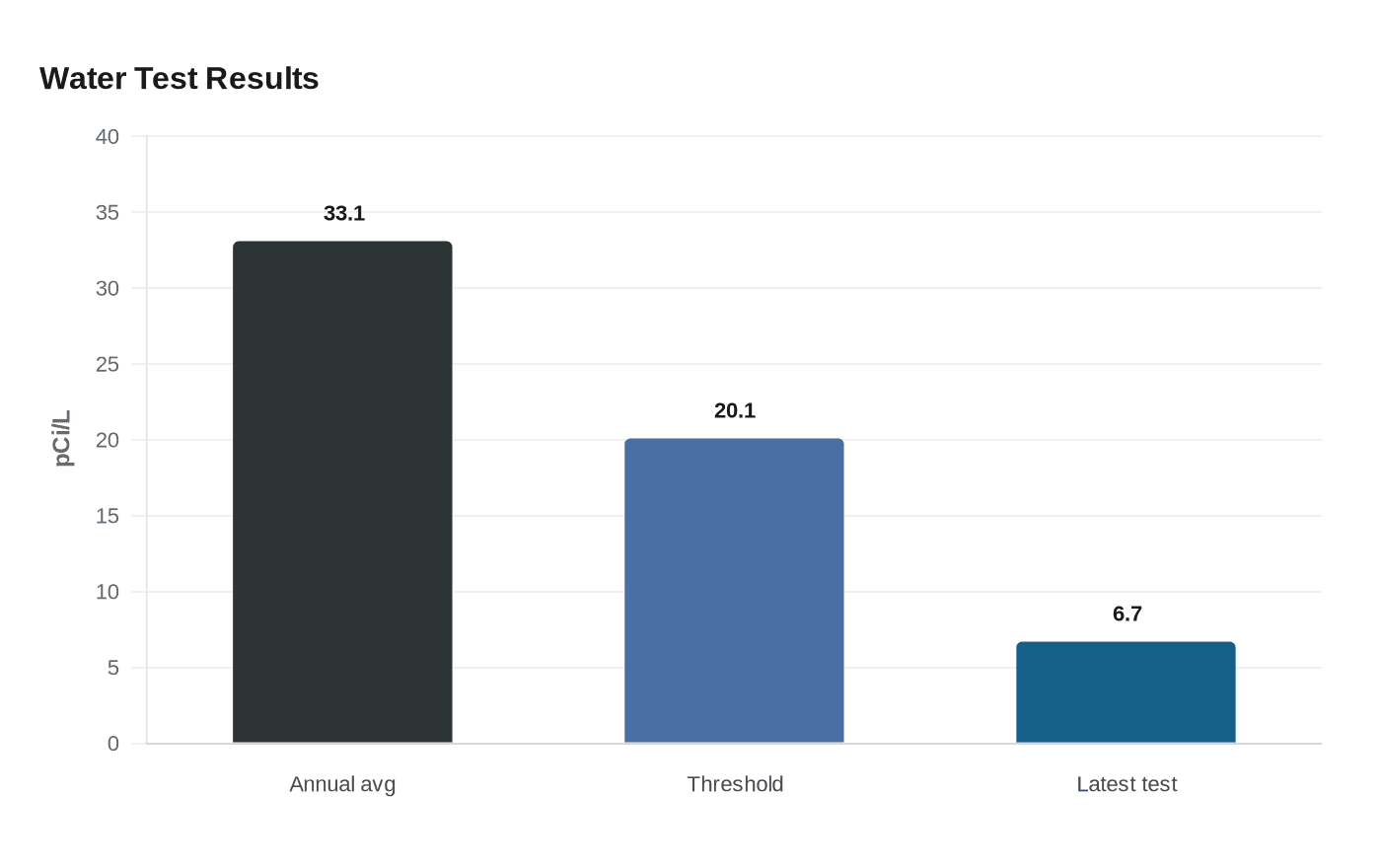
Knightdale families in Ashley Hills North are back on edge after Carolina Water Service sent another uranium warning, even as the utility says the latest sample in the system came back within a safe range. The new letter says the annual average gross alpha reading reached 33.1 pCi/L, above the 20.1 pCi/L threshold listed in the notice, while the most recent test came back at 6.7 pCi/L.
For residents who were already warned in February, the contradiction is hard to shake. That earlier round of testing found uranium at 250 pCi per liter in one notice, a level WRAL reported was 12 times higher than the standard of 20.1 pCi per liter. Carolina Water Service told WRAL then that it had shut off the well tied to the high result, but the latest notice shows how a past spike can continue to weigh on the running average months later.
Taylor Hines, who lives in Ashley Hills North, said she has been buying bottled water for cooking and drinking since the February warning. She said the quarterly update schedule leaves her feeling like she has to monitor the issue herself instead of relying on the utility to settle concerns before they grow.

Carolina Water Service of North Carolina says it used filtration media aimed at uranium and changed the controls at Well 3, where the problem was first detected. Jessica Dey, a company spokesperson, said the annual average should fall as newer, lower results are added after repairs. The company says there is nothing residents need to do right now and that it will keep sending quarterly updates until the readings drop back inside regulatory limits.
The numbers matter because drinking-water compliance is based on averages, not just one sample. The U.S. Environmental Protection Agency’s radionuclides rule sets a gross alpha limit of 15 pCi/L, excluding radon and uranium, and a uranium limit of 30 µg/L, with compliance measured by a running annual average. North Carolina also regulates drinking-water systems and posts public water data and notices through the North Carolina Department of Environmental Quality and its Division of Water Resources.
For Ashley Hills North, that means the system may be improving while trust remains damaged. Families are still weighing whether to use the tap, whether to keep buying bottled water, and whether the well that triggered the first warning in February has truly been brought under control.
This article was produced by Prism’s automated news system from verified source data, official records, and press releases, then run through automated quality and moderation checks before publishing. The system is built and supervised by the people who set the standards it runs under. Read our full AI policy.
Know something we missed? Have a correction or additional information?
Submit a Tip