Medical examiner: WakeMed Garner officer shot with own weapon
A medical examiner says Roger Smith was killed with his own service weapon, sharpening questions about how a fight inside WakeMed Garner turned deadly.
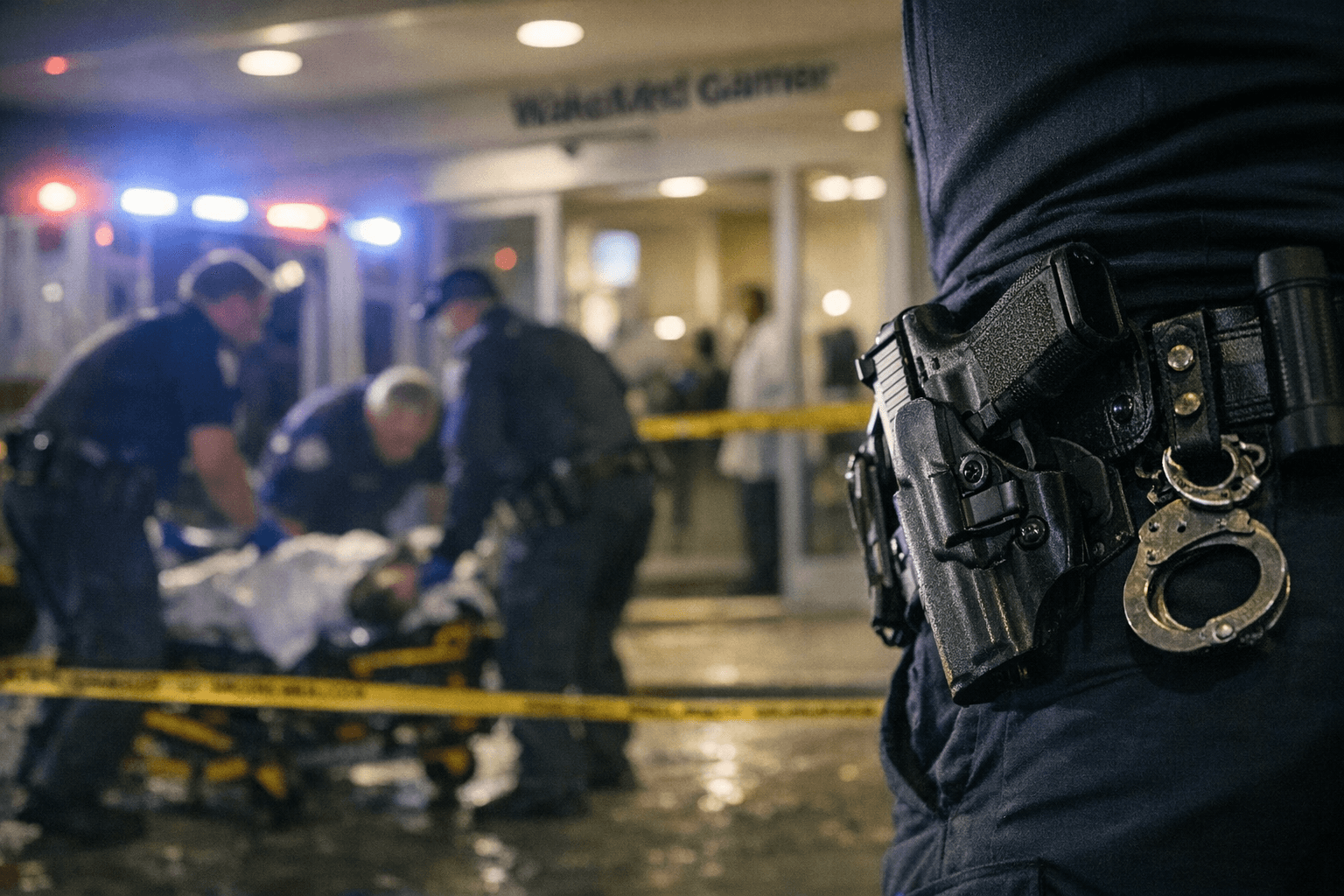
A medical examiner’s finding that WakeMed Campus Police Officer Roger Smith was shot with his own service weapon has deepened the central question in the Garner hospital killing: how did a struggle in the emergency room end with a 59-year-old officer disarmed inside WakeMed Garner Healthplex?
The North Carolina Office of the Chief Medical Examiner released a report in the case, and updated reporting said the fatal gunfire came from Smith’s own weapon. WRAL reported that the autopsy says Benji Martin Jr. wrestled Smith’s gun away before shooting him. That detail changes the public understanding of the confrontation and adds another layer to a case that has already drawn close attention across Wake County.
Smith was shot during the November 2025 incident at the WakeMed Garner Healthplex emergency room area, just off U.S. Highway 70. Authorities had said a struggle broke out before he was shot. CBS 17 reported that the patient was described as acting erratically before the fight began in the emergency department area. WakeMed said Smith was working in the emergency department lobby when the struggle ensued. He later died from his injuries at WakeMed Raleigh on New Bern Avenue.
The shooting happened around 9 a.m. on Saturday, Nov. 8, 2025. Garner police charged Benji Martin Jr., who was 29 and from Garner, with murder in Smith’s death. Martin was also shot during the altercation, hospitalized, and later taken into custody. The sequence described in the medical examiner’s report keeps the focus on how quickly a confrontation in a hospital setting can turn fatal, and on the split-second decisions officers make when confronting a volatile situation.
For Wake County, the case has become a painful reminder that emergency rooms are not only places of treatment but also flashpoints where security, restraint, staffing and weapon-retention practices can determine whether a confrontation stays contained or becomes deadly. Smith’s death also carried a deep local toll. Knightdale police described him as a local hero after his death, and Gov. Josh Stein publicly expressed sympathy for Smith’s family and praised officers for protecting the public.
Smith served with the Knightdale Police Department from 1997 to 2013 before spending more than a decade with WakeMed Campus Police. His death remains a stark loss for the law-enforcement community and for the hospitals and public agencies now facing harder questions about how to protect patients, staff and officers in one of the county’s most vulnerable settings.
This article was produced by Prism’s automated news system from verified source data, official records, and press releases, then run through automated quality and moderation checks before publishing. The system is built and supervised by the people who set the standards it runs under. Read our full AI policy.
Did this article answer your question?