WakeMed Saves $7 Million by Centralizing Medical Device Management With PartsSource
WakeMed cut $7M in costs, roughly $7,200 per hospital bed, by centralizing device management across its 38,000-device Raleigh health system.

A single CT scanner going dark for 24 hours can force a hospital emergency department to divert patients for an entire day. At WakeMed Health & Hospitals, which runs 970 beds across the Raleigh region and tracks more than 38,000 devices, managing that kind of risk once meant juggling a sprawling patchwork of service contracts, in-house repair crews, and ad hoc vendor calls with no unified line of sight across the fleet.
WakeMed announced April 8 that its multi-year partnership with Cleveland-based PartsSource has delivered measurable, system-wide improvements in clinical asset performance, including reduced service costs, improved equipment uptime, and real-time visibility. The results include $7.02 million in cumulative net savings, representing approximately 31% sustained annual savings. That works out to roughly $7,200 per licensed bed. The partnership also drove a roughly $900,000 reduction in service-cost variability after WakeMed centralized its clinical asset management and service orchestration.
"Healthcare organizations don't have a parts problem or a service problem — they have a control problem," said George Reed, WakeMed's director of clinical engineering. "We now operate with real-time visibility and coordinated decision-making across our entire fleet. That changes how we manage uptime, cost, and capacity."
The mechanism behind those savings starts with the scale of the problem. A PartsSource analysis shows hospitals manage an average of 146 service contracts, often representing more than half of a clinical engineering department's budget, without a unified, independent system of control. WakeMed dismantled that fragmentation by deploying PartsSource PRO and the PartsSource Command Center, giving its clinical engineering team real-time visibility into equipment health, utilization, and service status across multiple sites and vendors simultaneously.
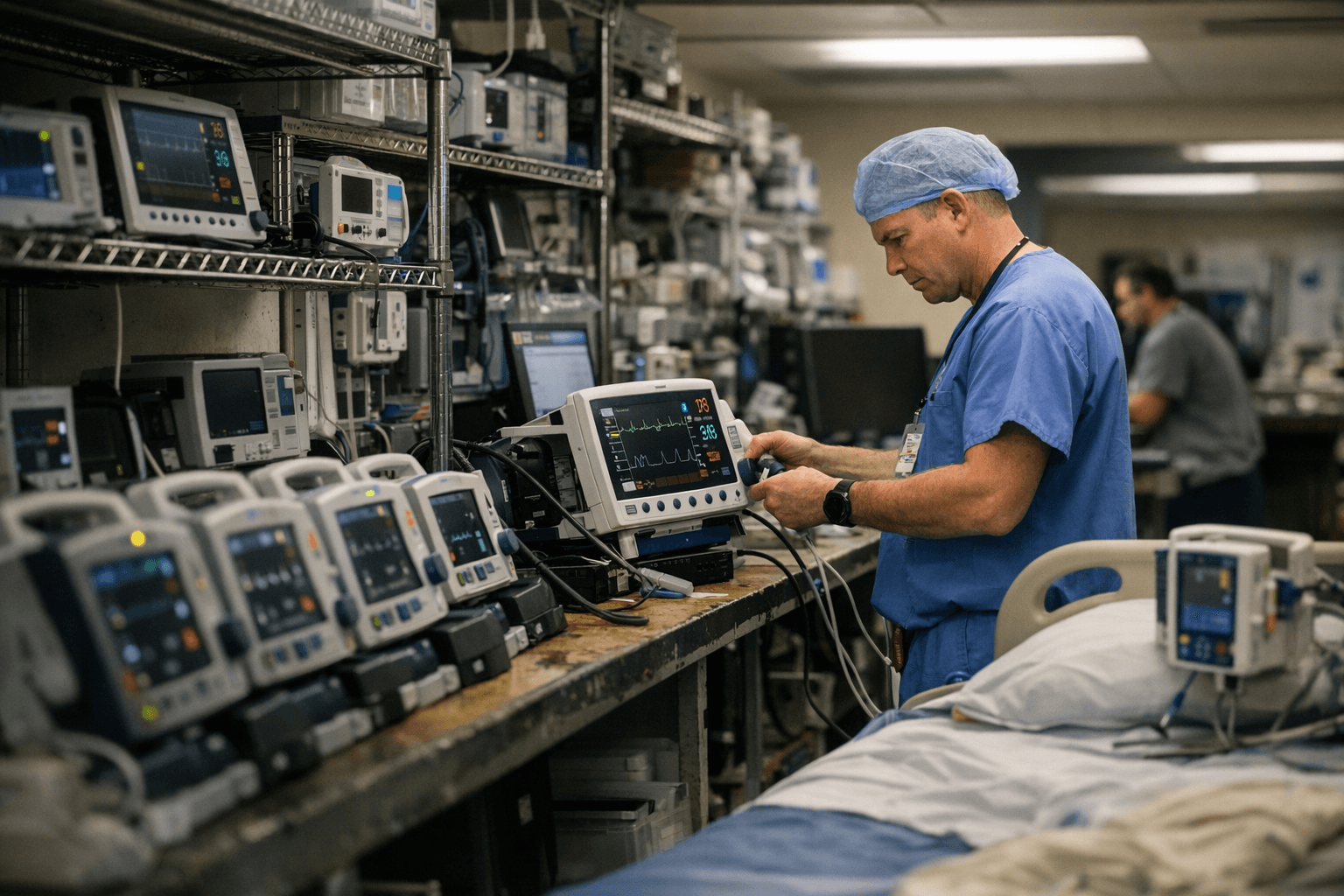
For high-stakes equipment like imaging systems, the difference is concrete. Under the old model, a malfunctioning MRI or CT scanner would trigger a reactive scramble: locate the right vendor, confirm contract coverage, order parts from separate suppliers. Under the Command Center's unified dashboard, technicians can see performance metrics shifting before a machine fails, source the most cost-effective repair option across competing vendors, and schedule maintenance proactively. Fewer surprise breakdowns mean fewer canceled scans and fewer patients rescheduled at the last minute.
Brad Casemore, PartsSource's chief customer and growth officer, described the shift in enterprise terms. "WakeMed is demonstrating what happens when clinical asset performance is managed as an enterprise system," he said.
What WakeMed has not yet specified publicly is where the $7 million goes. The health system has not detailed whether those savings are being reinvested in clinical staffing, capital equipment purchases, or patient-facing services — a distinction that matters directly to Wake County patients. Savings that reduce imaging wait times or fund additional procedure capacity land differently than savings absorbed into operating margins. WakeMed's results are set to be highlighted at MD Expo industry events, where other regional health systems will be watching to gauge whether a similar consolidation could close their own service-cost gaps.
This article was produced by Prism’s automated news system from verified source data, official records, and press releases, then run through automated quality and moderation checks before publishing. The system is built and supervised by the people who set the standards it runs under. Read our full AI policy.
Did this article answer your question?