NWS Raleigh warns hot cars can kill children during heat wave
Wake County is under dangerous heat, and NWS Raleigh says a closed car can turn deadly in minutes. North Carolina has recorded 43 pediatric vehicular heatstroke deaths since 1998.
Leaving children or pets in a closed vehicle on a warm day can quickly become deadly. Central North Carolina was under a Heat Advisory on June 18, with heat index values forecast to reach 108 degrees in Wake County and 19 other counties. NWS Raleigh’s heat page includes heat-risk tools, heat-index outlooks, Wet Bulb Globe Temperature, or WBGT, forecasts and Spanish-language safety materials.
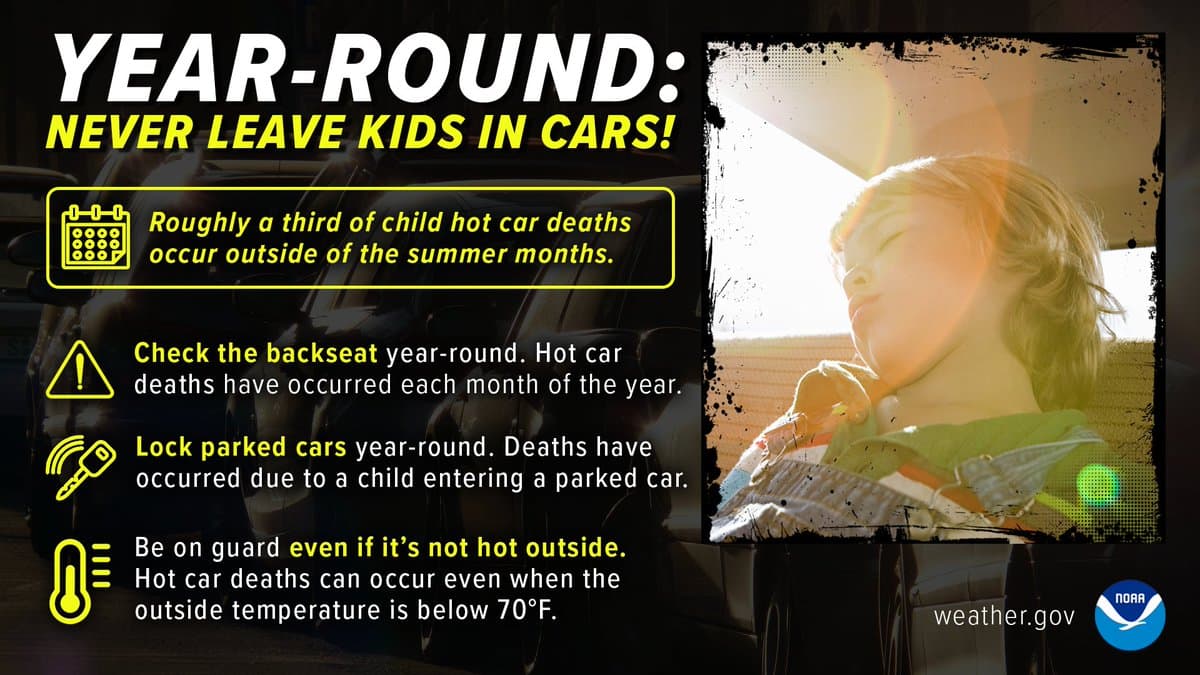
That danger can build during a daycare drop-off, a grocery run or a few quick errands. NHTSA says a vehicle interior can rise 20 degrees in as little as 10 minutes and 50 degrees in an hour, a child’s body temperature rises three to five times faster than an adult’s, and even a cool 60-degree day can turn deadly if a child is left in a hot car.

NHTSA says more than 1,010 children died in hot cars from 1998 through 2024. No Heat Stroke says North Carolina has had 43 pediatric vehicular heatstroke deaths since 1998, and that more than half of these deaths involve children under age 2. Kids and Car Safety says at least 1,180 children have died in hot cars in the United States since 1990, and at least another 7,500 have survived with injuries.
Never leave a child in a vehicle unattended for any length of time, check the entire car, especially the back seat, before locking the doors, keep keys and fobs out of a child’s reach, and ask a child care provider to call if a child does not show up as expected. Parking in the shade or cracking a window does little to keep a vehicle cool.
If a child is seen alone in a hot car, call 911 immediately and get help at once. Wake County’s Cool for Wake program may help eligible residents with fans and air-conditioning units, and cooling centers, libraries and community centers can offer air-conditioned relief during extreme heat.
This article was produced by Prism’s automated news system from verified source data, official records, and press releases, then run through automated quality and moderation checks before publishing. The system is built and supervised by the people who set the standards it runs under. Read our full AI policy.
Did this article answer your question?