Wake County report ranks housing, healthcare and mental health top priorities
Rent, clinic access and mental health are Wake County's biggest daily-life pressures, and more than 1,200 residents are estimated to be homeless on any given day.
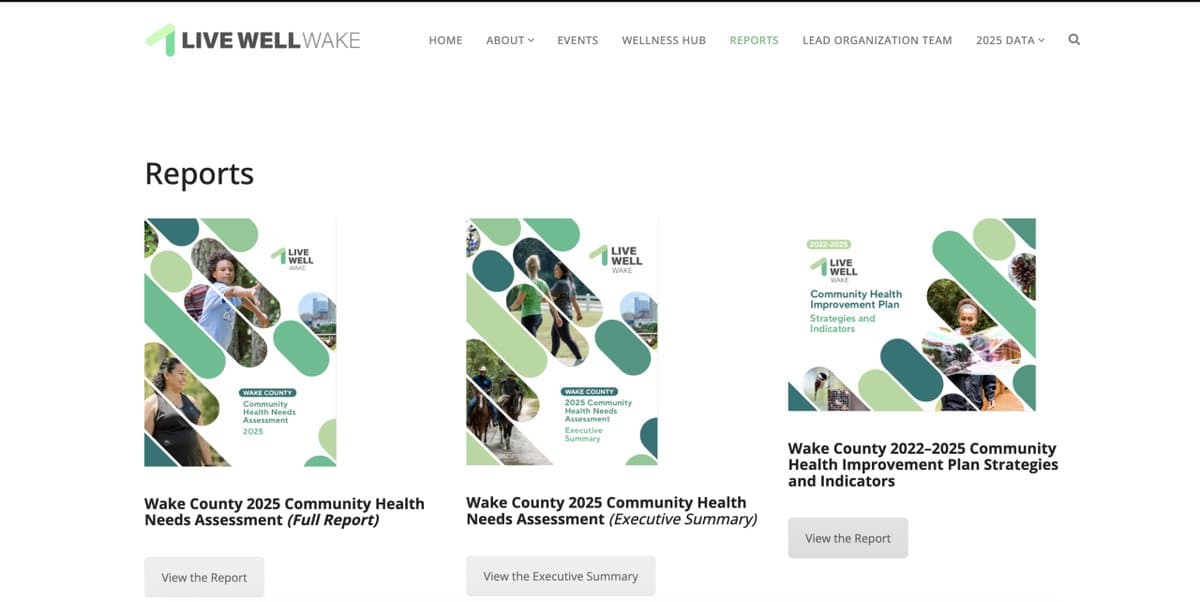
Wake County’s 2025 Community Health Needs Assessment, completed after a year of work from May 2024 through May 2025, puts affordable housing and homelessness, access to healthcare and mental health at the top of the list through 2028. The pressures shaping daily life in Wake County are landing in the same places again and again: rent, the doctor’s office and the mental-health line.
Housing is the first health issue Wake County has to solve
The strongest signal in the assessment is housing. Median housing costs have risen sharply, and a majority of surveyed residents said the county is underperforming on the affordable housing crisis. The county estimates that more than 1,200 residents are homeless on any given day, a number that turns housing from a policy debate into a daily health problem.
When rent eats up a paycheck or families move from place to place, regular care becomes harder to keep, prescriptions are easier to lose track of and stress spikes across households. The assessment treats affordable housing and homelessness as a health priority, not a separate social issue, because stable housing is tied to whether people can stay connected to care.
Wake County Commissioner Vickie Adamson, who co-chairs Live Well Wake, said the issues are “deeply personal” and said the report would help focus efforts and investment.
Access to care still breaks along familiar lines
The healthcare-access findings point to gaps that show up in everyday appointments, not just in broad statistics. Older adults, Black residents and people living in eastern Wake County still face persistent barriers, with cost, language, provider availability and insurance complexity all getting in the way.
Those barriers shape the kind of care people actually receive. A routine visit can turn into a delayed one if a provider is too far away, a specialist is booked out, a language barrier slows communication or insurance rules make the next step hard to navigate. The assessment places those barriers at the center of what is still holding care back in a county that continues to grow.
WakeMed’s 2025-2027 implementation plan will address access to healthcare, mental health and affordable housing and homelessness through expanded primary care, specialty care, virtual care and outreach. The 2025 assessment was a collaborative effort with Duke Raleigh Hospital, WakeMed Health and Hospitals, Wake County Human Services and nonprofit partners.
Mental health remains the place where gaps can turn into emergencies
The mental-health section calls for expanded mobile clinics, crisis response and care for vulnerable groups, including people experiencing homelessness, before a crisis becomes an ambulance run or an emergency-room boarding problem.
Mental health and housing are linked in both directions. A person without stable housing is harder to keep connected to therapy or medication; a person in crisis is less likely to maintain work or housing stability. By naming people experiencing homelessness in the mental-health section, the county is acknowledging that the same residents can end up cycling between shelters, clinics and emergency rooms when services are fragmented.
How Wake County built the assessment, and what comes next
The 2025 assessment was developed with the North Carolina Institute for Public Health using a 12-phase model recommended by the North Carolina Division of Public Health. The process was built from community input and data analysis, with Advance Community Health, Delta Dental, Duke Health, NeighborHealth, the Alice Aycock Poe Center for Health Education, RightCare, Wake County Government, WakeMed Health and Hospitals and other partners involved.
Elaine Loyack of Delta Dental served as co-chair alongside Adamson.
Staff and stakeholders will now begin crafting action plans and will track progress publicly on the Live Well Wake website. The 2019 assessment, completed from March 2018 through April 2019, involved more than 100 agency and community partners, and the 2022 assessment, worked on from June 2021 through April 2022, had to adapt data collection because of the COVID-19 pandemic. Both earlier reports also identified access to healthcare, mental health and affordable housing or homelessness as major priorities.
Wake County Human Services, local hospitals and community partners are required to conduct a community health needs assessment every three years, with State of the County Health reports filling in the years between assessments.
This article was produced by Prism’s automated news system from verified source data, official records, and press releases, then run through automated quality and moderation checks before publishing. The system is built and supervised by the people who set the standards it runs under. Read our full AI policy.
Did this article answer your question?