Raleigh lawmakers file bill to tighten data center oversight and costs
Opponents of a New Hill data center say it could strain power like 10,000 homes, as Raleigh lawmakers move to force big facilities to pay more and disclose more.

A proposed data center in New Hill, near Apex, that opponents say could draw the equivalent of about 10,000 homes helped push Raleigh lawmakers to file a bill aimed at making the biggest facilities pay more, reveal more and absorb more of the costs tied to power and water.
House Bill 1063, the Ratepayer and Resource Protection Act, was filed by House Democrats on April 27 and got its first reading the next day before being sent to the House Rules, Calendar, and Operations Committee. Rep. Lindsey Prather, D-Buncombe, is leading the effort as local backlash grows across North Carolina and more communities confront where large data centers should go, how much they should use and who should pay for the infrastructure they require.
The proposal would target facilities with a projected peak electricity demand of 40 megawatts or more, or annual water consumption above one billion liters. Those qualifying data centers would have to get at least 25% of their power from non-carbon-emitting generation, publicly report electricity use, peak demand, water consumption, cooling systems and emissions-free generation, and cover the energy and water infrastructure costs tied to their operations. The bill would also limit state and local incentives for the projects.
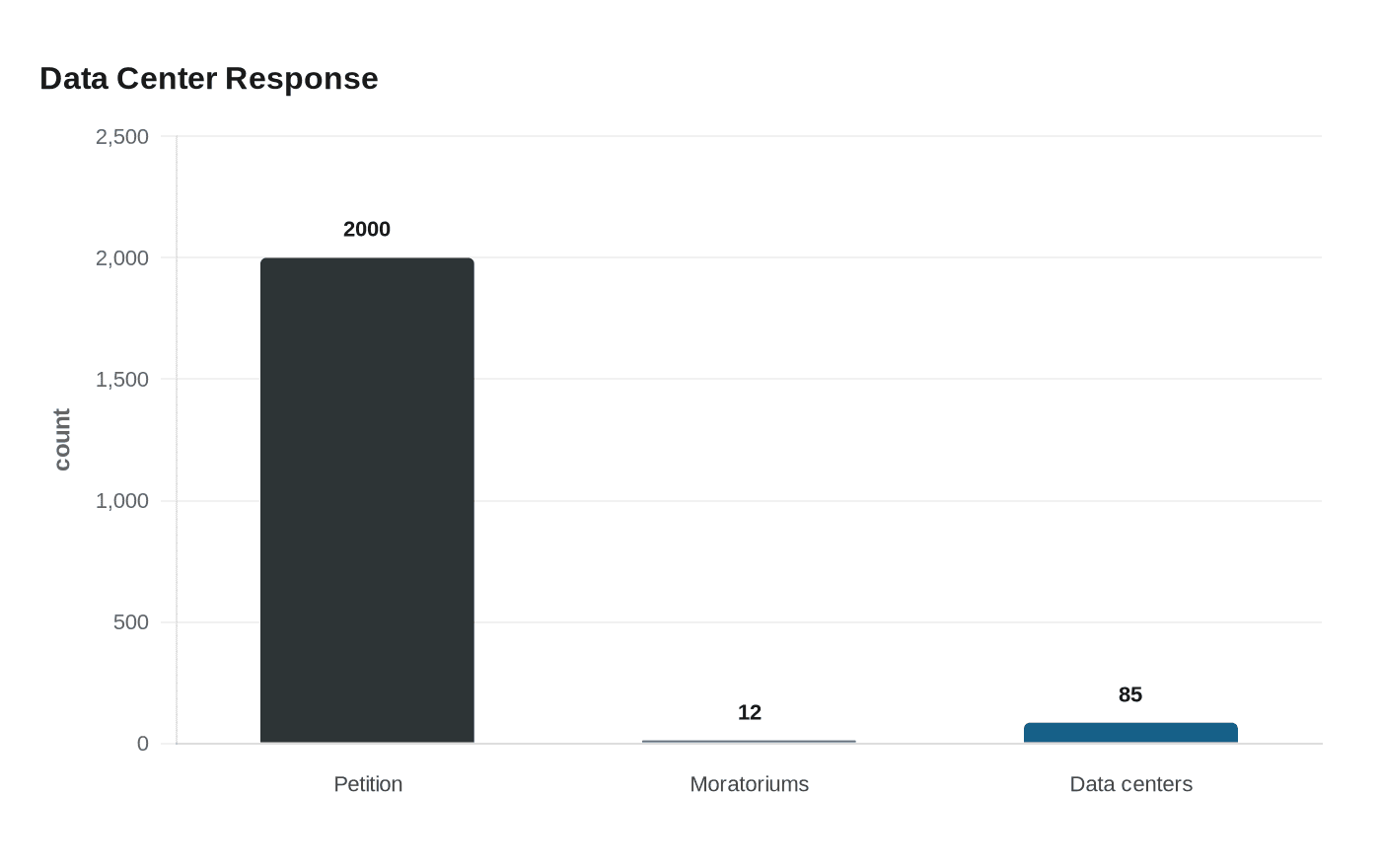
The political pressure is already spilling into Wake County. Nearly 2,000 people signed an online petition against the New Hill proposal, where residents have raised alarms about grid strain and higher electric bills. Across North Carolina, roughly a dozen local governments have already adopted moratoriums while they write land-use rules for data centers, a sign that many towns and counties are trying to get ahead of proposals that can land near neighborhoods before local standards are in place.
Gov. Josh Stein has turned the issue into a statewide affordability argument, saying planned data centers could produce about $450 million in annual sales tax exemptions if all projects move forward. He has also said a 300-megawatt data center can use as much electricity as about 200,000 North Carolina homes running nonstop, a comparison that has sharpened concerns about what residential customers may ultimately absorb. Duke Energy says it has mechanisms to allocate costs fairly, but it also acknowledges that grid improvements are generally spread across the customer base over time.
The fight now stretches beyond Wake County. Charlotte City Councilwoman Dimple Ajmera has called for a temporary moratorium near residential neighborhoods, warning about noise, water use and energy demand, and saying some projects are being proposed in Black and brown communities close to homes. The debate lands in a state that already had at least 85 data centers and still offers sales tax exemptions for data center electricity and equipment, benefits first enacted in 2006 and expanded in 2015.
This article was produced by Prism’s automated news system from verified source data, official records, and press releases, then run through automated quality and moderation checks before publishing. The system is built and supervised by the people who set the standards it runs under. Read our full AI policy.
Did this article answer your question?