Wake County unsheltered homelessness doubles as housing costs rise
Unsheltered homelessness in Wake County has doubled since 2020, and the most visible pressure points are camps, shelter waits and encampments near Raleigh’s roads and parks.
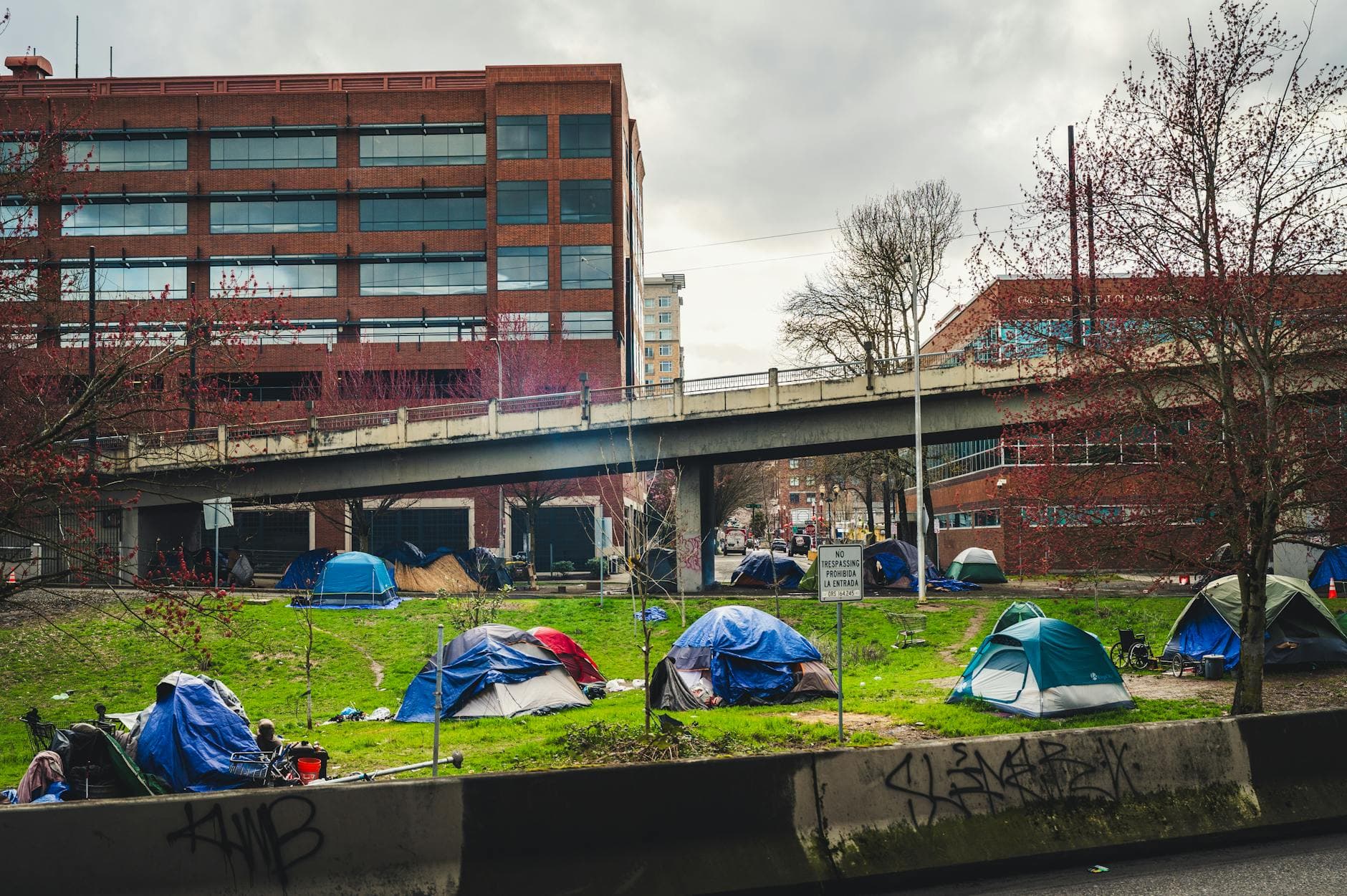
Raleigh says unsheltered homelessness in Wake County has doubled since 2020, a rise that is playing out in city parks, along the beltline at Capitol Boulevard and near the Raleigh-Garner border as housing costs push more people outside. The city has linked the trend to an affordability crisis that is forcing more residents into encampments on public and private land.
The strain shows up in Wake County’s own homelessness counts. The 2024 Point-in-Time count was conducted Jan. 24, 2024, and the Wake County Continuum of Care says the annual snapshot is generally an undercount, meaning the doubling figure likely understates the full scale of the problem. In 2023, 67% of people counted as homeless identified as African-American, and 44% of African-Americans experiencing homelessness were unsheltered, underscoring how sharply the crisis falls on Black residents.
The local system has been building for years, but the numbers suggest need is still outrunning capacity. Wake County launched the Access HUB in 2020 as a one-number line for homelessness prevention, emergency shelter, transitional housing and street outreach. The county approved its first 20-year affordable housing plan in 2017, and Raleigh and Wake County formed a homelessness task force in May 2023 when leaders were dealing with more than 900 people without homes. At the same time, local reporting described 20 active homeless camps and shelters with four- to six-week waitlists.
Wake County’s Unsheltered Facility Study points to the bottlenecks. Single adults make up the bulk of chronic homelessness locally, and single adults experiencing chronic homelessness are five times more likely to be unsheltered. The study also says three out of four unaccompanied youth ages 18 to 24 are unsheltered. Families with minor children may wait 29 to 66 days to reach emergency shelter, then spend 70 to 156 days there once admitted.
Raleigh has moved money into the response, but the gap remains stark. In May 2024, city leaders approved a $5 million pilot program modeled after Houston’s approach, with $3 million for rent assistance and moving people out of camps and $2 million to repair and expand affordable housing options. The city expected the effort to help about 40 people move into permanent housing, even as reporting found 48 homeless camps on city park land and 21 more on land such as the beltline at Capitol Boulevard.
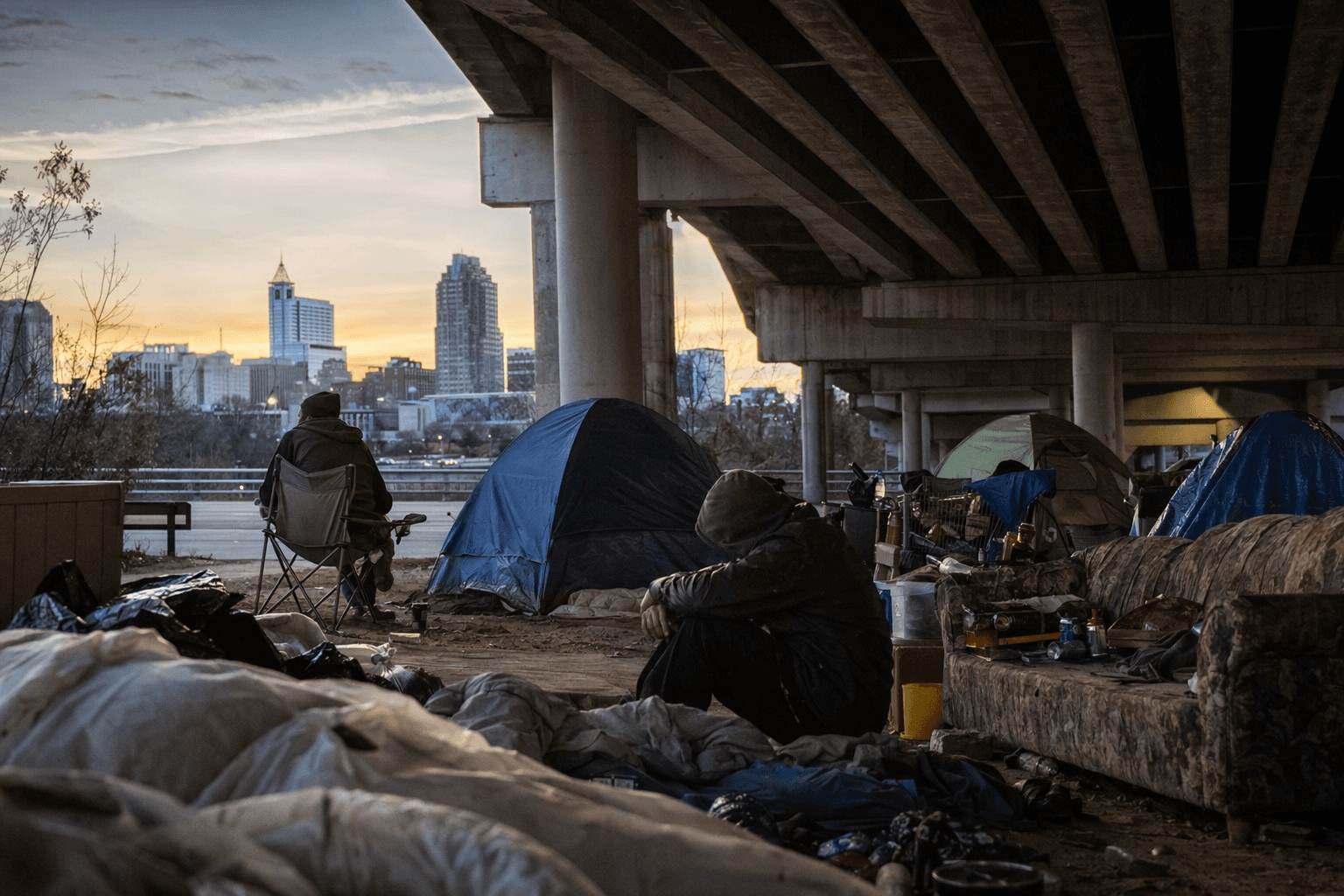
The human toll is visible in places like the Raleigh-Garner border, where one encampment held about 30 tents and 40 people who had nowhere else to go. Tristin Taylor’s case shows how fragile that situation can be: The Cooper Foundation stepped in with a housing stability grant to cover her first month’s rent, security deposit and last month’s rent after she fell into homelessness following debilitating migraines and job loss. Raleigh’s 2026-2030 Affordable Housing Plan now describes the city as facing an urgent housing affordability and homelessness crisis, and Wake County’s goal of making homelessness rare, brief and one-time remains a long way from the street-level reality.
This article was produced by Prism’s automated news system from verified source data, official records, and press releases, then run through automated quality and moderation checks before publishing. The system is built and supervised by the people who set the standards it runs under. Read our full AI policy.
Did this article answer your question?