Raleigh police urge summer travel safety ahead of busy vacation season
Raleigh police are using a free weekly summer safety series to warn families about hot cars, road-trip mistakes and other preventable vacation hazards.
Before families start piling into cars for beach weekends, out-of-town ball tournaments and long highway drives, Raleigh police are using a free summer safety series at Millbrook Exchange Community Center to push one message: the biggest vacation problems are often preventable. The weekly program runs through Aug. 4 and focuses on the habits that keep trips from turning into emergencies, from checking a vehicle before departure to never leaving children or pets in a hot car.
A free weekly program built for the summer rush
The City of Raleigh’s Summer Safety Series runs from June 2 through Aug. 4, 2026, and the city says the community education program is designed to address seasonal risks as they change through the summer. ABC11 described it as a free weekly effort hosted by the Raleigh Police Department’s Community IMPACT and Engagement Division, and the city says sessions are being held at the Millbrook Exchange Community Center on Tuesdays in June and July.
That structure matters because the series is not a one-time presentation. It is recurring, low-barrier and built to reach residents who may not sign up for formal training but still need practical safety reminders before they hit the road. The Department is pairing the sessions with its 2026 Summer Action Plan, which runs from June 1 through Aug. 31 and is meant to strengthen public safety, build trust with residents and improve quality of life across Raleigh.
What families most often miss before a trip
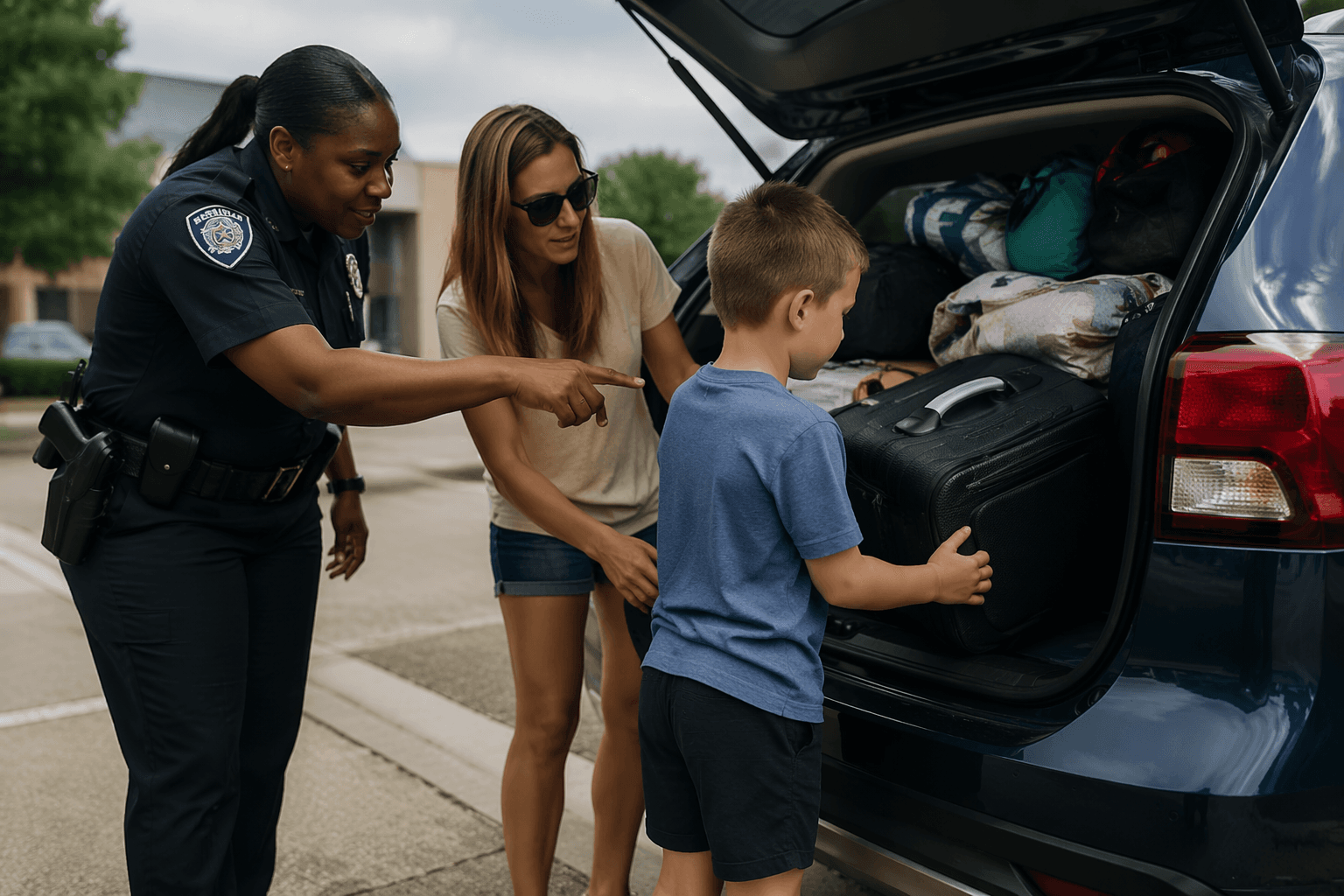
The clearest mistake is assuming a quick departure is a safe departure. The travel-safety session that included Raleigh police and the Wake County Sheriff’s Office centered on the pre-trip basics that are easiest to skip when schedules are tight, especially during one of the busiest travel periods of the year.
Those basics start with the vehicle itself. A long drive in summer heat puts more stress on tires, fluids and air conditioning, and the session emphasized checking the car before leaving town rather than discovering a problem on I-40 or somewhere along U.S. 70. The same advice applies to family logistics: if children are traveling, every seat, buckle and bag should be settled before the engine starts, not after the car is already moving.
Just as important is the danger posed by parked vehicles in North Carolina heat. Raleigh police and other local agencies have repeatedly highlighted the risk of leaving children or pets inside a hot car, even for a short stop, because the temperature inside a vehicle can rise quickly. That message has also been carried beyond Raleigh, with Wake County and Wake Forest scheduling summer safety events focused on hot-car dangers and pet safety.
- Check tire pressure, fuel level and fluid levels before a long drive.
- Confirm car seats and seat belts are properly fitted before leaving the driveway.
- Keep water, chargers and any needed medications within reach.
- Plan rest stops in advance if the trip will run through the hottest part of the day.
- Never leave children or pets in a parked vehicle, even briefly.
A simple pre-trip checklist reduces the odds of trouble:
Why the city is pushing this message now
The summer safety effort comes at the same time Raleigh police are emphasizing a broader public safety push across the city. The Community IMPACT and Engagement Division, which Raleigh says was established in 2025 to increase trust and transparency between police and the community, is at the center of that work. Assistant Director Amanda Rolle said in a city news release tied to the Summer Safety Series that “Public safety is a shared responsibility.”
That framing reflects the way Raleigh is trying to deliver the message, not just the message itself. By placing officers, community educators and partner agencies in a neighborhood space like Millbrook Exchange Community Center, the city is trying to make safety advice feel immediate and usable, rather than abstract. It also gives residents a place to ask questions about the kinds of summer mistakes that often look minor until they become expensive, dangerous or both.
The 2026 Summer Action Plan reinforces that approach. Running from June 1 through Aug. 31, it links crime prevention, community engagement and public safety outreach into a single summer strategy. In practice, that means the city is treating the vacation season not just as a time for fun, but as a period when more people are on the road, schedules are looser and preventable harm becomes easier to overlook.
Local agencies are treating summer travel as a risk season
Raleigh is not the only local agency sounding the alarm. Wake County and Wake Forest have each promoted summer safety events centered on hot-car awareness and pet safety, showing how the issue stretches across the region rather than stopping at city limits. Wake County Public Health, Wake County Animal Services, Wake Forest Police and Wake Forest Fire have all been named in related local outreach, reflecting a wider summer public safety campaign that reaches families, pet owners and drivers at the same time.
North Carolina state officials have added another layer to that warning. The North Carolina Department of Public Safety says summer is a high-travel season for North Carolinians and points to National Highway Traffic Safety Administration crash data in its seasonal guidance. That data-backed framing matters in a state where vacation traffic, weekend trips and long-distance family visits all increase at the same time the heat rises.
For Wake County drivers, the practical takeaway is straightforward. A summer trip does not begin once the car is on the highway. It begins at the curb, with the vehicle checked, the passengers counted and the heat risk taken seriously before anyone pulls away from home.
The habits that actually lower the risk
The recurring theme in Raleigh’s summer messaging is that small habits do real work. A tire check takes minutes. A child headcount takes seconds. A decision not to leave a pet in the car can prevent a crisis entirely. Those are the kinds of moves the city is trying to normalize through the Summer Safety Series, especially in a season when the pressure to hurry is often what causes families to skip the basics.
That is why the city has turned the series into a weekly program rather than a single warning. Between the June 2 start date, the Aug. 4 endpoint, the Tuesday meetings at Millbrook Exchange Community Center and the broader Summer Action Plan running through Aug. 31, Raleigh is building a sustained campaign around the same idea: safe summer travel depends less on luck than on routine preparation.
This article was produced by Prism’s automated news system from verified source data, official records, and press releases, then run through automated quality and moderation checks before publishing. The system is built and supervised by the people who set the standards it runs under. Read our full AI policy.
Did this article answer your question?