Tucson Abduction of Nancy Guthrie Revives Wake County Memories of Janssen Kidnapping
FBI doorbell images of a ski-masked person in the Nancy Guthrie abduction have rattled Wake County residents who recall the 2014 Frank Janssen kidnapping.
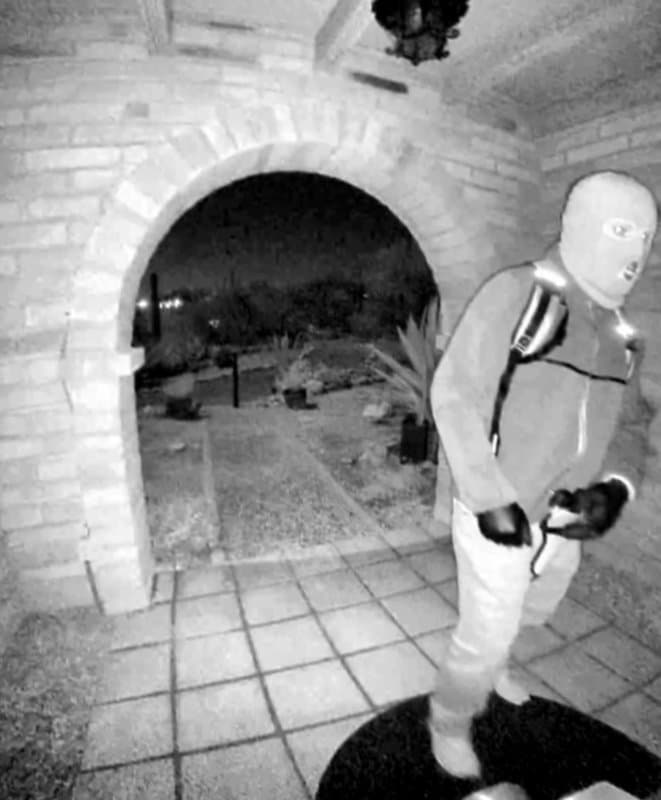
FBI-released doorbell images and video tied to the disappearance of Nancy Guthrie have renewed painful memories in Wake County of a high-profile 2014 kidnapping that drew a massive federal response. Guthrie was abducted from her Tucson, Arizona, home nearly two weeks ago, and investigators on Tuesday released footage from Guthrie’s Nest doorbell that shows a person covered from head to toe, wearing a ski mask and gloves; according to the FBI, the person was armed with a holstered pistol.
The images and the stark detail of a masked, armed intruder prompted local residents to recall the April 5, 2014 attack on Frank Janssen in Wake Forest. That assault culminated in a multiagency manhunt and federal prosecution that many in the Triangle still remember. Luis Velasco, who spent 30 years with the FBI and served as a crisis negotiator on the Janssen case, described the Guthrie incident as intentional. “It was clearly targeted,” Velasco said, and he added that the timing of the image release may reflect technical or investigative necessities: “Velasco says the FBI may only be sharing these photos now because it took time to retrieve them from the damaged doorbell. Or he says there may be a key reason the agency can’t yet share, as this investigation continues.”
Wake County residents draw a direct line between the two cases not because investigators have linked them, but because the images and the apparent brazenness of the Tucson abduction echo the operational intensity of the Janssen rescue. The Janssen case unfolded when a group of kidnappers stormed into Frank Janssen’s home in Wake Forest. The group used a stun gun and pistol-whipped the 63-year-old Janssen. His hands were zip-tied, and he was forced down into the floor of a car, with a kidnapper’s foot resting on his body. A federal indictment later identified the intended target as Colleen Janssen, Frank’s daughter, who had worked as a prosecutor on the conviction of Kelvin Melton, a prisoner at Poke Correctional Institution; Melton was among eight people ultimately charged in the kidnapping and was later sentenced to life in prison for his role.
Investigators in the Janssen matter used cellphone calls and texts tied to Kelvin Melton to hone in on Janssen’s location in Atlanta and to stage a timed rescue. “Cell phone calls and texts between Melton ultimately helped authorities hone in on Janssen’s location in Atlanta and stage a rescue - just in time,” and Velasco recalled the operational response: “Luckily, we had our resources there. We had a SWAT team, we had the hostage rescue team to be able to go in.”

For Wake County the return of that memory underscores two realities: violent crimes can trigger cross-jurisdictional responses that involve local, state and federal resources, and public information released by investigators shapes community perception. Velasco urged calm and confidence in investigators: “I want the public to know that they're really good at what they do, and they have to have optimism,” he said. “And I would say to the family to keep hope and that we're all praying for the family.”
Reporting on the Guthrie disappearance remains fluid. The original posting and update timestamps on the first report list “Posted 2/11/2026, 3:17:46 AM Updated 2/1,” an inconsistency that requires confirmation. For Wake County residents, the immediate implications are clear: follow official FBI and local law enforcement updates, and expect any additional imagery or appeals for tips to shape public understanding as investigators work to resolve the Tucson case.
This article was produced by Prism’s automated news system from verified source data, official records, and press releases, then run through automated quality and moderation checks before publishing. The system is built and supervised by the people who set the standards it runs under. Read our full AI policy.
Did this article answer your question?