Wake County commissioners oppose state property tax cap, warn of school funding cuts
Wake commissioners say a state tax cap could squeeze Wake County schools, EMS and fire protection while saving the average homeowner less than $5 a year.

Wake County commissioners say a proposed state property-tax cap could force painful choices in schools, EMS hiring and fire protection, even though the county’s own FY2026 tax increase cost the average homeowner less than $5 a year.
The Wake County Board of Commissioners voted 7-0 on April 20 to oppose the proposal, which would cap local governments’ authority over property-tax revenue and could trigger automatic cuts in some situations. County leaders said Wake depends on property taxes for about 75% of its budget, making the levy one of the few tools it has to keep up with fast growth, rising school enrollment and demand for emergency services.
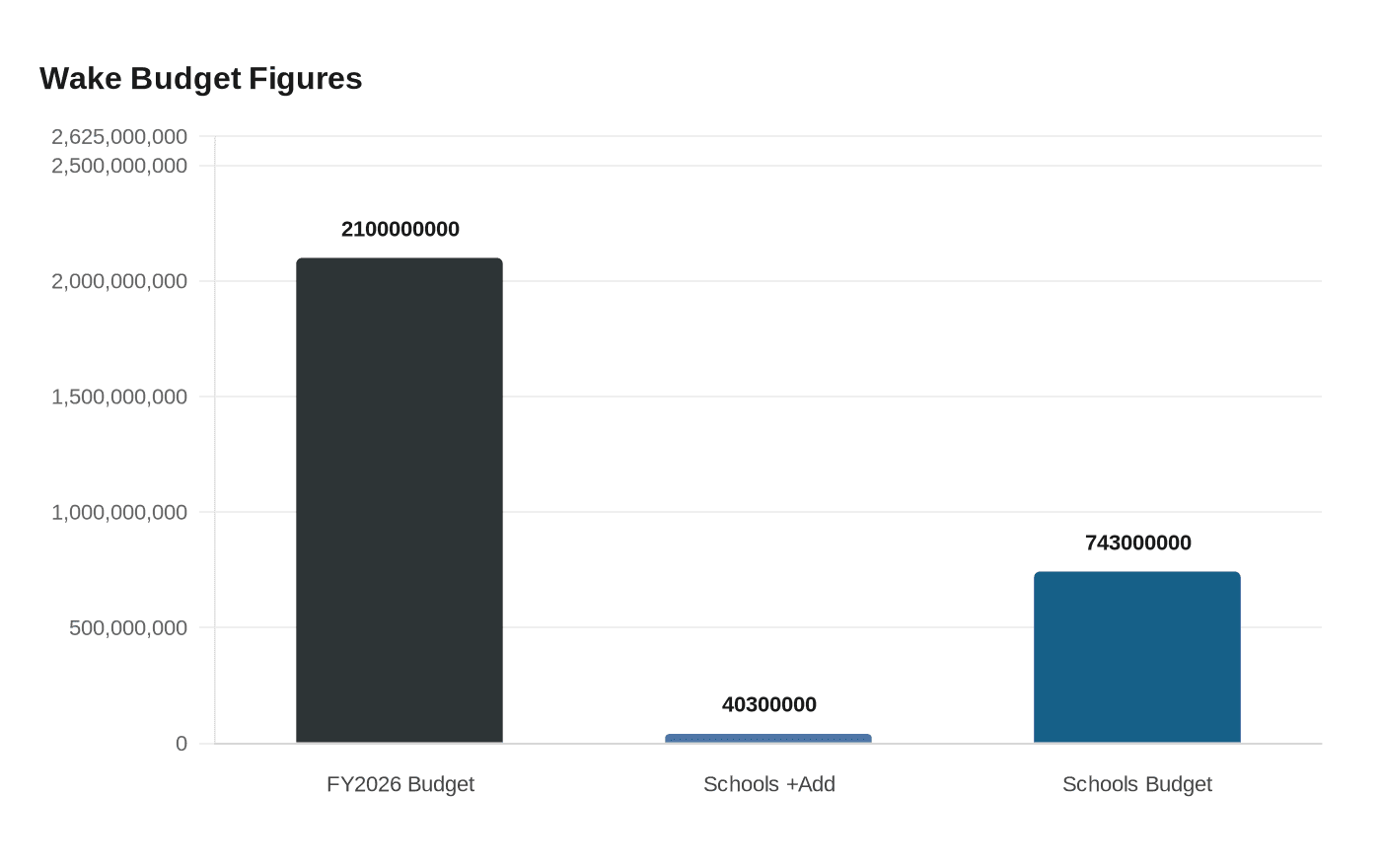
The fight is rooted in numbers Wake residents already felt in the county’s $2.1 billion FY2026 budget adopted June 2, 2025. Commissioners approved a small property-tax increase to fully fund Wake County Public Schools, with county officials saying the change would cost the average homeowner less than $5 a year. That budget added $40.3 million to Wake County Public Schools, bringing the district’s operating budget to nearly $743 million, but it also forced tradeoffs: money was shifted away from affordable-housing land acquisition and some EMS hiring.
The same budget included a 1.5-cent fire-tax increase for households in unincorporated Wake County and Wendell, underscoring how little room county leaders say they have left to balance competing needs. Commissioners argued that a state-imposed ceiling would make those decisions even harder, especially in a county where property taxes are the main revenue source and sales taxes and fees are far less stable.
The proposal moved forward in a North Carolina House committee last week, but it still needs full House and Senate approval with supermajority support before voters could see a constitutional amendment on the November ballot. Supporters say the cap is meant to rein in sharp tax increases after revaluations, including Wake County’s 2024 reassessment, when property values rose by more than 50% on average. County officials say Wake is shifting to revalue every two years, rather than every four, to reduce the size of future spikes.
Wake is not alone in pushing back. Durham and Orange counties have also formally opposed the proposal, and Mecklenburg County commissioners have warned that it would reduce local flexibility and weaken fiscal stability. The broader debate comes as Wake’s biggest property-tax payers are corporate landowners, including drug makers, developers, tech companies and a bank, raising questions about who would benefit most if Raleigh imposes a statewide limit on local tax growth.
This article was produced by Prism’s automated news system from verified source data, official records, and press releases, then run through automated quality and moderation checks before publishing. The system is built and supervised by the people who set the standards it runs under. Read our full AI policy.
Did this article answer your question?