Wiley Nickel vows to shift Wake County marijuana prosecution priorities
Wiley Nickel said low-level marijuana cases would no longer be a top Wake County DA priority, a shift that could spare minor-possession cases from routine prosecution.
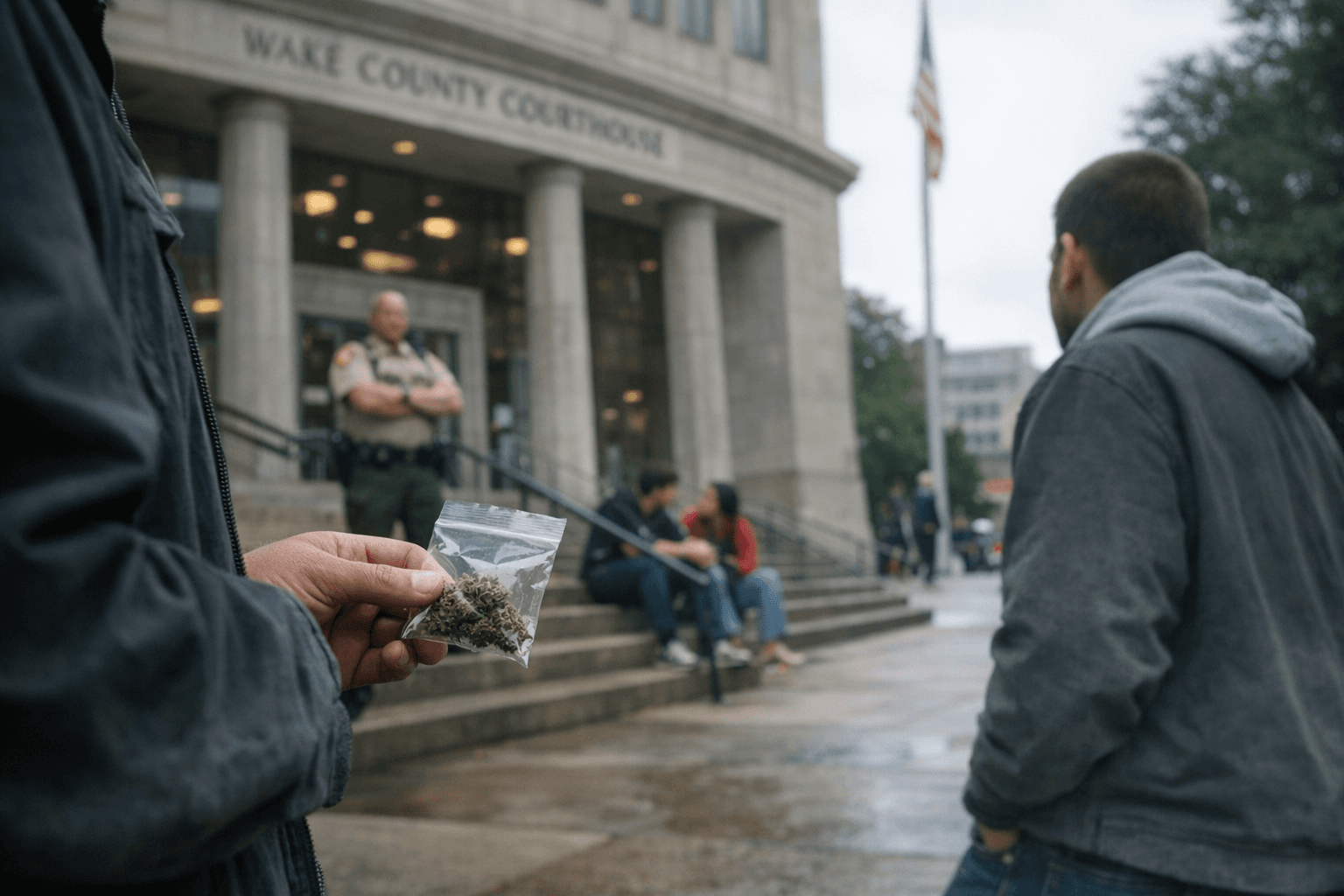
People cited for small amounts of marijuana in Wake County could face a different courthouse response if Wiley Nickel takes over as district attorney, with the unopposed candidate saying his office would put more energy into serious crime.
Nickel said he wants to change how the office handles low-level marijuana cases and redirect prosecutors toward cases that carry greater public harm. “It’s just really about priorities,” he told ABC11. He said he would take office on January 1, 2027, after the November general election, and he plans to meet with law enforcement leaders across Wake County in the coming months.
The practical effect would be felt in Judicial District 10, which covers all of Wake County and includes the Wake County Courthouse in Raleigh. Under North Carolina law, possession of more than one-half ounce of marijuana is punishable as a Class 1 misdemeanor, while smaller amounts are treated more leniently. A policy shift from the district attorney’s office would not change that law, but it could change how often prosecutors choose to pursue lower-level possession cases and how much time and staffing those cases consume.
That matters for defendants, defense lawyers and police officers alike. If Nickel follows through, people found with small amounts of marijuana could be less likely to see those cases treated as a major prosecutorial priority, while more serious charges would receive greater attention. The office would still be expected to represent the state and protect victims’ rights in pursuit of justice, but the day-to-day balance of cases could tilt away from minor marijuana prosecutions.

Nickel’s stance also fits a broader shift already underway. ABC11 reported in 2024 that Triangle-area prosecutors said many offices had already moved away from prioritizing lower-level marijuana charges, even though state law still limits how much discretion they have. On April 22, 2026, the U.S. Department of Justice said it was placing FDA-approved marijuana products and state-licensed medicinal marijuana products in Schedule III, another sign that marijuana policy is moving in a less punitive direction.
The race itself opened after longtime District Attorney Lorrin Freeman chose not to seek reelection. Nickel, who is running unopposed in the general election, has emerged as the likely next top prosecutor in one of North Carolina’s most powerful local legal offices, and his marijuana pledge suggests the bigger shift may be in how Wake County decides to spend its prosecutorial power.
This article was produced by Prism’s automated news system from verified source data, official records, and press releases, then run through automated quality and moderation checks before publishing. The system is built and supervised by the people who set the standards it runs under. Read our full AI policy.
Did this article answer your question?