Wake County Food Pantries Strained by Rising Costs, Surging Demand
Community of Hope Ministries in Garner served 600,000+ meals in 2025; now a 3.4% wholesale price spike is pushing Wake County pantries toward empty shelves.

Community of Hope Ministries in Garner delivered more than 600,000 meals to Wake County residents in 2025, but rising wholesale food costs and surging demand now threaten its ability to keep shelves stocked week to week.
Roughly 12% of Wake County residents face food insecurity, and the organizations serving them are being squeezed from two directions at once. Wholesale food prices climbed 3.4% year-over-year, with vegetable prices rising even more sharply. At the same time, higher rents and healthcare costs have left more households with less money for groceries, pushing seniors, single-parent families, and low-income residents toward emergency food assistance in growing numbers.
Amy White, executive director of Community of Hope Ministries, said the upstream pressure on farm operations feeds directly into what her pantry can afford to purchase. "When you look at the overall costs, operational costs for large farms, we know that impact will trickle down to us and our ability to buy retail," White said.
For clients like Barbara Winston, 78, the difference is felt at every visit. "When I come [to Community of Hope Ministries], everything [in stock] is what I like," Winston said, underscoring how stable pantry supplies directly affect the nutritional quality of meals for seniors living on fixed incomes.
Community of Hope is one node in a countywide network that includes the Food Bank of Central and Eastern North Carolina and smaller pantries serving neighborhoods in Raleigh, Cary, Apex, and Wake Forest. Each operates on thin margins, drawing on donated goods, purchased staples, and a mix of public and private grants. When wholesale prices rise, the purchasing power of those grants and the value of typical food donations shrink at the same time.
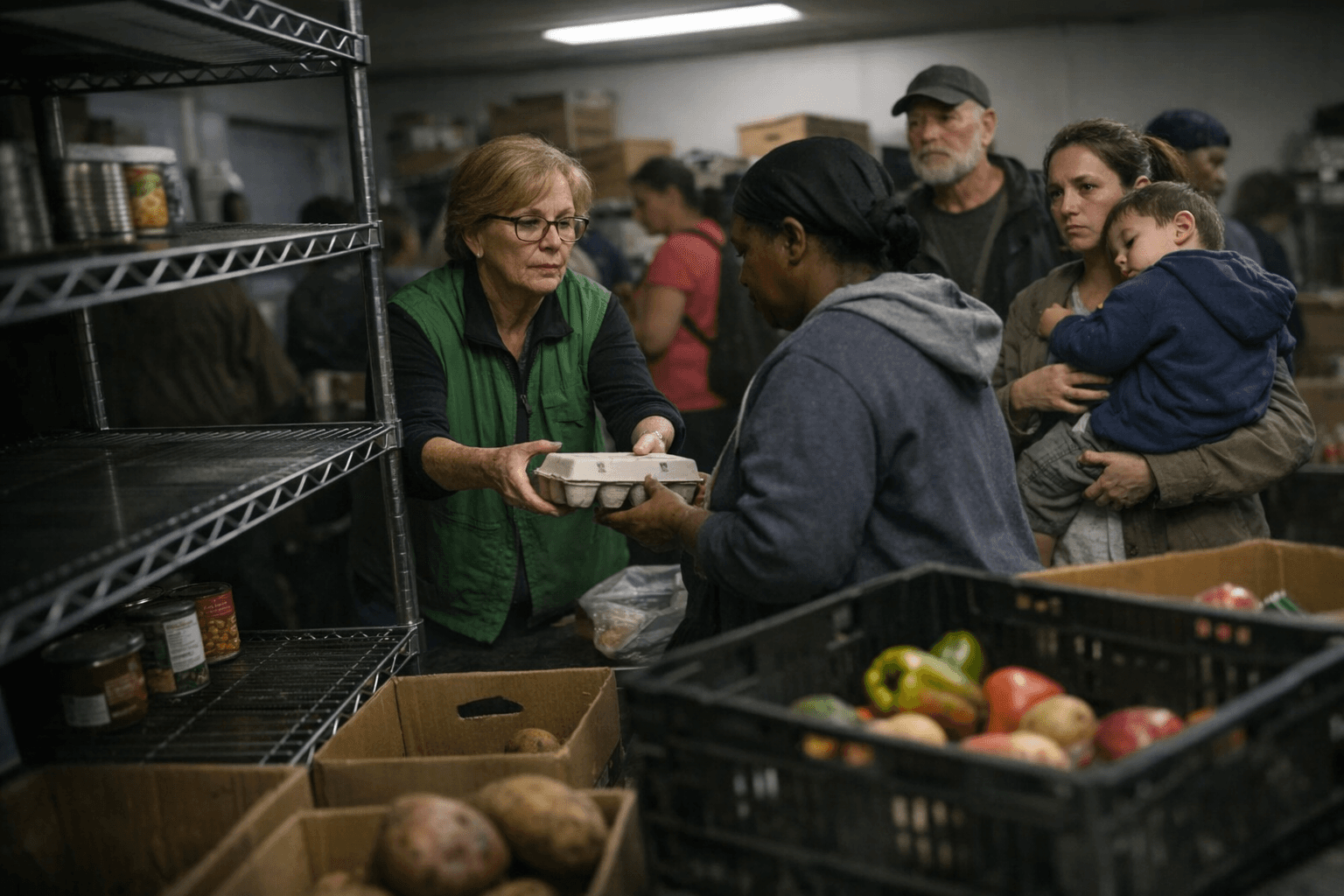
Pantries are responding with grocer partnerships for discounted bulk purchases, targeted item drives for the most depleted categories, and stepped-up appeals for volunteer labor. Some organizations are shifting toward shelf-stable, high-nutrition inventories while fresh produce supplies remain volatile.
Community members and employers can help close the gap. Donations to Community of Hope and affiliated pantries go directly toward sustaining a network that served more than 600,000 meals last year. Employers with corporate matching programs can double the value of staff contributions, and volunteers are needed during peak distribution hours to sort, pack, and distribute food.
Policymakers are being pressed to act on two fronts: immediate relief through food grants and emergency funding, and longer-term investments in affordable housing and living-wage employment that would reduce the structural pressure on Wake County's emergency food network.
This article was produced by Prism’s automated news system from verified source data, official records, and press releases, then run through automated quality and moderation checks before publishing. The system is built and supervised by the people who set the standards it runs under. Read our full AI policy.
Did this article answer your question?