Wake County Study Finds 75% of Landfill Waste Could Be Recovered, Recycled
Three-quarters of what gets buried at Wake County's South Wake Landfill could be recycled or composted, a county study found; the site is projected to hit capacity by 2045.
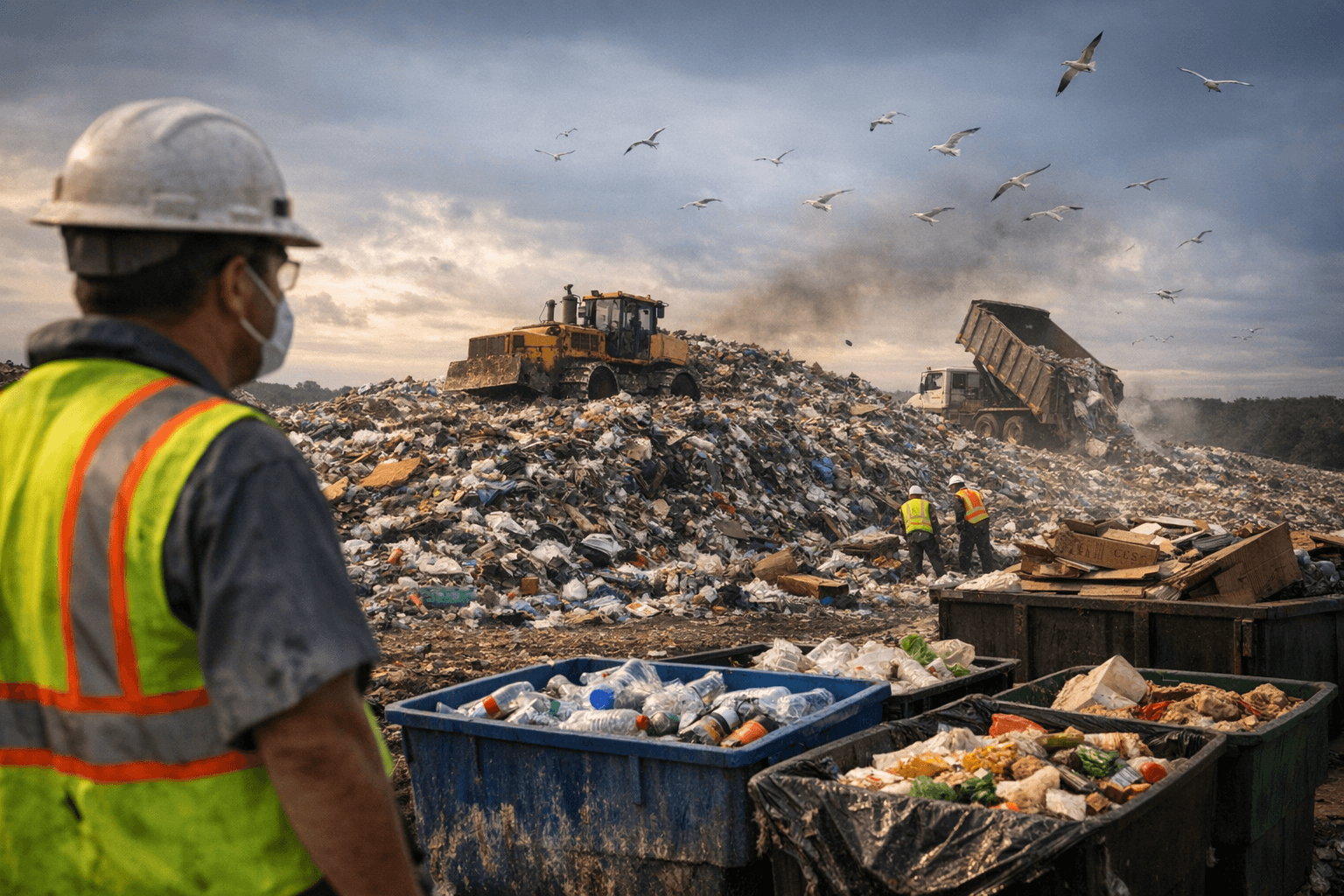
Three-quarters of the garbage currently buried at the South Wake Landfill could be composted, recycled, or otherwise recovered, according to a 2019 waste composition study that Wake County is now using to anchor a sweeping long-term planning effort before the landfill runs out of room.
The findings sit at the core of Wake County's "Beyond the South Wake Landfill Study," a multi-phase initiative launched to identify what comes after the county's primary disposal site closes. The landfill, located on the boundary between Holly Springs and Apex and open since 2008, receives approximately 500,000 tons of waste each year, roughly 1,600 tons every day. To put that volume in physical terms: it is the equivalent of burying a football field under eight feet of garbage, daily. As of the end of 2025, the landfill was approximately 39% full. At current disposal rates, which are growing at about 1.5% per year, the site is projected to reach capacity somewhere between 2040 and 2045.
The financial pressure to extend that timeline is substantial. According to Wake County's 2020 Comprehensive Solid Waste Management Plan, each additional year of landfill life saves local governments across the county a collective $6 million to $7 million in disposal costs. That makes every ton diverted through composting or recycling a direct budget issue for municipalities from Raleigh to Wendell.
Construction and demolition debris has been the fastest-growing driver of disposal rates. C&D waste landfilled in FY2019 jumped 162% compared to FY2010, far outpacing municipal solid waste growth of 27% over the same period. C&D materials grew from 30% of total waste in FY2010 to 47% by FY2019, a direct reflection of the county's residential and commercial building boom. Commercial and industrial waste now accounts for more than half of the overall municipal solid waste stream, making business-sector diversion one of the largest available levers for reducing landfill pressure.
The Beyond the South Wake Landfill Study is currently in Phase 1 and evaluating three broad scenarios for when the current facility closes. The first is building a new, publicly owned landfill within Wake County, which would require a minimum site of 400 acres and would need to clear siting restrictions including flood zones, wetlands, airports, and historic sites. The second option is transferring waste to large regional private landfills in nearby counties, a move estimated to cost between $53 and $74 per ton and add roughly $15 to $20 per year to residents' waste bills. That option also carries safety tradeoffs: the county notes it would nearly double the risk of truck crashes and generate additional greenhouse gas emissions from the extra vehicle miles. A third option is a waste-to-energy facility, which burns trash to produce electricity and can reduce waste volume by up to 90%, effectively extending the life of any remaining landfill space tenfold. Sixty-six such facilities operate across the United States, including a Palm Beach County, Florida plant handling 3,000 tons per day and a Fairfax County, Virginia facility processing nearly one million tons annually. Europe routes more than 40% of its waste through similar systems, compared to just 13% in the U.S.
Regional capacity is an added complication. Five private landfills operate within 100 miles of Wake County, but many are projected to reach their own capacity around the same timeframe as South Wake, limiting the reliability of any long-term regional transfer strategy.
Wake County already operates programs to reduce what reaches the landfill. The county's three Multi-Material Recycling Facilities, combined with curbside commingled recycling available in Raleigh and all 11 Wake County towns, divert more than 60,000 tons of paper, plastic, and other recyclables each year. Even so, the landfill accepted 530,741 tons of garbage in the most recently reported year, while Wake County Waste & Recycling Facilities recycled 40,751 tons during the same period. The Feed the Bin school recycling program, now in its 21st year, engaged 203 schools during the 2024-2025 school year. Between 2018 and 2020, the county's Commercial Waste Reduction Grant program awarded $104,612 across 15 grants to organizations including Inter-Faith Food Shuttle, North Carolina State University, and the Town of Wendell.
Commissioner Shinica Thomas described the study's purpose in direct terms. "This study is about planning ahead and listening closely," Thomas said. "We know residents care deeply about how waste is managed today and how decisions made now can shape the future. The Beyond the South Wake Landfill Study gives us a framework to explore options thoughtfully, transparently and with community input at the center."
The county has opened a dedicated project website and a public survey to gather community input over the next three months. Whatever path Wake County ultimately chooses, the 2019 study makes the core challenge plain: the overwhelming majority of what gets buried today doesn't have to be.
This article was produced by Prism’s automated news system from verified source data, official records, and press releases, then run through automated quality and moderation checks before publishing. The system is built and supervised by the people who set the standards it runs under. Read our full AI policy.
Did this article answer your question?