Wake County’s Historic Oak View Park traces farmstead roots to 1829
Oak View blends a free family park with a preserved 1829 farmstead, where visitors can tour historic buildings, fish two ponds and learn Wake County’s rural history.

Historic Oak View County Park is the rare Wake County park where a family can walk past a main farmhouse, a cotton gin house, a tenant house and a livestock barn in the same visit. Set on 27 acres at 4028 Carya Drive in Raleigh, it is built for people who want more than a greenway stroll or a playground stop. The county treats it as both a neighborhood amenity and a working lesson in how rural Wake once looked, felt and functioned.
A park that feels like a farmstead
Oak View does not behave like a standard park, and that is its appeal. Wake County describes it as a place that interprets North Carolina’s agrarian past, with free admission, public programs, group programs, major events and volunteer opportunities that keep the site active rather than static. The park is open Monday through Saturday from 8:30 a.m. to 5 p.m. and Sunday from 1 to 5 p.m., giving it the rhythm of a public gathering place as much as a historic site.
Visitors can move through the grounds on paved paths, use ADA-accessible parking and accessible restrooms, and find ramps at some historic buildings. The Farm History Center adds a more hands-on layer, including the interactive children’s space known as Farmer’s Corner. For families and newer Wake residents, that mix matters: Oak View is one of the clearest places in Raleigh to see a rural landscape that has largely disappeared under subdivisions, office parks and new roads.
The land’s recorded history begins in 1829
Oak View’s history starts with a land purchase, not a preservation plan. In 1829, Benton Southworth Donaldson Williams bought 85 acres in eastern Wake County from Arthur Pool for $135, and the property would grow into one of the county’s most important surviving farmsteads. The main house went up in 1855, and by 1860 the farm had expanded to more than 900 acres.
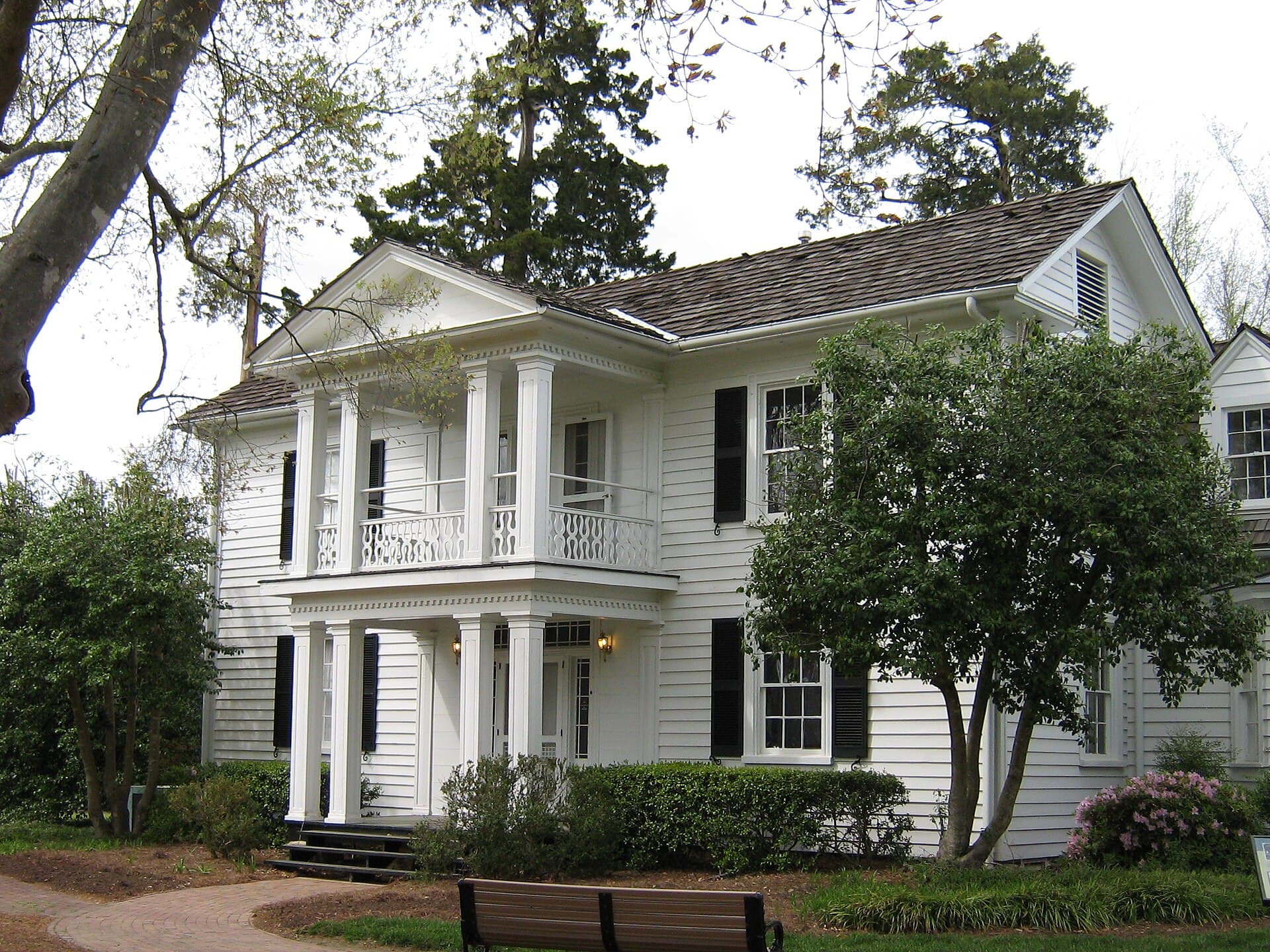
That antebellum operation was not a small family homestead. County history says it produced 23 bales of cotton a year and relied on the labor of 14 enslaved men, women and children. Raleigh’s historic resources office describes the site as a late-antebellum family farm of nearly a thousand acres, with the main house preserved as the Williams-Wyatt-Poole House, an I-house with Greek Revival details such as a pedimented portico, paneled columns and pilasters.
Why Oak View tells the harder parts of local history
The county’s interpretation of Oak View goes beyond architecture and agriculture. Wake County says its mission is to honor the lives and labor of enslaved individuals, sharecroppers and tenant farmers tied to the site, and to tell the full story of the land. That makes the park useful not only as a historic attraction but also as a place to understand how Wake County moved from plantation agriculture into sharecropping and tenant farming.

That interpretive approach has shown up in public programming. Juneteenth events at Oak View have used the 1870s tenant house to help explain what freedom meant for newly emancipated people living and working there. Walking tours have also centered the enslaved community’s transition from slavery to freedom, turning the park into a place for reckoning as well as recreation. IndyWeek described the site as a former plantation when reporting on a slavery-history initiative kickoff there, reinforcing the role Oak View now plays in public memory.
What is on the grounds today
The park’s historic fabric reaches well beyond the main house. Wake County’s property tour materials identify six historic buildings on the site: the Plank Kitchen, Main Farmhouse, Carriage House, Cotton Gin House, Livestock Barn and Tenant House. Those structures, along with a gazebo, herb garden, fruit orchard, pecan grove and the Farm History Center, make the site feel layered and lived in rather than frozen behind ropes.
The grounds also give visitors a direct way to spend time outdoors. Oak View has two fish ponds, and fishing is allowed only with cane poles and catch-and-release rules. That small detail says a lot about the park’s identity: it invites quiet, family-friendly use while still preserving the feel of a historic farm landscape. The result is a place where children can fish, adults can study the buildings, and everyone can see how food, labor and land once shaped daily life in Wake County.
Why it still matters in a fast-growing county
Oak View’s relevance comes from timing as much as from age. Wake County is growing quickly, and each year makes the county’s old rural edges harder to find in their original form. Oak View preserves one of those places in the open, close enough to Raleigh to be practical, but rooted enough in the 19th century to show how the region once worked.
The site’s standing on the National Register of Historic Places gives that preservation added weight, but the real value is on the ground. Oak View is one of the few places in Wake where the county’s agricultural, racial and political history can be read from the landscape itself, from the Greek Revival main house to the tenant house that speaks to what came after emancipation. For anyone trying to understand the county beyond its new subdivisions and traffic corridors, this is one of the clearest windows into the older Raleigh that still survives.
This article was produced by Prism’s automated news system from verified source data, official records, and press releases, then run through automated quality and moderation checks before publishing. The system is built and supervised by the people who set the standards it runs under. Read our full AI policy.
Did this article answer your question?