Wildlife Officials Expand Bear Awareness Program as Black Bears Move Into Triangle
Black bears have been spotted in Fuquay-Varina and Garner as NC wildlife officials expand their BearWise coexistence program to the Triangle for the first time.
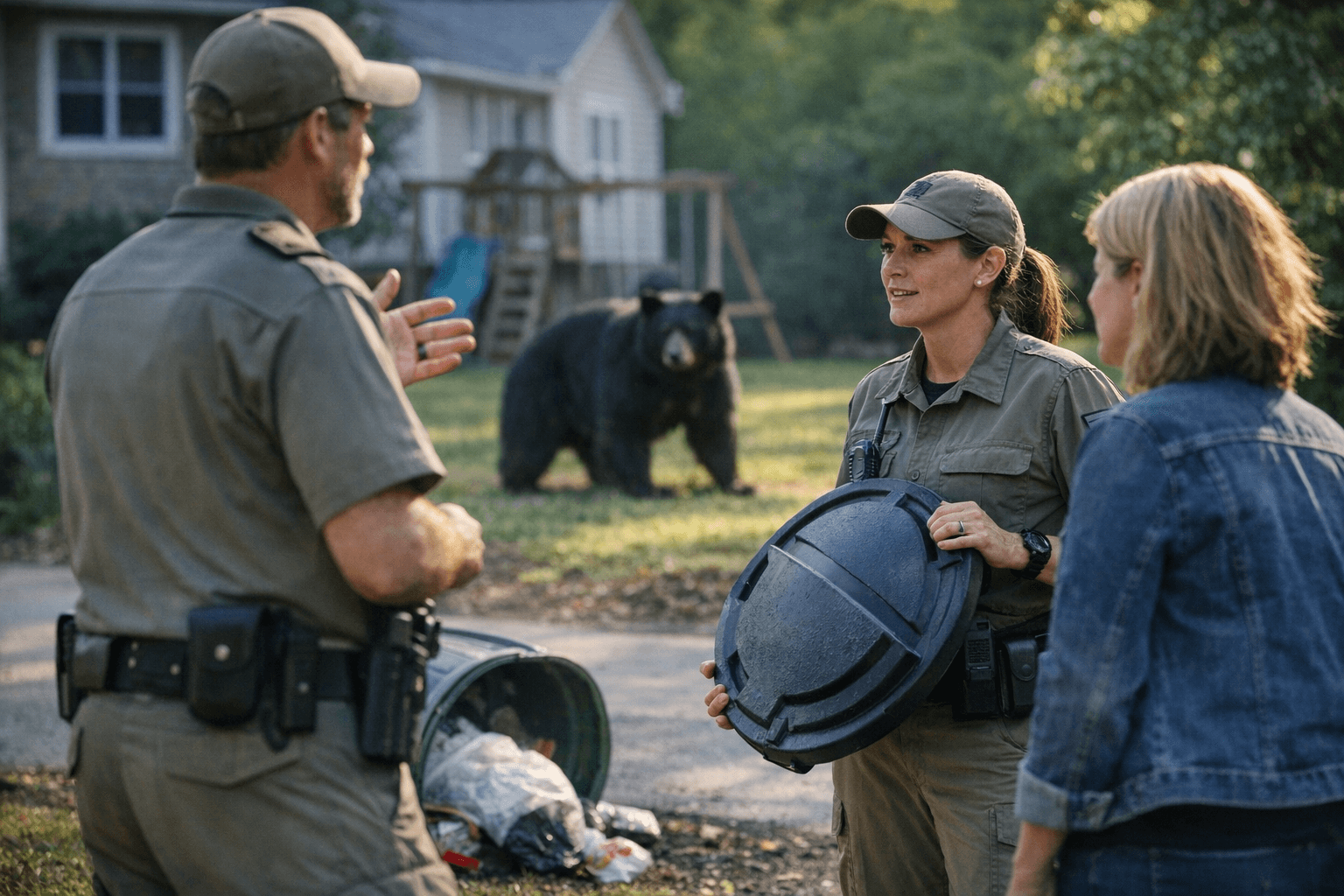
Black bears have turned up in Fuquay-Varina and Garner, and the North Carolina Wildlife Resources Commission is now treating the Triangle as bear country for the first time, expanding its BearWise coexistence program to Raleigh, Durham, and the broader Piedmont region.
NCWRC biologist Greg Batts says the Triangle's greenways and waterways are functioning as travel corridors for young male bears pushing out of traditional mountain territory. "They use and roam across a large space. They're here today and gone tomorrow," Batts said. Those passing bears are not establishing permanent territory yet, but their appearance in suburban neighborhoods has caught residents off guard. "It's a new thing when a bear shows up in Raleigh and everybody kind of freaks out," Batts said.
North Carolina's black bear population has expanded at an estimated rate of 6 percent per year over the last 30 years, with range maps showing steady movement from remote mountain and coastal areas inward toward the Piedmont since 1971. Black bears are now found in approximately 60 percent of the state's total land area. Calls to the NCWRC's Wildlife Helpline have increased, with questions about bears rising daily and typically peaking from late April through August.
The state manages population growth largely through hunting, which Batts says accounts for roughly 4,400 bears killed each year. Despite that, the population continues to grow, and Batts says the best long-term answer is learning to coexist. The BearWise program, in which NCWRC participates, shares strategies to prevent conflicts, provides resources to resolve bear problems, and encourages communities to use bear-resistant trash cans and outreach materials.
Wildlife biologist Greg Batts noted that black bear sightings are common in May and June as young male bears begin to separate from their mothers. Residents in Wake County communities like Garner and Fuquay-Varina, which sit along greenway corridors and creek drainages that connect to undeveloped land to the west and south, are among the most likely to encounter a passing bear this spring.
Batts is not asking residents to panic. "I just encourage people, hey, if you see one, enjoy seeing it," he said. Practical steps include securing garbage in bear-resistant containers, removing bird feeders during warmer months, and never feeding bears deliberately. Bears that associate neighborhoods with food become repeat visitors and often have to be euthanized.
The BearWise expansion into the Triangle marks a recognition that the region's rapid growth and the bear population's steady march eastward are now intersecting in ways that require a sustained public education effort rather than occasional emergency responses.
Here is the formatted output:
SUMMARY: Black bears spotted in Fuquay-Varina and Garner as NC wildlife officials bring BearWise coexistence program to the Triangle for the first time.
CONTENT:
Black bears have turned up in Fuquay-Varina and Garner, and the North Carolina Wildlife Resources Commission is now treating the Triangle as bear country for the first time, expanding its BearWise coexistence program to Raleigh, Durham, and the broader Piedmont region.
NCWRC biologist Greg Batts says the Triangle's greenways and waterways are functioning as travel corridors for young male bears pushing out of traditional mountain territory. "They use and roam across a large space. They're here today and gone tomorrow," Batts said. Those passing bears are not establishing permanent territory yet, but their appearance in suburban neighborhoods has caught residents off guard. "It's a new thing when a bear shows up in Raleigh and everybody kind of freaks out," Batts said.
North Carolina's black bear population has expanded at an estimated rate of 6 percent per year over the last 30 years, with range maps showing steady movement from remote mountain and coastal areas inward toward the Piedmont since 1971. Black bears are now found in approximately 60 percent of the state's total land area. Calls to the NCWRC's Wildlife Helpline have increased, with questions about bears rising daily and typically peaking from late April through August.
The state manages population growth largely through hunting, which Batts says accounts for roughly 4,400 bears killed each year. Despite that, the population continues to grow, and Batts says the best long-term answer is learning to coexist. The BearWise program, in which NCWRC participates, shares strategies to prevent conflicts, provides resources to resolve bear problems, and encourages communities to use bear-resistant trash cans and outreach materials.
Bear sightings are common in May and June as young male bears begin to separate from their mothers. Residents in communities like Garner and Fuquay-Varina, which sit along greenway corridors and creek drainages connecting to undeveloped land to the west and south, are among the most likely to encounter a passing bear this spring.
Batts is not asking anyone to panic. "I just encourage people, hey, if you see one, enjoy seeing it," he said. Practical steps include securing garbage in bear-resistant containers, removing bird feeders during warmer months, and never feeding bears deliberately. Bears that associate neighborhoods with food become repeat visitors and often have to be euthanized, which is the outcome wildlife managers most want to avoid.
The BearWise expansion into the Triangle marks a recognition that the region's rapid growth and the bear population's steady march eastward are now intersecting in ways that require sustained public education rather than occasional emergency responses.
This article was produced by Prism’s automated news system from verified source data, official records, and press releases, then run through automated quality and moderation checks before publishing. The system is built and supervised by the people who set the standards it runs under. Read our full AI policy.
Did this article answer your question?