About 450 Marines Deployed to Yuma Border Support Operations
About 450 U.S. Marines from the 1st Combat Engineer Battalion were deployed to Yuma County on December 23, 2025 to support Joint Task Force Southern Border missions. The deployment, tied to a July transfer of roughly 285 acres to the Navy as a National Defense Area, concentrates military construction and access control activity along the U.S. Mexico border and matters for local land use, public access, and law enforcement coordination.
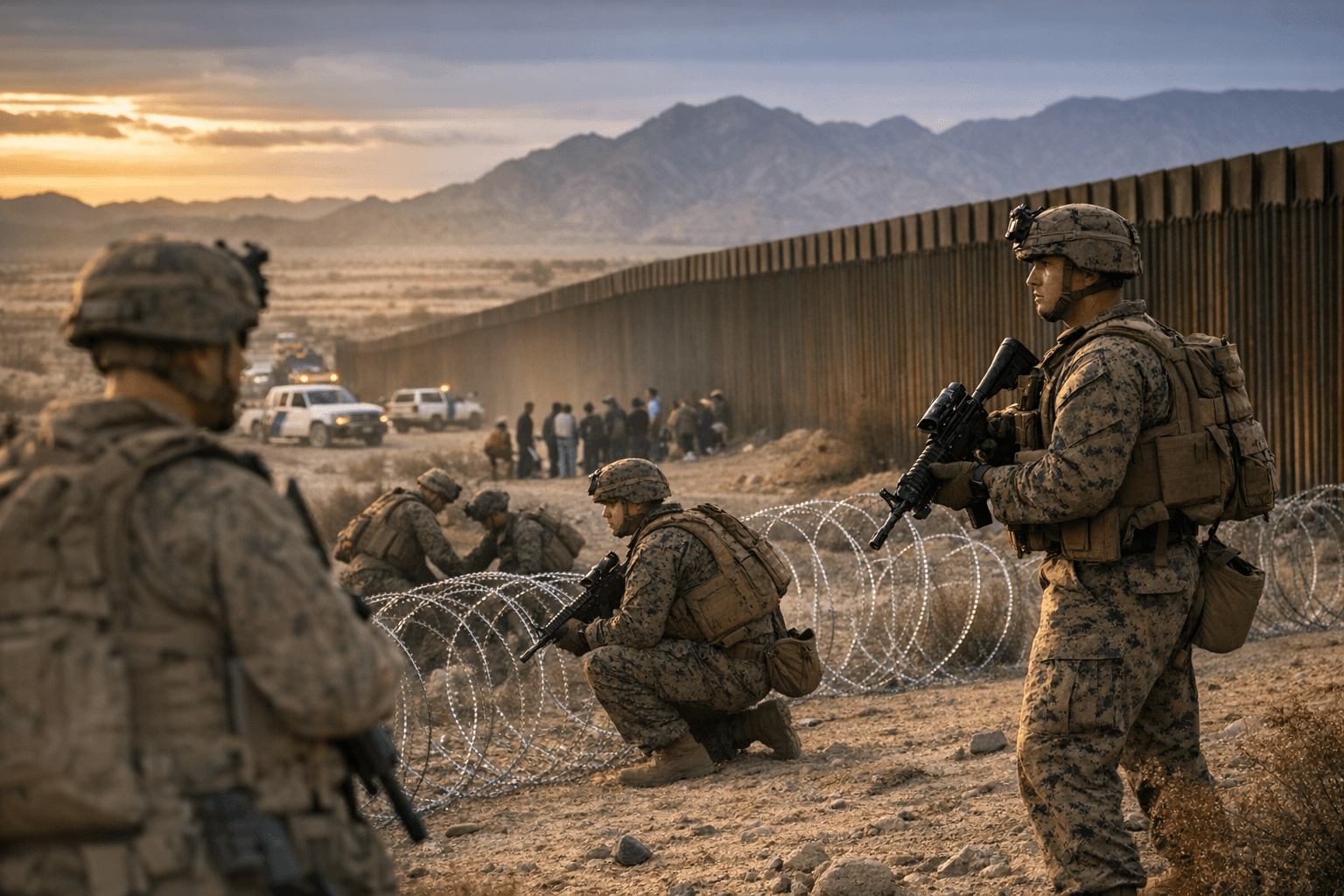
On December 23, 2025 roughly 450 U.S. Marines based at Camp Pendleton were sent to Yuma County to support Joint Task Force Southern Border operations. The unit was assigned engineering and infrastructure work to assist United States Border Patrol missions, including construction projects, barrier reinforcement, placement of signage and road improvements. The Marines were not given civilian law enforcement authority.
The deployment followed a July 2025 Interior Department action that transferred jurisdiction of about 285 acres of public land in Yuma County along the U.S. Mexico border to the Navy for three years. That transfer established a National Defense Area intended to support border security operations. Under the National Defense Area designation military personnel are allowed to temporarily detain people who allegedly enter restricted military property, and detainees are to be turned over to Border Patrol. Officials expected the battalion assignment to last around six months, and the deployment was part of a broader effort that in recent months has involved thousands of service members along the southern border.
For Yuma County residents the combination of land transfer and Marine engineering work has immediate practical effects. Road work and construction projects can disrupt local travel and access to public lands that previously had been open. Signage and reinforced barriers change how people move and recreate along the border. The National Defense Area designation also changes who may lawfully control access to certain lands and creates a pathway for military personnel to detain individuals found on restricted property before turning them over to civilian Border Patrol agents.
Policy and institutional questions follow from those changes. The transfer of public land for temporary military control raises issues of civilian oversight, transparency and interagency coordination between the Department of the Interior, the Department of Defense and Homeland Security components. Local authorities and residents have a stake in how detention on restricted land will be monitored, and how public access and environmental management will be restored when the three year period ends.
As the deployment proceeds local officials, state representatives and federal agencies will play key roles in explaining operations, addressing community impacts and ensuring that military activity remains supportive of civil authorities while protecting residents rights and local land use.
This article was produced by Prism’s automated news system from verified source data, official records, and press releases, then run through automated quality and moderation checks before publishing. The system is built and supervised by the people who set the standards it runs under. Read our full AI policy.
Did this article answer your question?