Arizona Bill Would Raise Rural Speed Limits, Empower ADOT Director
A state bill sponsored by Rep. Nick Kupper proposed raising posted speed limits on certain rural roads and giving the ADOT director authority to remove posted maximum limits on some daylight only rural highway stretches. If enacted, the measure would make parts of Arizona among the most permissive in the nation, with direct implications for travel times, safety, and law enforcement in Yuma County.
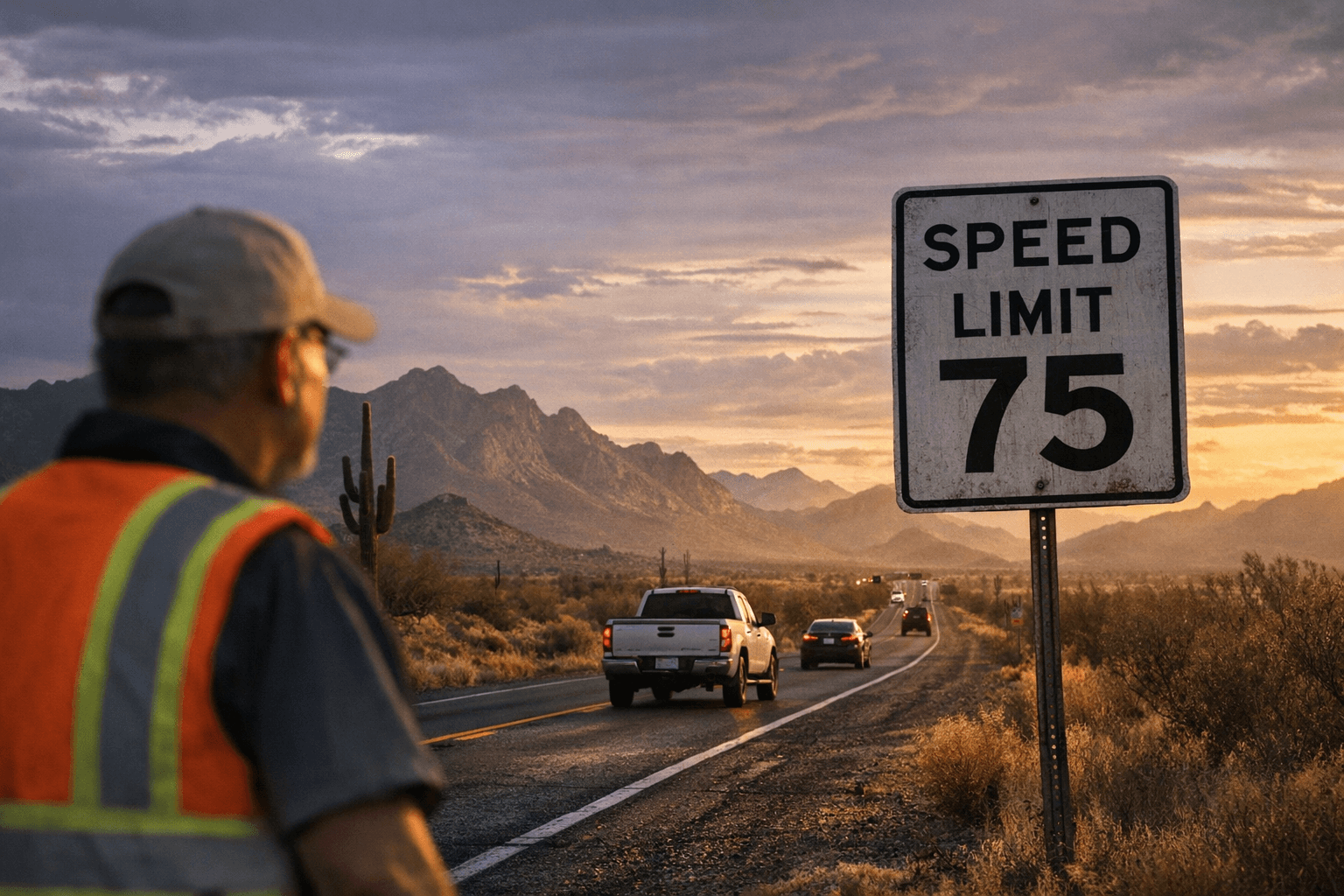
On December 15, 2025 Representative Nick Kupper filed legislation that would change how speed limits are set on rural state highways. The proposal would raise posted limits on specified low traffic corridors, and it would permit the Arizona Department of Transportation director to eliminate posted maximum speed limits on selected daylight only stretches of rural highway. Sponsors say the changes would shorten travel times across long, sparsely populated areas. Critics have raised immediate concerns about roadway safety and the ability of law enforcement to enforce higher speeds.
The bill would position parts of Arizona among the most permissive jurisdictions in the United States if the new authorities are adopted. That standing came into focus in discussions about balance between personal mobility and public safety, and about the uneven risks that higher speeds pose on two lane roads with limited shoulders and infrequent lighting. Supporters emphasize efficiency for long distance travel on rural corridors, where traffic volumes are low and delays are costly for residents, agricultural carriers, and service providers.
Opponents point to potential increases in crash severity, and to enforcement burdens on county sheriffs and state troopers who already manage large patrol areas. In Yuma County, where highways run long distances between towns and cross border traffic is an everyday reality, the policy shift could affect emergency response times, farm to market logistics, and routine travel for residents who commute between dispersed work sites. Changes in posted limits could also reshape interactions with commercial traffic, seasonal migrant labor flows, and tourism patterns along desert routes.
The proposal arrives amid a broader statewide debate over traffic policy, road safety, and rural infrastructure priorities. If it advances through the legislative process, local officials and law enforcement agencies in Yuma County will face practical choices about enforcement strategies, signage, and public education. Lawmakers will consider the trade offs between travel efficiency and the safety record of rural highways as the bill moves through committee and floor discussions in the coming weeks.
This article was produced by Prism’s automated news system from verified source data, official records, and press releases, then run through automated quality and moderation checks before publishing. The system is built and supervised by the people who set the standards it runs under. Read our full AI policy.
Did this article answer your question?


