Army Tests Apache-Launched Drone Weapons at Yuma Proving Ground
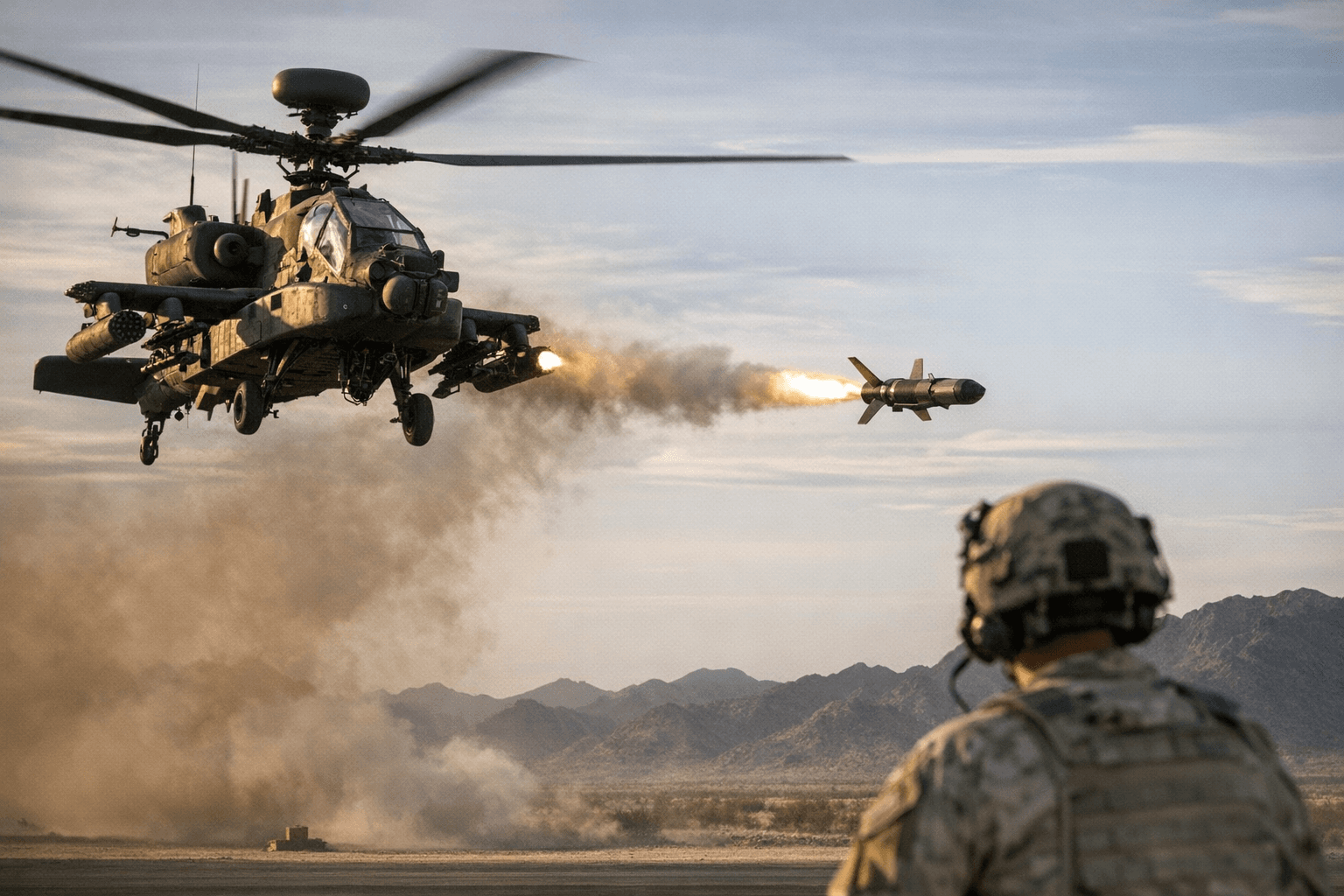
An AH-64 Apache helicopter launched a drone weapon from both a hover and while moving during a three-week Army experiment at Yuma Proving Ground in early March.
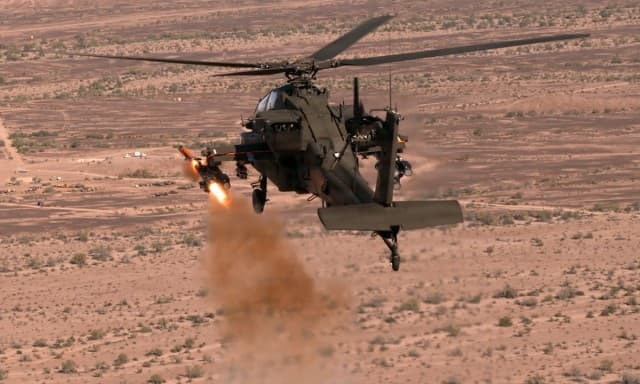
An AH-64 Apache helicopter fired an Altius 700 Medium-Range Launched Effect from a hover and while moving during a three-week Army experiment at Yuma Proving Ground in early March, marking a significant milestone in the service's push to integrate drone weapons into aviation combat operations.
The test was part of the Cross Domain Fires Concept Focused Warfighting Experiment 26 Aviation Excursion, led by the Army's Aviation Future Capability Directorate and conducted simultaneously with related activities at Fort Sill, Oklahoma, and White Sands Missile Range, New Mexico. The experiment examined how command and control, sensing, targeting, and effects delivery can be woven together to support Multi-Domain Operations against near-peer adversaries.
"They accomplished the launches from both a hover and while moving," said Edgar Castillo, a YPG project engineer. "Hosting this was really good for us and the Army."
Soldiers from the 1st Armored Division, based at Fort Bliss, Texas, joined multiple private industry partners and YPG personnel across three weeks of daily complex tactical test scenarios. A separate Launched Effects Short-Range Special User Demonstration put those Soldiers through immersive scenarios against fabricated surrogate targets, including military vehicles, self-propelled howitzers, and air defense guns built by YPG personnel.
Col. Bryan Jones, the A-FCD Experimentation Division Chief, said Yuma's attributes were central to why the installation was chosen. "Yuma provides a critical advantage with its expert teams, threat simulators, and instrumentation, especially for aviation," Jones said. "To guarantee a system is ready for the field, we have to push its limits in complex, realistic scenarios. The unrestricted environment at Yuma is essential, allowing us to identify and resolve issues early, ensuring we deliver the most reliable and effective capability to our Soldiers."
Scheduling flexibility was another factor. Steve Flores, a Long Range Precision Fire Cross Functional Team Integrator, noted that "at many test ranges, flexibility is very limited. Here, we can schedule tests weeks in advance instead of months in advance."
YPG's ranges, larger in area than the state of Rhode Island, fire hundreds of thousands of rounds per year. The installation recorded a verified 70-kilometer artillery direct hit in 2019, and the Army is working toward systems capable of accurately engaging targets at 100 kilometers. YPG also serves as the primary operator and maintainer of radar equipment for the Threat Systems Management Office, giving experimenters access to foreign threat radar systems that replicate real-world electronic environments.
The Army has described launched effects as giving ground commanders the ability to extend sensing range and use machines to make first contact with an adversary instead of Soldiers. According to reporting tied to the experiment, launched effects are slated to begin fielding to all Army divisions next year.
Army officials said the YPG experiment paid dividends that could inform the service's aviation and fires modernization programs for years.
This article was produced by Prism’s automated news system from verified source data, official records, and press releases, then run through automated quality and moderation checks before publishing. The system is built and supervised by the people who set the standards it runs under. Read our full AI policy.
Did this article answer your question?