Army warns trespassers face deadly risks and enforcement at Yuma Proving Ground
Yuma Proving Ground’s 1,300-square-mile ranges contain unexploded ordnance, abandoned mine shafts and live-fire test zones; Arizona has given YPG police the power to issue CVB citations now adjudicated in U.S. District Court.
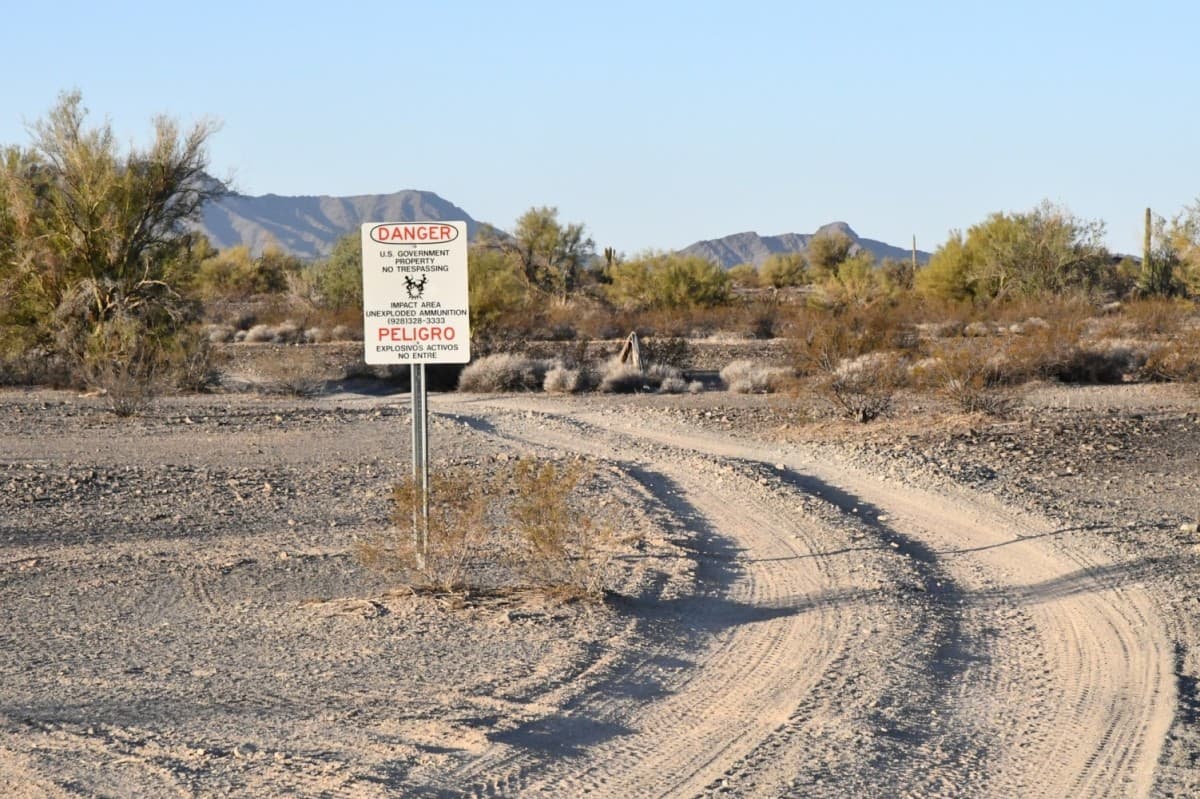
Army officials and on-the-ground conservation officers are warning that trespassing on U.S. Army Yuma Proving Ground’s 1,300-square-mile Yuma Test Center ranges is both a crime and a life-threatening risk. The Army published a notice and photo by spokesman Mark Schauer on February 10, 2026 underscoring hazards that include unexploded ordnance, long-range artillery surface danger zones, heavy airdrops and laser-targeting tests.
The Army press release highlighted the installation’s history and tests: “After more than 80 years of existence and plenty of posted no trespass signs, you might think people would steer clear of these areas. But you would be wrong.” The same release described unexploded ordnance tied to the proving ground’s distant history under General George S. Patton during World War II, surface danger zones for powerful long-range artillery shells, airdrops of cargo parachutes carrying multi-ton pallets or military vehicles, and laser-targeting testing that can cause “serious eye injuries.”
Enforcement authority at YPG has changed in recent years. “In recent years, the State of Arizona authorized YPG concurrent criminal jurisdiction. Until the change, YPG Police only had the authority to issue DD Form 1408s, which have no penalty or deterrence associated with them for individuals who are unaffiliated with the Department of Defense. Now, YPG Police are empowered to issue Central Violations Bureau (CVB) citations, which are adjudicated by a U.S. District Court.” Sgt. Gregory Harper, a conservation law enforcement officer at Yuma Proving Ground, said the post’s approach remains education-first: “Our policy is to educate and issue a warning the first time unless there is a more serious offense connected to the trespassing,” and added, “Even a verbal warning is annotated in our system.”
Army spokesmen and enforcement personnel say the timing of the reminder was deliberate. Mark Schauer noted the message was issued ahead of a busy President’s Day weekend and that Yuma’s population “roughly doubles in winter.” Schauer also said a “significant majority” of range trespassers are winter visitors who are “off-highway vehicle enthusiasts,” and acknowledged that, because of the proving ground’s scale, “it would not be feasible to fence all of it off.”
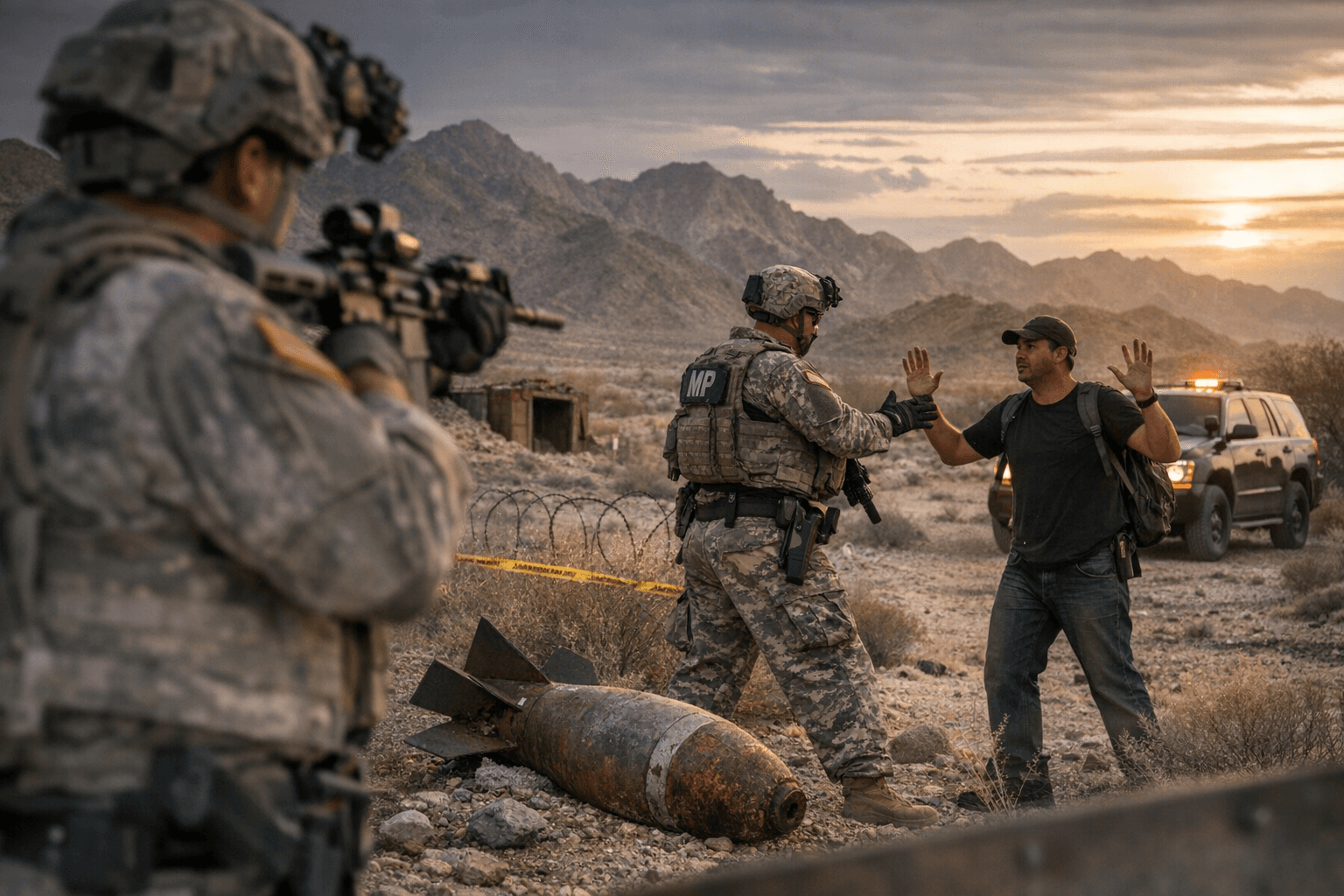
Harper’s field work provides concrete examples of the danger. He has repeatedly extracted people from abandoned mines and “joined multiple law enforcement agencies in a 12-hour rescue mission of a woman who broke her ankle at the bottom of a 200-foot-deep mine shaft” in 2024; Schauer noted that rescue “happened about a mile and a half outside of the Yuma Proving Ground border.” Harper told reporters he mostly meets “genuinely good people” who “are cooperative and their intent isn’t bad, but that won’t protect them from the hazards on our ranges.”
Military neighbors coordinating over range safety stress operational impacts and reporting requirements. MCAS Yuma guidance says fouled ranges “not only hamper mission readiness, but also pose a significant hazard to the trespassers themselves,” and directs that any mission interrupted or aborted because of a fouled range “will be immediately reported to LEG IRON 310.0/141.85/32.05 or (928) 269-7080.” The MCAS excerpt also warns units to follow Station Order 5532 on use of force and includes an explicit caution: “TO ANYONE WHO APPROACHES THEM. Do not approach Scrappers.”
The Army’s Feb. 10, 2026 release and accompanying DVIDS photo by Mark Schauer (Photo ID 9515960, VIRIN 260210-A-GD561-8176) make clear that trespassing on YPG can carry immediate physical danger and now carries enforceable federal citation authority. Yuma Proving Ground and MCAS Yuma procedures require documentation and reporting of fouled ranges to Yuma Range Management Department so mission safety and conservation measures can be applied.
This article was produced by Prism’s automated news system from verified source data, official records, and press releases, then run through automated quality and moderation checks before publishing. The system is built and supervised by the people who set the standards it runs under. Read our full AI policy.
Did this article answer your question?


