ERA equality tour stops at Yuma Main Library, urges voter support
A vintage roadster and a century-old suffrage route brought the ERA fight to Main Library, where supporters tied Yuma’s past to today’s Arizona vote.
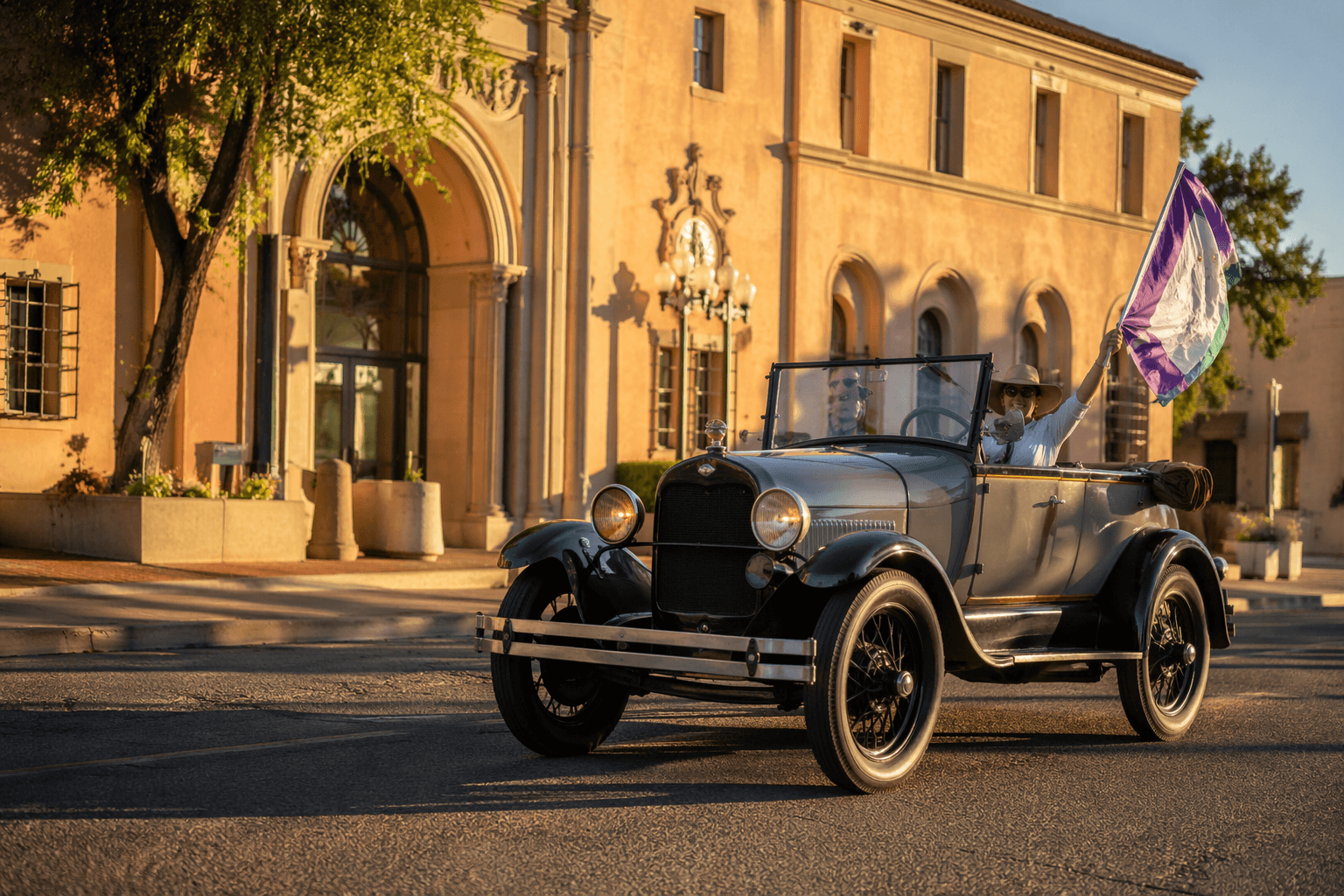
A 1914 Saxon roadster named the Golden Flyer II rolled up to Yuma Main Library on May 1 with a message aimed squarely at Arizona voters: equality is still unfinished business. The stop at 2951 S. 21st Drive was part of the national Driving the Vote for Equality tour, which is retracing the 1916 cross-country drive of suffragists Alice Burke and Nell Richardson to push support for the Equal Rights Amendment.
The tour says Burke and Richardson drove 10,700 miles in 1916, and the campaign is now covering 25 states to argue that the ERA should be affirmed as the 28th Amendment. KYMA reported the Yuma visit and noted that the original journey lasted just under six months, included a desert crossing and passed through Yuma more than a century ago.
Yuma City Councilmember Karen Watts spoke at the event, giving the local stop a clear civic face as organizers connected national history to present-day questions about women’s rights and legal equality. The library event, listed from 1 p.m. to 2 p.m., drew its meaning from that local link: Yuma is not just a pass-through on the tour, but a community where the debate still reaches into public life.
The ERA’s long legal road helps explain why supporters are still making the case. The Library of Congress says the amendment was first formally introduced in 1923, after ratification of the Nineteenth Amendment, and that opposition was immediate, including from labor feminists who feared the loss of protective labor laws. The National Archives says Congress proposed the ERA in 1972, and Congressional Research Service materials say only 35 states ratified it by the extended 1982 deadline, leaving it short of the 38 needed for constitutional adoption.
In Arizona, the issue remains active. The state does not currently have its own Equal Rights Amendment in its constitution, and recent legislative proposals have kept the question alive here. For supporters, that makes the Yuma stop more than a ceremonial flashback. It is a reminder that the argument over equal rights still has legal, political and personal stakes for women and families in Yuma County, and that the next chapter depends on how Arizona voters respond.
This article was produced by Prism’s automated news system from verified source data, official records, and press releases, then run through automated quality and moderation checks before publishing. The system is built and supervised by the people who set the standards it runs under. Read our full AI policy.
Did this article answer your question?