Hundreds Rally in Yuma Against Perceived Threats to Democracy
Hundreds of people gathered Oct. 18 at 16th Street and 4th Avenue in downtown Yuma as part of nationwide "No Kings" demonstrations, raising concerns about threats to democratic institutions. Local media followed up on Nov. 1, with KAWC featuring coverage by student reporters and an interview with a 104‑year‑old World War II veteran who attended the rally.
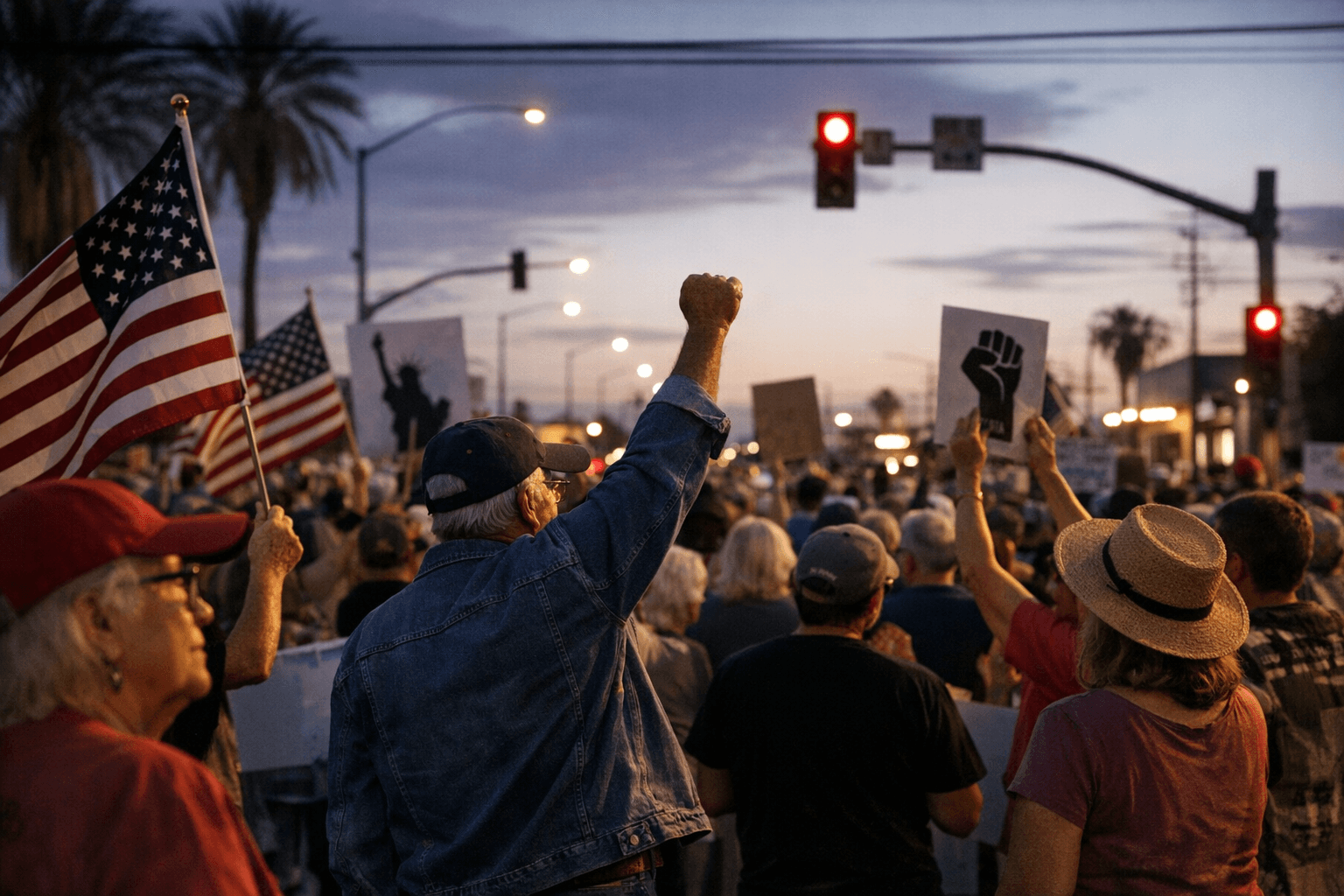
On Oct. 18, a crowd described as numbering in the hundreds assembled at the intersection of 16th Street and 4th Avenue as part of the national "No Kings" demonstrations. Organizers and participants framed the event around worries about threats to democratic norms and institutions, joining a wave of similar rallies across the country that sought to mobilize citizens in defense of democratic practices.
The downtown Yuma gathering brought together a visibly intergenerational group of residents. Local student journalists played a notable role in covering the event, and public radio station KAWC ran a Nov. 1 follow‑up segment that included reporting by those students. Among the interviews KAWC aired was one with a 104‑year‑old World War II veteran who had attended the rally, a presence many observers said underscored how concerns about democracy can cut across age and experience.
For Yuma County, the demonstration is important on several levels. First, it highlights active civic participation in the community: residents are using public assembly to express political concerns and to draw local attention to national debates. Second, the involvement of student reporters points to growing youth engagement in public affairs and strengthens local journalism capacity, providing residents with firsthand coverage produced by members of the community. Third, the attendance of long‑serving veterans ties contemporary political anxieties to broader historical narratives about wartime service and the defense of democratic values.
The rally was peaceful and limited to a focused location in the downtown area. While demonstrations can prompt heightened traffic and momentary disruption, the event primarily functioned as a civic expression rather than an emergency or public-safety incident. Local officials and media coverage have emphasized the constitutional right to assemble, situating the rally within the legal framework that governs peaceful protest in the United States.
Viewed from a broader perspective, Yuma’s participation in the "No Kings" demonstrations reflects national and international patterns in which citizens rally to defend democratic norms amid political uncertainty. For a community with deep ties to multiple generations and a significant veteran population, such gatherings do more than mirror national trends; they spark local conversations about governance, civic responsibility, and how Yuma’s residents want to shape their shared political future.
As reporting continues, the follow‑up work by KAWC and student journalists will remain a valuable resource for residents seeking to understand who participated, what motivated them, and how the conversation about democracy is evolving within Yuma County.
This article was produced by Prism’s automated news system from verified source data, official records, and press releases, then run through automated quality and moderation checks before publishing. The system is built and supervised by the people who set the standards it runs under. Read our full AI policy.
Did this article answer your question?


