Supreme Court case could reshape farmworker protections in Yuma County
A Supreme Court fight over Sun Valley Orchards could shift where H-2A disputes are heard, with Yuma County’s 8,000 visa workers in the middle.
A Supreme Court case over a New Jersey farm’s labor dispute could change how quickly wage and housing claims are decided for Yuma County’s farmworkers, where seasonal labor is central to the winter harvest economy. The justices granted review in Department of Labor v. Sun Valley Orchards, LLC on April 27, 2026, and the Labor Department asked for more time in the case on May 11.
The dispute turns on who hears H-2A labor cases when employers are accused of breaking the rules tied to the guest worker program. The court limited review to two questions: whether Article III of the Constitution blocks the Labor Department from adjudicating claims for monetary remedies in H-2A cases, and whether federal law authorizes the department to do so. In practical terms, the answer could decide whether these cases stay inside the Labor Department’s administrative system or move into federal court, changing the pace, cost and leverage of enforcement.
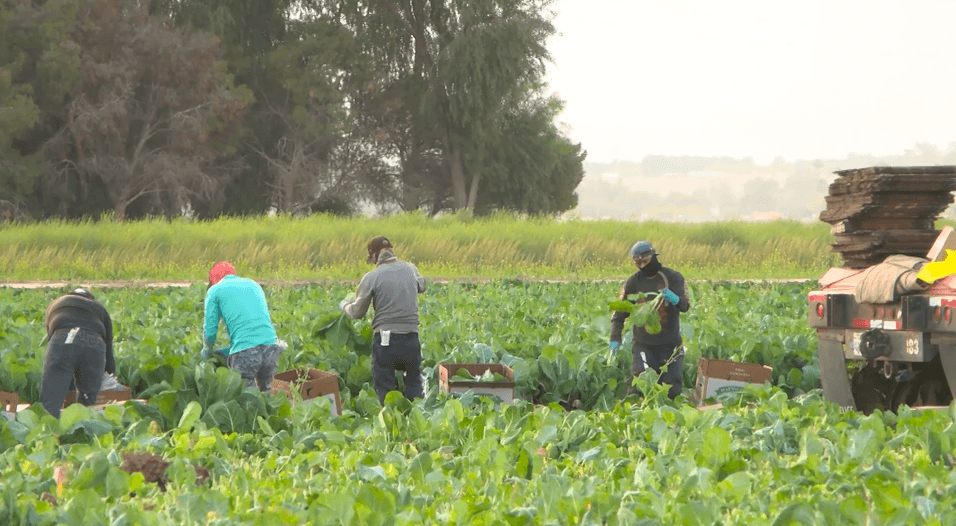
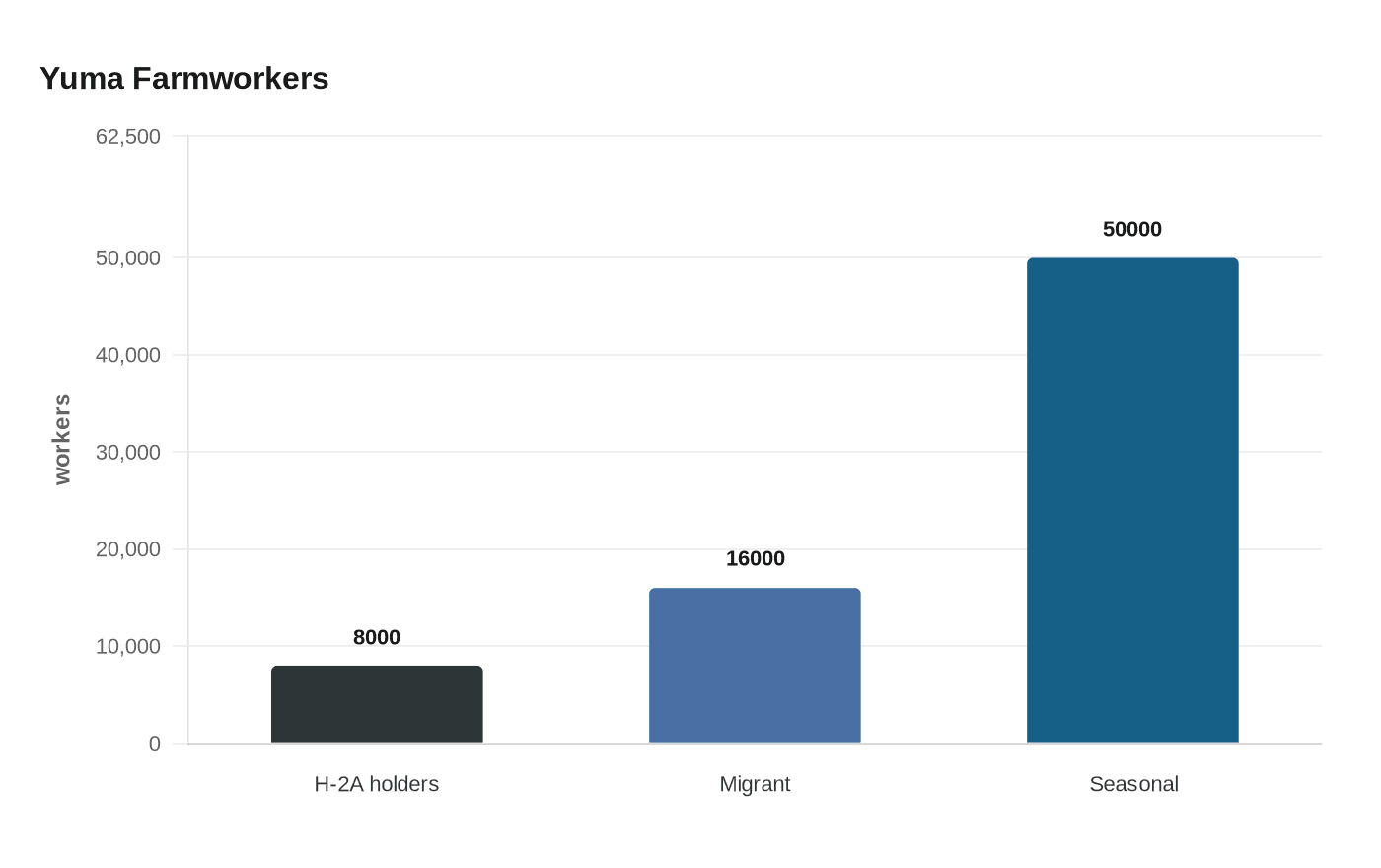
That matters in Yuma County because agriculture is not a side industry here. A University of Arizona Cooperative Extension study says agriculture and agribusiness contributed $3.9 billion to Yuma County alone in 2022, while a separate report put the sector’s value at $3.2 billion in retail terms. KYMA reported in April 2026 that 8,000 workers in Yuma County are certified H-2A visa holders, and recent reporting says the county has more than 65,000 farmworkers, including about 16,000 migrant workers and roughly 50,000 seasonal workers.
The underlying case shows why growers and workers are watching closely. The Third Circuit said the Labor Department alleged Sun Valley Orchards failed to provide required housing, meal plans, transportation and guaranteed work hours under an H-2A employment agreement. In the administrative case, the department assessed more than $500,000 in back wages and penalties, with the record also described as more than $550,000 and more than $580,000 depending on the source. Oyez said the department used its own administrative law judges to order the payments.
The case lands at a moment when federal farmworker rules are already shifting. The U.S. Department of Labor’s 2024 Farmworker Protection Rule took effect on June 28, 2024, strengthening protections and compliance monitoring in the H-2A system. For Yuma County growers, labor contractors and field crews, the Supreme Court’s ruling could help determine whether future disputes are handled by agency judges or in federal court, a change with direct consequences for staffing, costs and working conditions across one of Arizona’s most agriculture-dependent counties.
This article was produced by Prism’s automated news system from verified source data, official records, and press releases, then run through automated quality and moderation checks before publishing. The system is built and supervised by the people who set the standards it runs under. Read our full AI policy.
Did this article answer your question?