Young Quechan singer uses traditional songs to preserve heritage
Nashja Owl is keeping Quechan songs alive around Yuma, where youth singers are now the difference between a living tradition and a fading memory.
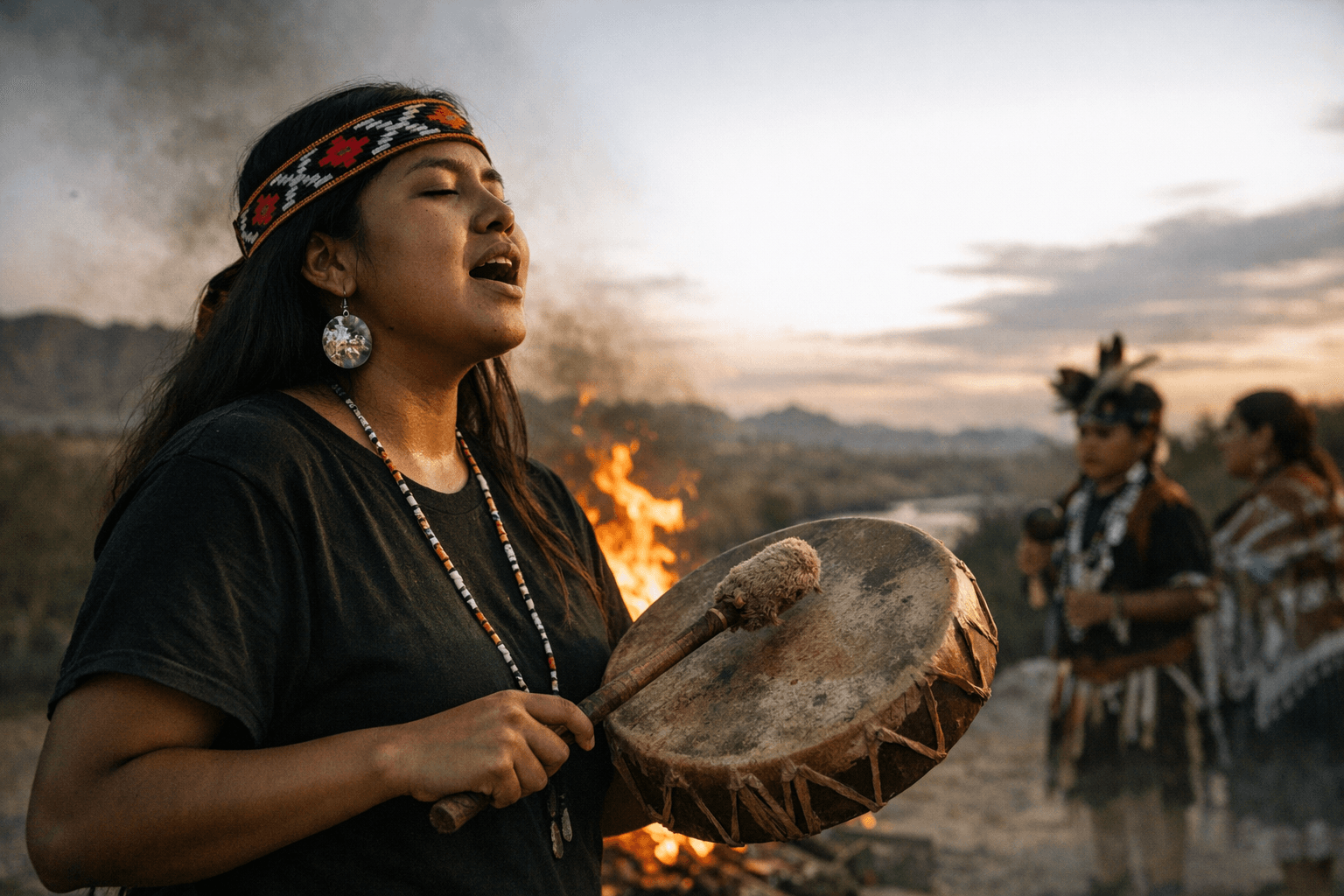
A young voice carrying an old inheritance
Nashja Owl has been singing since she was 6, and that early start has made her more than a performer in the Yuma area. She has become part of the practical work of keeping Quechan heritage intact, using traditional songs to connect with ancestors and help carry the culture forward for younger generations.
That matters because the Quechan people, also known as Kwatsáan, live with a history tied closely to place. The Fort Yuma-Quechan Reservation sits near Yuma, Arizona, on both sides of the Colorado River, stretching across the Arizona, California and Baja California, Mexico borders and covering about 45,000 acres. In a community shaped by borderlines and distance, music is not a backdrop. It is one of the few durable ways knowledge passes from one generation to the next.
Why the songs matter now
For the Quechan community, the stakes are not abstract. The Alliance for California Traditional Arts has noted that very few members of the Quechan and Kumeyaay peoples along the California-Mexico border know the sacred songs that mark rites of passage from birth to death. That is not just a cultural loss. It is a break in the chain of memory, ceremony and identity that can take generations to repair.
That is why youth singers like Owl matter so much. Each song learned and repeated helps preserve something that cannot be replaced by records or textbooks alone. The tradition lives only if young people know it, practice it and are willing to carry it into the future.
The reservation’s cultural work is rooted in language
The Quechan tribe’s language preservation program is built around that same idea. Created by tribal members, it says traditional culture taught through the Native language is meant to give community members lifelong skills so they can prosper in a dual cultural society. That framing is important because preservation is not presented as a museum exercise. It is treated as daily life, education and survival at once.
The program connects language with traditional cultural teaching, which means the act of learning a song is also an act of learning worldview, values and belonging. For a community that lives across state and international lines, the ability to hold both cultural continuity and modern life together is part of what makes the program so significant.
Who is learning from whom
Owl is part of a broader youth movement that shows preservation is already happening in the hands of the next generation. California Humanities highlighted the documentary project “AWAKEN,” which followed Quechan cousins Orlando Jefferson and Kieran Palone as they learned traditional songs and dances even while they loved metal music. That contrast says a great deal about how heritage survives. It does not require young people to choose between old and new identities. It requires elders, families and cultural leaders to make room for both.
The film also underscored another key reality: the Quechan Nation is one of the largest tribes in California, yet many people still do not know it because of its isolated location. That isolation can make it harder for cultural knowledge to spread, but it also makes local youth even more important as carriers of tradition. When the people who grow up inside the culture step forward to sing, they become the bridge between what was taught and what comes next.
What would be lost without youth participation
The loss would not be symbolic alone. If sacred songs are known by only a few community members, then each passing generation brings a sharper risk that songs connected to birth, adulthood and death will weaken or disappear. Cultural advocates have already made clear that the songs are central to intergenerational knowledge, not optional ornament.
Youth participation also keeps the tradition visible in a region where Quechan identity can easily be overlooked. A young singer in Yuma County does more than perform heritage. She makes it harder for the community’s language, ceremony and history to be pushed aside by distance, neglect or misunderstanding. In that sense, Owl’s work is both artistic and civic.
A community defending land and identity at the same time
The cultural effort is unfolding alongside another struggle over what the Quechan homelands should remain. In February 2024, the Fort Yuma Quechan Indian Tribe proposed a national monument to protect more than 390,000 acres of homelands. That proposal reflects a wider determination to safeguard the places that hold memory, ceremony and community life.
The tribe also celebrated a separate victory after the Imperial County Board of Supervisors rejected the Oro Cruz mining project in March 2024. Zion White, a Quechan Tribal council member, said the tribe has continuously opposed threats to its ancestral territories and described the decision as “another win for not only the tribe but all of those who support environmental equality standards.” The message is clear: protecting songs and protecting land are part of the same struggle, because one cannot endure without the other.
Why Yuma County should pay attention
For Yuma County, Owl’s singing is a local story with broader meaning. It reaches into the reservation’s 45,000 acres, across the Colorado River, and into the everyday question of what survives when a language, a ceremony and a people’s memory face pressure from outside forces. The answer depends on who is willing to learn, who is willing to teach and who is willing to sing.
That is what makes Owl’s role so important. She is not preserving the Quechan past as a sentimental gesture. She is helping ensure that sacred songs, language and identity remain available to the next generation, in the place where they belong and in a community that still needs them to endure.
This article was produced by Prism’s automated news system from verified source data, official records, and press releases, then run through automated quality and moderation checks before publishing. The system is built and supervised by the people who set the standards it runs under. Read our full AI policy.
Did this article answer your question?