Yuma artist Luisana Salas builds mural business, eyes art therapy future
Luisana Salas is turning murals and pet portraits into a Yuma income stream, and her next move could link art with local mental health care.
A young artist building a real business in Yuma
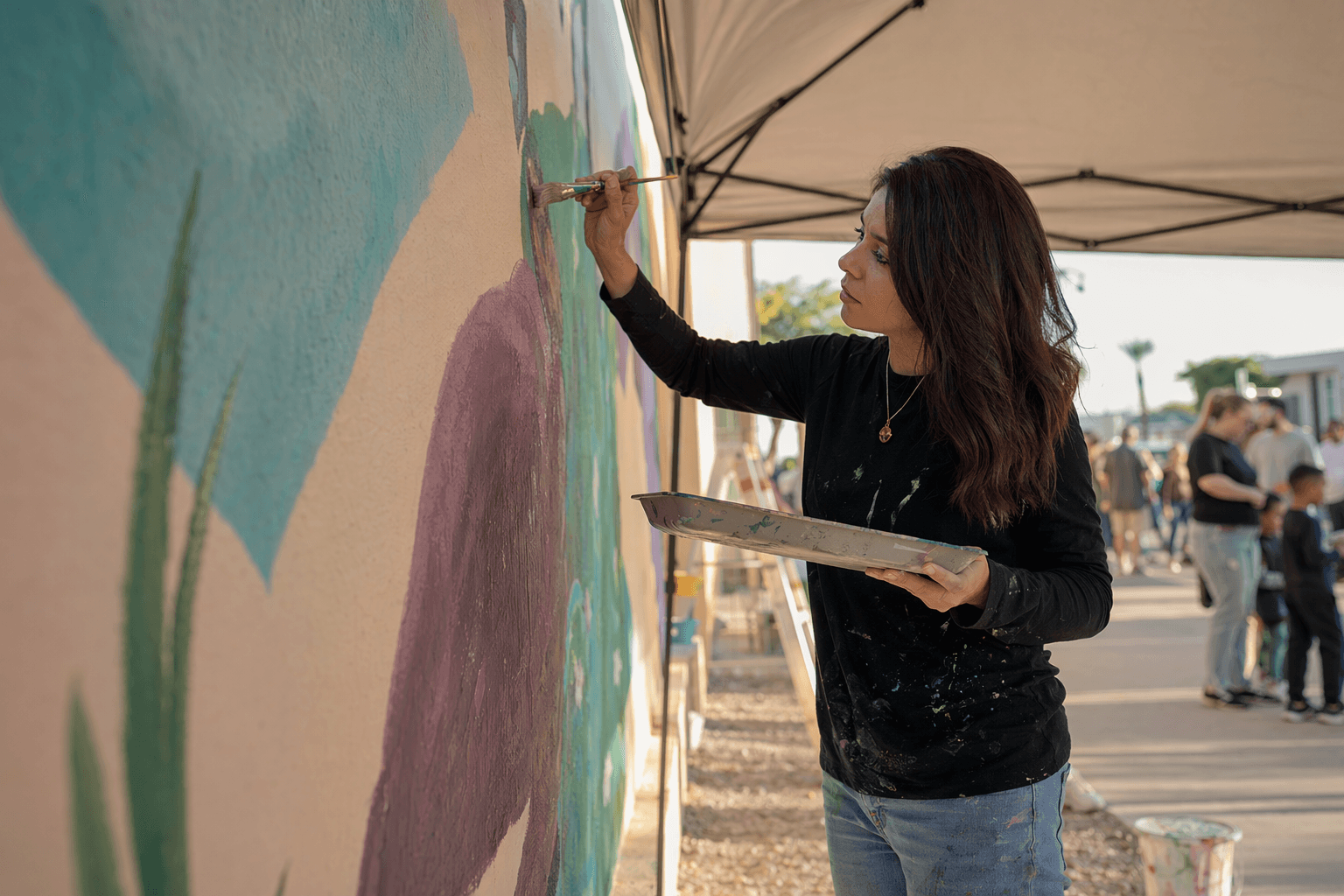
Luisana Salas is doing more than filling walls with color. KAWC describes her as a well sought-after artist in Yuma County, and her work in wall murals and pet portraits has already become part of the local creative economy. What makes her stand out is not just style, but strategy: she is a transfer student at Northern Arizona University and is already thinking about a business in art therapy after she graduates next year.
That matters in Yuma because it shows how a creative career can become an income stream, not just a passion project. Salas is building a name for herself in the kinds of work that people actually commission, murals that change how a street or storefront looks, and portraits that hang in homes. In a county where economic coverage often centers on agriculture, government, crime, or schools, her path points to another kind of local enterprise, one built on skill, visibility, and repeat demand.
Why murals and portraits work as a local business
Salas’s mix of mural work and pet portraits is significant because both markets are rooted in trust and personal connection. Murals are public-facing and can help define the look of a block, a business, or even a neighborhood. Pet portraits are more intimate, and they show how a young artist can serve private clients while developing a recognizable style.
Her personal aesthetic helps, too. The interview notes her love of anime, which she jokingly calls “Japanimation,” a detail that gives her work a memorable identity. In a city where a lot of artists compete for attention, having a clear visual voice can be as important as technical ability. It can also help a client remember the artist behind the work, which is the first step toward a sustainable commission-based business.
Salas’s trajectory suggests how creative work circulates money locally. One mural can bring a business more foot traffic, while a pet portrait can turn a one-time customer into a repeat client or referral source. That is the quiet economic value of artists like Salas: they are not only making images, they are creating small business activity around them.
Yuma already has a public-art ecosystem to plug into
Salas is entering a city that has spent years building public-art infrastructure. The City of Yuma says the Yuma Art Center and Historic Yuma Theatre attract tens of thousands of visitors annually. Together, they support more than 14 visual art exhibitions, nearly 50 unique performing and visual arts classes, film screenings, festivals, and an annual summer mural program.
That ecosystem matters because it gives young artists a pathway from learning to earning. The City says its summer mural program has produced approximately 28 murals across Yuma over 26 years. Most participants, the City says, start with little or no art experience, then spend two weeks in “art boot camp” learning fundamentals such as color theory and shading before moving into the five-week project.
For a student like Salas, that environment signals that Yuma does not treat public art as an afterthought. It treats it as part of the city’s visual identity. That is important for residents, because the result is visible in daily life. Murals are not hidden inside galleries. They sit on walls people pass on the way to work, school, or dinner downtown.
Public art in Yuma is also a tourism strategy
Yuma’s mural projects are not just about beautification. They are part of a broader civic and tourism strategy that uses art to make the city more recognizable and more visitable. The NexGen Arts Committee, formed in 2017, was created to enhance arts engagement in Yuma. One of its efforts, Mural-A-Month, was designed to commission 12 site-specific murals across the city, one each month for 2018, with support from the Arizona Community Foundation of Yuma and the City of Yuma.
The Arizona Commission on the Arts has also highlighted Yuma’s DIY Mural Project, which used randomly mailed “golden ticket/arts summons” invitations to draw residents into mural-making in Yuma, Somerton, and San Luis. That approach says a lot about the county’s arts culture: it is not just top-down commissioning, it is participation, outreach, and neighborhood identity.
Visit Yuma has built on that momentum with a mural trail app that helps visitors learn about murals and public art in downtown Yuma and beyond. That turns murals into more than decoration. It turns them into markers on a map, which is exactly how public art can support local business districts, encourage foot traffic, and give visitors a reason to stay longer.
From NAU to an art therapy future
Salas’s next step is where the story becomes even more interesting. As a transfer student at Northern Arizona University, she is not only studying art, she is thinking ahead to how art can become a health-centered business after graduation. Her plan to start a business in art therapy next year suggests she sees creative work as something that can do more than generate commissions.
That is an important direction for Yuma County. Art therapy connects creative practice with emotional well-being, and it could open a new lane for an artist who already knows how to work with clients and public spaces. It also fits a broader trend in which artists are building careers that combine service, entrepreneurship, and community impact instead of waiting for gallery representation alone.
The NAU connection also matters because it links Yuma to a larger education-to-career pipeline. Students who build portfolios, collaborate on public art, and get mentorship while in school are better positioned to return with practical skills. For Salas, that means the classroom is only part of the story. The next stage is turning those skills into a business that serves Yuma in a different way.
What her path says about Yuma’s creative economy
Salas is a useful case study in how the county’s arts scene is changing. She is not just an artist looking for exposure. She is a young entrepreneur learning how to turn murals, portraits, and personal style into a livelihood. In a place where public art already has civic support, tourism value, and a growing trail of visible projects, that kind of career can take root.
The bigger takeaway is simple: Yuma’s creative economy is not hypothetical. It is already visible on walls, in classrooms, and in the commission work of artists like Salas. As she moves from student to business owner, her work shows how art can shape the look of the city while also shaping a paycheck.
This article was produced by Prism’s automated news system from verified source data, official records, and press releases, then run through automated quality and moderation checks before publishing. The system is built and supervised by the people who set the standards it runs under. Read our full AI policy.
Did this article answer your question?