Yuma Border Cities See Sharp Population Drops Amid Immigration Crackdown
Yuma's population growth rate fell from 3.3% to 1.4% in the year through July 2025, making it one of three U.S. border cities with the sharpest slowdowns, Census data shows.
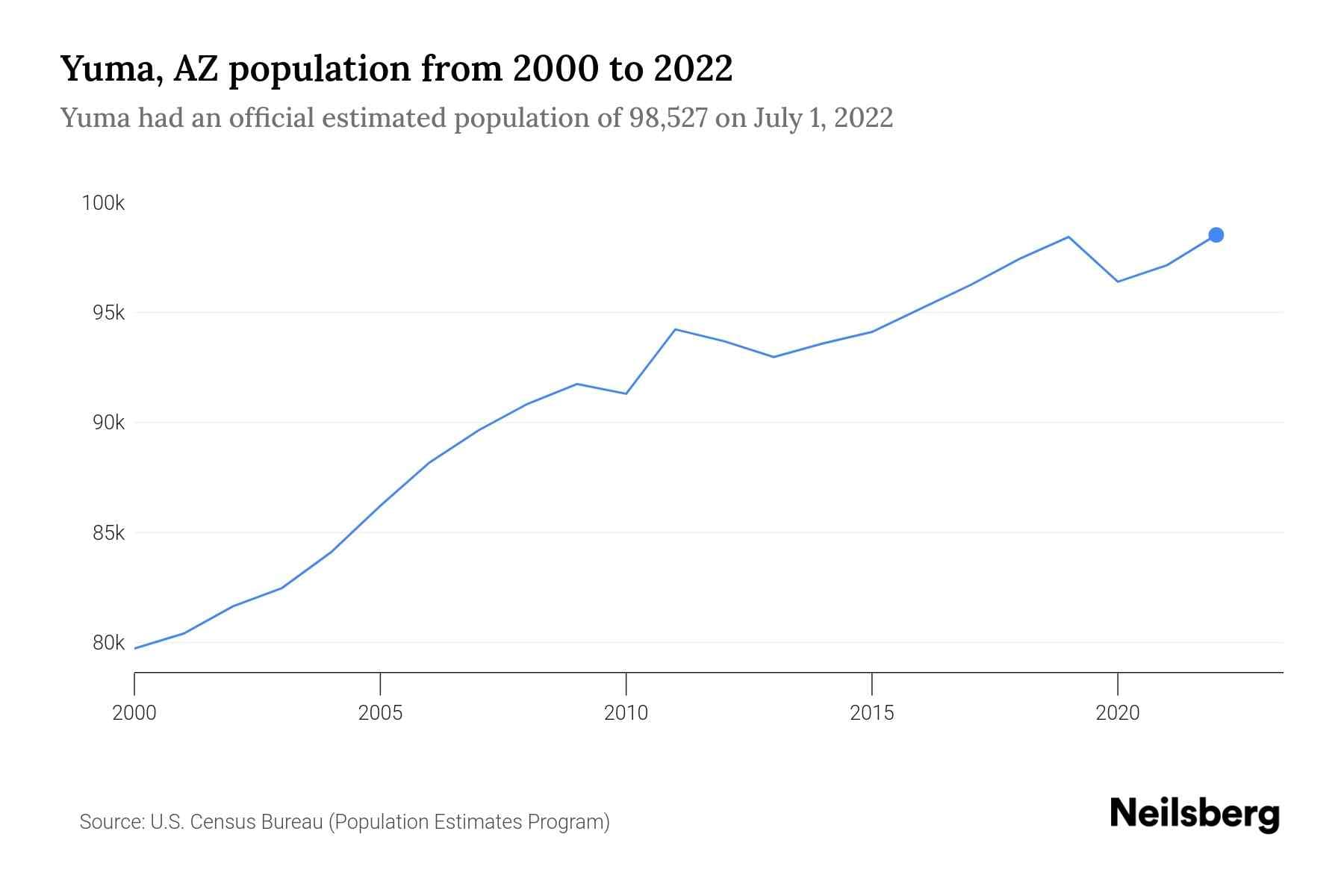
Yuma's population growth rate dropped by more than half in a single year, new U.S. Census Bureau estimates show, placing the Arizona border city alongside Laredo, Texas, and El Centro, California, as one of three metros nationwide where population gains fell the most sharply during the opening months of President Donald Trump's second term.
Yuma's growth rate fell from 3.3% to 1.4% over the one-year period ending July 2025. Laredo saw an even steeper slide, from 3.2% to just 0.2%, while El Centro dropped from 1.2% into negative territory at -0.7%. Their shifting populations were largely due to lower levels of immigration, the Census Bureau said. All three had experienced growth in 2024 because of an influx of thousands of immigrants.
The figures, covering one year through July 2025, reflect the initial months of President Donald Trump's second term and the beginning of his administration's immigration crackdown.
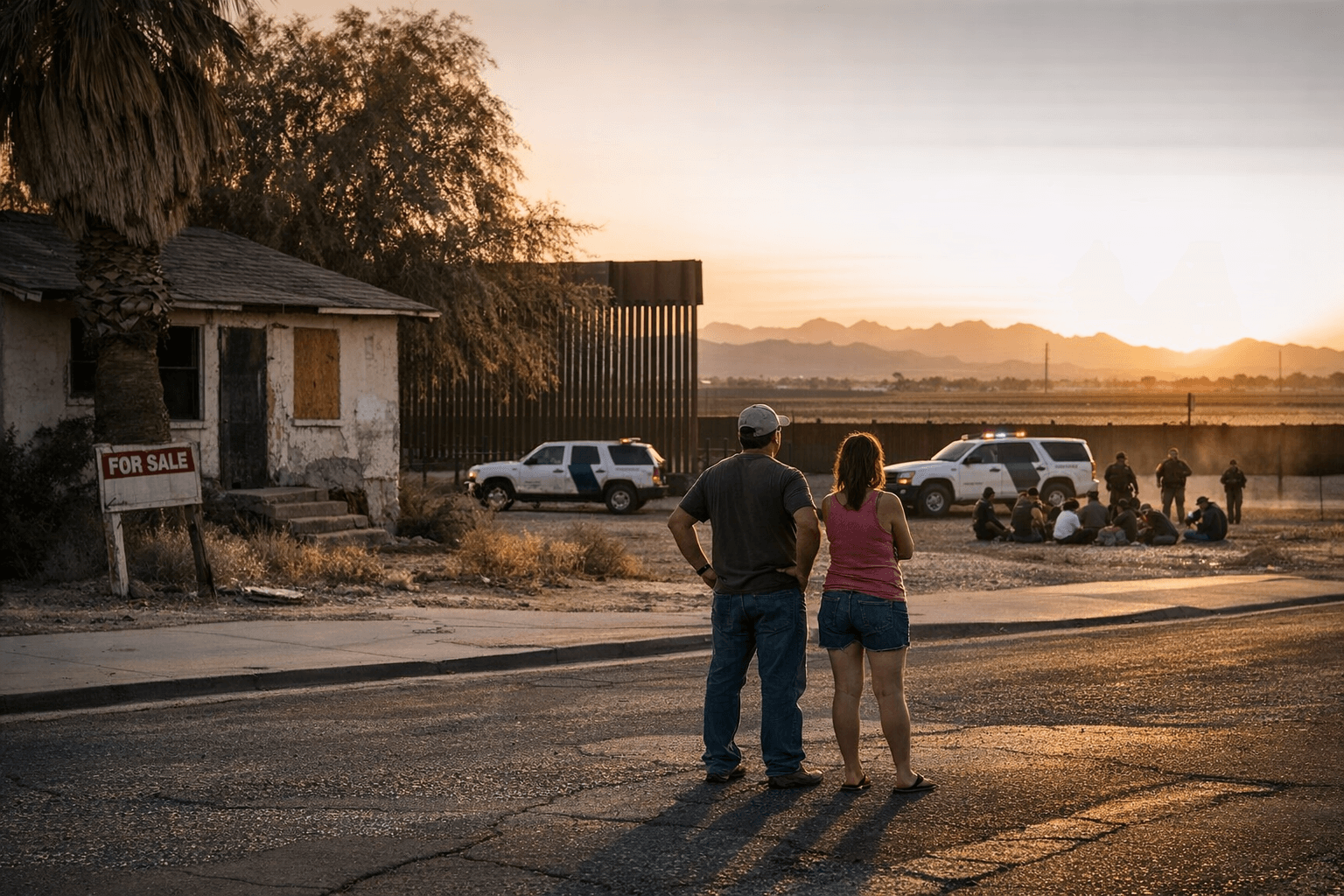
Helen You, interim director of the Texas Demographic Center, said the numbers reveal a structural vulnerability in border communities that does not affect most of the country in the same way. "That pattern suggests a sharper rise-and-fall effect in border regions, where international migration plays a more central role in year-to-year population change," You said.
That dynamic is only intensifying as the country ages. Demographers noted that immigration has become a key driver of population growth in an aging country with low birth rates, and in many large metro areas it now plays an outsized role in determining whether populations rise or fall.
The slowdown was not confined to the border. Major immigrant destinations, including Miami-Dade County, Harris County, Texas, and Los Angeles County, all recorded much lower levels of immigration in 2025. The Census Bureau said nine out of 10 U.S. counties took in fewer immigrants than a year earlier. Nationally, the average growth rate for metro areas fell from 1.1% in 2024 to 0.6% in 2025.
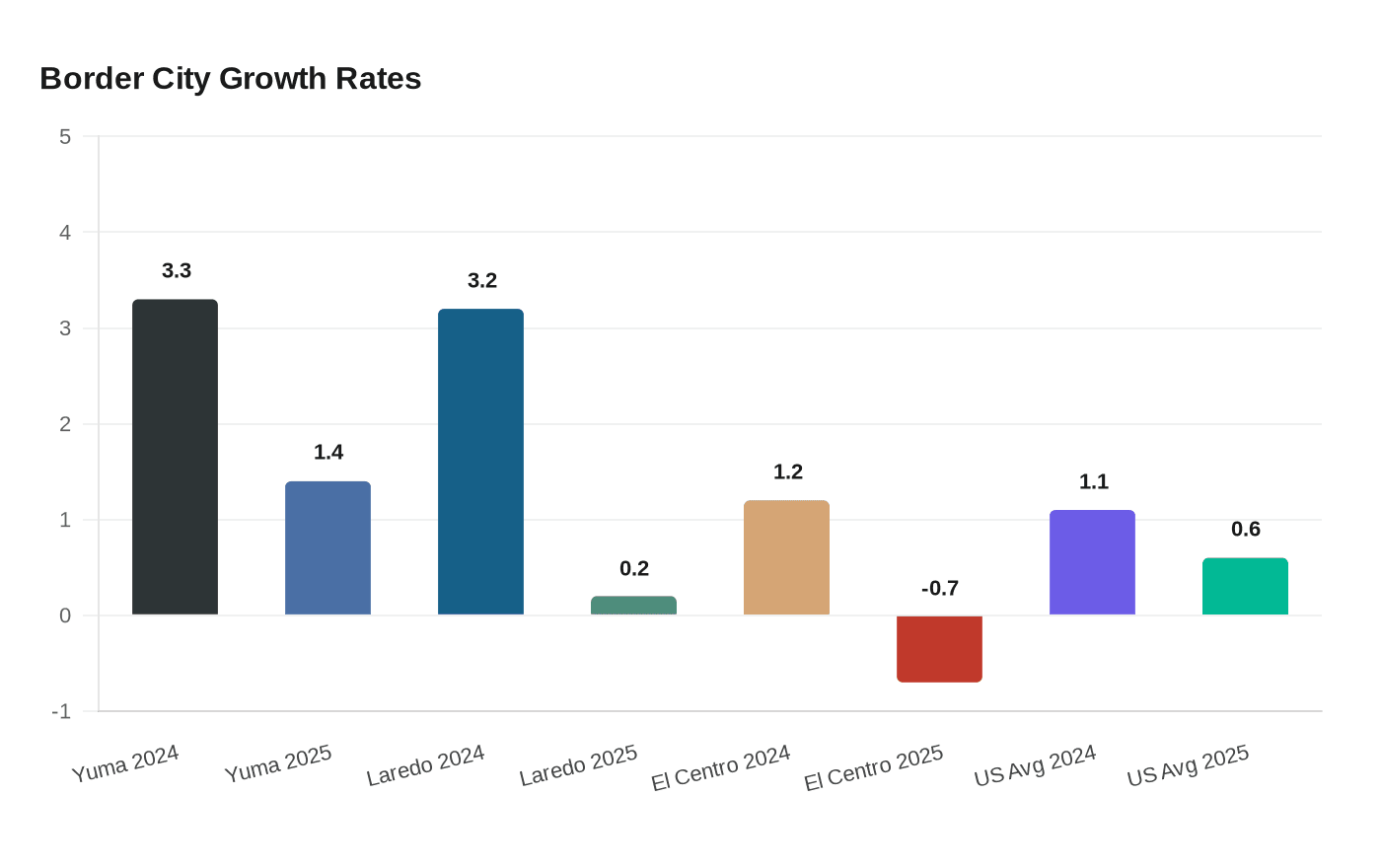
Growth rates in U.S. metro areas dropped the steepest in communities along the U.S.-Mexico border last year because of declines in immigrants, while counties along Florida's Gulf Coast lost residents due to a series of hurricanes, according to the Census Bureau.
Not every metro trended downward. Topping the list of metro areas with rising populations in 2025 were Houston and Dallas-Fort Worth, followed by the Atlanta, Phoenix and Charlotte, North Carolina, metro areas. Phoenix's continued growth stands in contrast to the conditions along Arizona's southern border, where Yuma's trajectory now mirrors the broader pattern playing out in Laredo and El Centro: a community whose recent population gains were built on international migration, now counting the cost of its sudden absence.
This article was produced by Prism’s automated news system from verified source data, official records, and press releases, then run through automated quality and moderation checks before publishing. The system is built and supervised by the people who set the standards it runs under. Read our full AI policy.
Did this article answer your question?