Yuma entrepreneur balances spray tan business and nursing degree
A 22-year-old in Yuma is betting that a lean beauty business can grow alongside a nursing degree, but the real test is building enough local repeat customers to keep it steady.

A lean beauty business in a market that rewards repetition
Jamie Frazier is trying to build Salt and Sun Spray Tans in Yuma at the same time she is working toward a nursing degree, and that combination says as much about the local economy as it does about her ambition. At 22, she is not entering entrepreneurship through a franchise deal or a major commercial lease. She is trying to make a service business work through personal visibility, repeat bookings and word-of-mouth in a city where trust matters and where a young owner has to be both the face of the brand and the engine behind it.
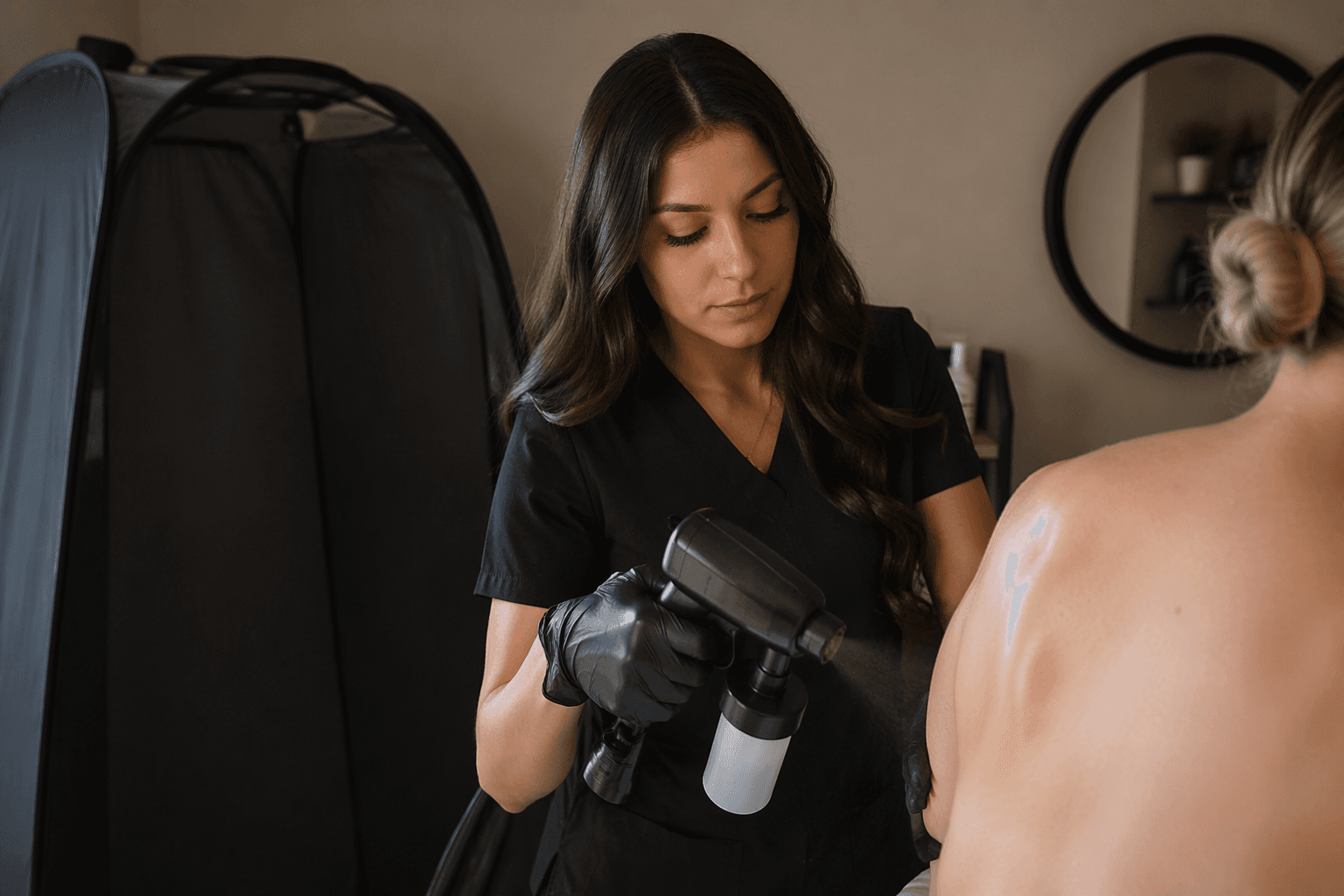
That is the real challenge for a business like this: keeping startup costs and operating expenses low enough to survive while still creating a polished service customers will come back for. A spray tan operation can be a lighter lift than a full-service salon, but it still depends on equipment, supplies, marketing and enough demand to turn appointments into steady cash flow. For Frazier, the added pressure is time. School limits flexibility, which means every booking has to count and every customer relationship has to be strong enough to bring the next one.
Why Yuma can support a service like this
Yuma County gives that kind of business a real, if competitive, customer base. The county’s population was estimated at 220,310 on July 1, 2024, and 66.1% of residents identified as Hispanic or Latino in the Census Bureau’s QuickFacts profile. The county also reported a median household income of $60,417 and a bachelor’s degree-or-higher rate of 16.7% among adults 25 and older, figures that help explain why small, practical service businesses often have to work hard for every dollar and every repeat visit.
The spending numbers show there is still room for consumer-facing businesses. Yuma County recorded $3.53 billion in retail sales in 2022, along with $566.4 million in accommodation and food services sales. That matters for a business built around events, personal presentation and short turnaround times. Spray tanning is not a necessity, but in a desert market where people are preparing for weddings, vacations, graduations and social events, it fits into a recognizable local pattern of discretionary spending.
The risks of building locally, one client at a time
The upside of a one-owner business is flexibility; the downside is vulnerability. Frazier does not have the cushion of a large payroll or a corporate brand behind her, and she is entering a market where customer loyalty is everything. If repeat bookings slow down, if advertising does not convert, or if a few regular clients drift away, the business feels it immediately.
That risk is sharpened by the fact that Yuma already has other tanning and spray-tanning businesses, including Elite Tanning & Salon, which offers traditional tanning beds, stand-up booths and spray tanning. In other words, Salt and Sun Spray Tans is not inventing a niche from scratch. It is fighting for attention in a service category that customers already understand, which can be good for demand but unforgiving for a newcomer. To stand out, a small operator has to offer convenience, consistency and enough personal service to make the next appointment feel easy.
What Jamie Frazier’s path says about Yuma’s small-business climate
Frazier’s story fits a broader pattern in Yuma’s economy: the city is not just a place for large employers or established storefronts, but also for first-generation operators and younger founders trying to build something on the side before it becomes something bigger. KAWC’s community-focused storytelling captured that shift well. The value of the episode is not just that a 22-year-old owns a business. It is that she is doing it while still investing in another career path, which is a reminder that entrepreneurship here is often braided into work, school and family obligations rather than separated from them.
That matters in a county where Arizona’s economic profile says poverty and unemployment are both higher than the state and national averages. Those conditions can make local entrepreneurship harder, but they also help explain why some residents create their own opportunities instead of waiting for them. A young owner balancing classes and clients is not unusual in a market that rewards practicality, hustle and low overhead.
At the same time, Yuma’s economic development pitch suggests the city sees room for businesses at every scale. The City of Yuma highlights low costs, a skilled workforce and a strategic location near California and Mexico, along with strengths in manufacturing, aerospace, logistics, agriculture and life sciences. That is a broad economic base, and it helps support consumer spending in the service sector even when the region faces tighter income and education statistics than the state overall.
The takeaway for first-time owners in Yuma
Frazier’s business is small, but it is revealing. Salt and Sun Spray Tans shows how a first-time owner in Yuma can enter the market without a massive investment, lean on local demand and try to grow through personal trust instead of scale. It also shows the limits of that model: competition is real, customer retention is essential, and balancing ownership with nursing school leaves little room for mistakes.
For Yuma County, that makes her business more than a side note. It is a test case for whether the local economy can keep producing room for young residents who want to build something of their own. In a county shaped by service spending, modest incomes and a need for steady opportunity, businesses like Frazier’s are not just surviving on the margins. They are part of how the city keeps its small-business base moving forward.
This article was produced by Prism’s automated news system from verified source data, official records, and press releases, then run through automated quality and moderation checks before publishing. The system is built and supervised by the people who set the standards it runs under. Read our full AI policy.
Did this article answer your question?