Yuma mom builds support network and kids' brand amid struggles
Sabrina Molina turned postpartum isolation into a moms network and kids' brand that now fills a real need for Yuma families.
A village built from loneliness
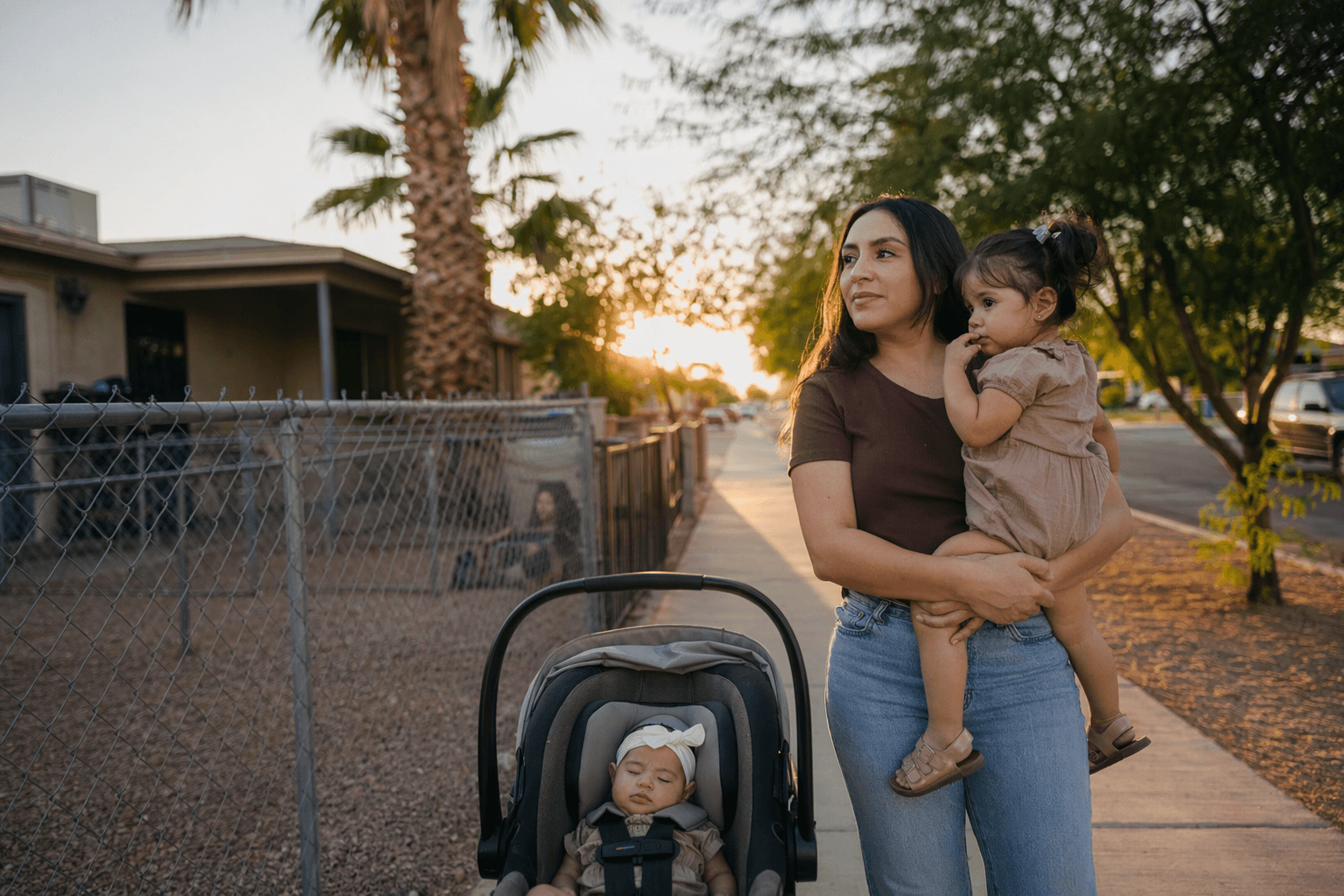
Sabrina Molina did not set out to become a local model of entrepreneurship. She was a 27-year-old stay-at-home mother trying to manage a newly turned 3-year-old, an almost 2-year-old, and two bonus kids while navigating postpartum anxiety and depression. In that stretch of isolation, she built what she says she needed most: a village.
That idea became the foundation for two connected ventures in Yuma. One is a growing moms network that began as Walking Moms of Yuma and later became Mamas and Minis of Yuma. The other is Desert Babes Bold, an online brand that sells baby bows and trucker hats for kids and adults. Together, they show how a small local business can also function as a support system, a social anchor, and a point of identity for young families.
From walking group to wider community hub
Walking Moms of Yuma started with a simple purpose: get moms together and make room for connection. As the group grew, the name changed to Mamas and Minis of Yuma, reflecting how the mission expanded beyond walks into events and playdates. That shift matters because it shows the group is not just about exercise or casual meetups; it has become a broader community network for parents looking for consistency, friendship, and a place to belong.
Molina’s experience also reflects a reality many families in Yuma know well. She said she did not grow up in the city and often felt alone there, which made the need for connection feel urgent rather than optional. The group’s growth suggests that she was not the only one searching for a closer network, especially in a place where many residents are newcomers, working parents, or people trying to build roots while managing busy lives.
A small business with a personal edge
Desert Babes Bold began during nap times, which gives the brand a very Yuma kind of origin story: family life and business life folded into the same hours of the day. Molina built it as something personal, then watched it grow through pop-ups around Yuma and through community support that embraced both the products and the larger story behind them. What began as a side effort became part of her household income and part of her public identity.
The brand sells baby bows and trucker hats for kids and adults, which keeps it playful while still being practical for local shoppers. That mix matters for small-business readers because it shows how homegrown brands can expand without losing their connection to the community that first lifted them up. In Molina’s case, the business is not separate from the moms network; both grew from the same need for belonging and both reinforce one another.
Why this resonates in Yuma County
Yuma County had an estimated population of 220,310 in 2024, making it the sixth-most populous county in Arizona. It also accounted for 0.7% of the state’s total population growth from 2019 to 2024, and 32.3% of people who moved into the county from another U.S. state in 2024 were ages 25 to 54. Those numbers point to a county shaped by growth, mobility, and working-age families, which helps explain why a network like Mamas and Minis of Yuma can fill such a visible need.
In communities where families are arriving, moving, or rebuilding routines, the first challenge is often not just finding services, but finding people. A parent group that doubles as a social circle can help solve problems that are easy to overlook, from loneliness to the daily logistics of raising young children. Molina’s story lands squarely in that space, where entrepreneurship is not only about products sold, but about the relationships that make a business meaningful.
For Yuma’s small-business community, the lesson is equally practical. A brand tied to real local needs can gain loyalty faster than something built only around aesthetics or trends. Molina’s work shows that a business rooted in lived experience can become part of the city’s informal infrastructure, especially for parents who want both support and a sense of local pride.
Maternal mental health is part of the story
The strongest part of Molina’s story is not just that she built something successful. It is that she built it while dealing with postpartum anxiety and depression, turning a private struggle into a public resource for other mothers. That makes the story part entrepreneurship and part public health, because the need for connection among new parents often overlaps with mental health risk.
Postpartum Support International’s Arizona chapter says its mission is to increase awareness, education, prevention, and treatment of perinatal mental health issues affecting individuals, families, and support systems across the state. The National Maternal Mental Health Hotline also offers free, confidential, 24/7 support in English and Spanish for pregnant and postpartum individuals experiencing mental health issues. Those resources matter because they recognize that parenting challenges are not just personal; they are health issues that deserve access, treatment, and community response.
Arizona health materials underscore why that support cannot be treated lightly. They cite a 44% increase in pregnancy-related deaths from 2016/2017 to 2018/2019, with 90% deemed preventable. In that context, a peer network like Mamas and Minis of Yuma is more than a feel-good gathering. It is one small but meaningful way families can reduce isolation and spot needs earlier, especially when the women involved may not have long-established support systems.
What Molina’s path says about Yuma’s parent economy
Molina’s business and community work reflect a larger pattern in Yuma County: families here are not only consumers, they are builders of networks, brands, and shared spaces. Her story shows how a parent-centered business can answer an emotional need and a market need at the same time. That is why her work has drawn attention beyond the products themselves.
The practical takeaway for Yuma is clear. A moms group can become a community anchor; a small brand can become a local identity; and a personal struggle can become a structure that helps other families feel less alone. In a county growing as fast and changing as Yuma, that combination carries real weight, not just for one mother, but for the parent economy she is helping shape.
This article was produced by Prism’s automated news system from verified source data, official records, and press releases, then run through automated quality and moderation checks before publishing. The system is built and supervised by the people who set the standards it runs under. Read our full AI policy.
Did this article answer your question?