Yuma mother-daughter salon expands into local beauty-supply industry
KYMA spotlighted a Yuma mother-daughter salon that has expanded beyond chair work into the local beauty-supply industry.
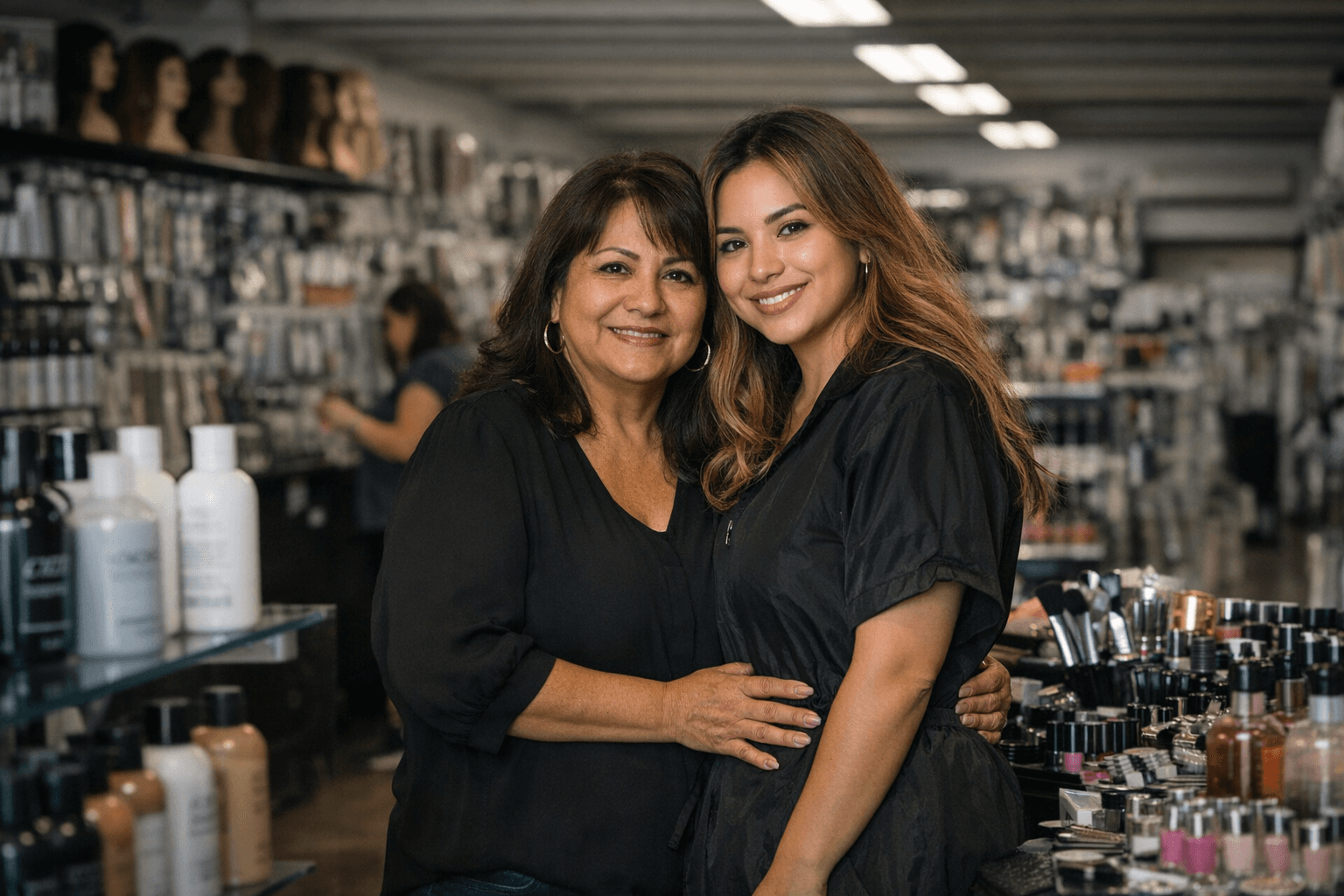
KYMA published a Black History Month feature on Feb. 17, 2026, highlighting a Yuma family-owned salon led by a mother-daughter duo that "has expanded beyond chair work into broader influence over the local beauty‑supply industry." The brief KYMA excerpt supplied with the segment said, "A mother-daughter duo own a local salon and are changing the game in the beauty supply industry." It also included the truncated line: "Co-owning the shop with my family, not just my"
The KYMA piece ran as part of local Black History Month coverage and was shared on social media; a Facebook post that circulated the series paired the Yuma salon profile with another item, reading in part: "Black History Month: Yuma family salon helps change the game in the local beauty supply ... Black women create accessible salon in Atlanta, GA." KYMA's description of the salon moving beyond chair work signals a shift from service-only operations to a role that touches retail or distribution in Yuma's beauty ecosystem, although KYMA's supplied material does not detail names, addresses, products, or timelines.
A separate Black History Month profile published by Azfamily/3TV-CBS5 focused on a long-standing Yuma business, the 15th Avenue Barbershop. Azfamily described the shop as "one of the first black-owned barbershops in the state" and reported that founder James Williams opened the shop in 1966, "just two years after the Civil Rights Act of 1964 was passed." Williams told Azfamily, “At the time I started, there weren’t many places where black people could get haircuts,” and added, "It was kinda segregated, they referred most of the black customers here to the barbershop."
Azfamily's reporting traced the barbershop's community role through personal accounts. Craig Austin, who began cutting hair there after he lost his job during the pandemic, said, “He opened up the doors to me.” Austin reflected on identity and the shop's place in the community: “As I got older I realized I was the color, it is me, I am black and that’s okay. There’s nothing wrong with it, nothing wrong with you being who you are," and “If these walls could talk, man, they’ve seen a lot, a lot of history is here.” Customer Lowell Robinson, who was stationed at the Marine base in Yuma, recalled word of mouth bringing him to the shop "over 30 years ago" and said, “Hey where’s the black barbers at and before you know it they’re all coming out here for a haircut. Black, white, people of all colors,” underscoring a diverse clientele.
Together, KYMA’s Feb. 17, 2026 salon profile and Azfamily’s barbershop piece sketch a local Black History Month narrative in Yuma that links contemporary entrepreneurship to a civil-rights-era legacy. KYMA’s language about expanded influence in the beauty-supply industry points to potential economic shifts in how Black-owned personal-care businesses in Yuma generate revenue and local supply-chain presence, even as the specific operational details of that expansion remain to be documented.
This article was produced by Prism’s automated news system from verified source data, official records, and press releases, then run through automated quality and moderation checks before publishing. The system is built and supervised by the people who set the standards it runs under. Read our full AI policy.
Did this article answer your question?