Yuma Proving Ground Builds Rain Simulators for Year-Round Wet Weather Testing
YPG built two rain simulators so engineers can test vehicles in controlled downpours year-round, without waiting for Yuma's rare storms.
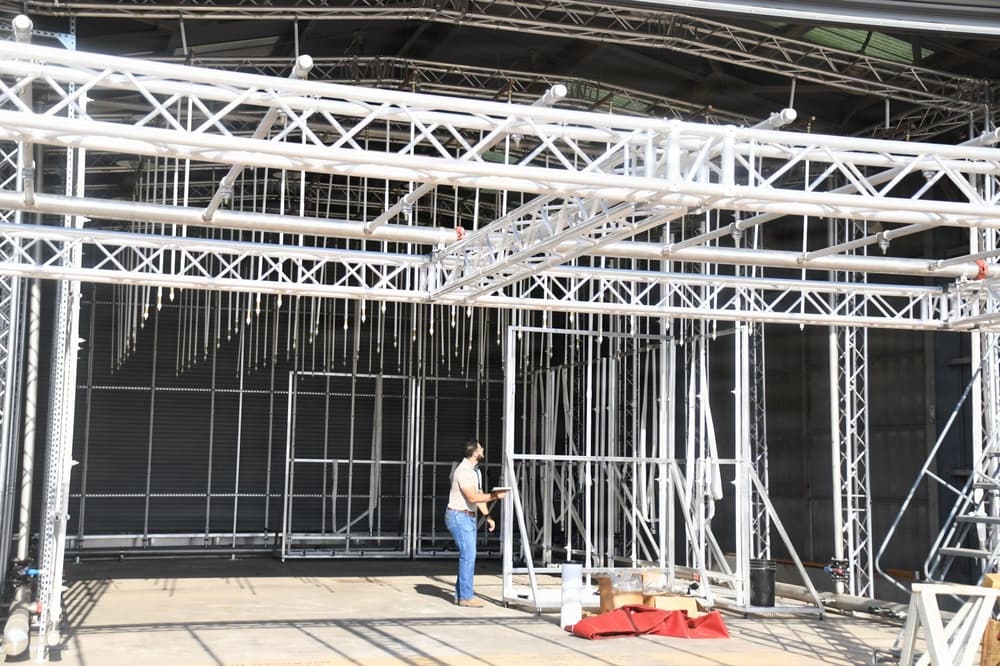
Yuma Proving Ground has engineered its own weather. The Metrology and Simulation Division at the Yuma Test Center completed construction and fielding of two purpose-built rain-simulation systems in late March, giving test engineers the ability to generate controlled downpours on demand rather than waiting for the clouds that rarely appear over the Sonoran Desert.
The two units serve distinct roles. The Enclosed Rain Array System, known as ERAS, is a stationary indoor generator designed for laboratory-style testing where precision and repeatability are non-negotiable. Its counterpart, the Modular Rain Array System (MRAS), is a mobile outdoor unit that can be transported to larger test lanes, vehicle ranges, and proving ground courses across YPG's sprawling installation. Together, the systems extend wet-weather testing from a controlled room to the full breadth of YPG's test infrastructure.
Both were built using locally fabricated hardware, including hose networks, sprinkler arrays, and engineered mounting structures, combined with instrumentation that allows engineers to dial in specific rainfall intensity, droplet size, and distribution patterns. When a test plan calls for replicating a monsoon downpour or a light coastal drizzle, operators can configure either unit to match those conditions precisely, then reproduce them identically across multiple test runs.
That repeatability is the core value. Validating a vehicle's braking performance, sensor reliability, electronics sealing, or troop ingress and egress in wet conditions requires consistent, measurable precipitation, not a lucky storm window. YPG has long operated as one of the Department of Defense's premier extreme-environment test centers, and the new rain simulators extend that philosophy into wet-weather certification.
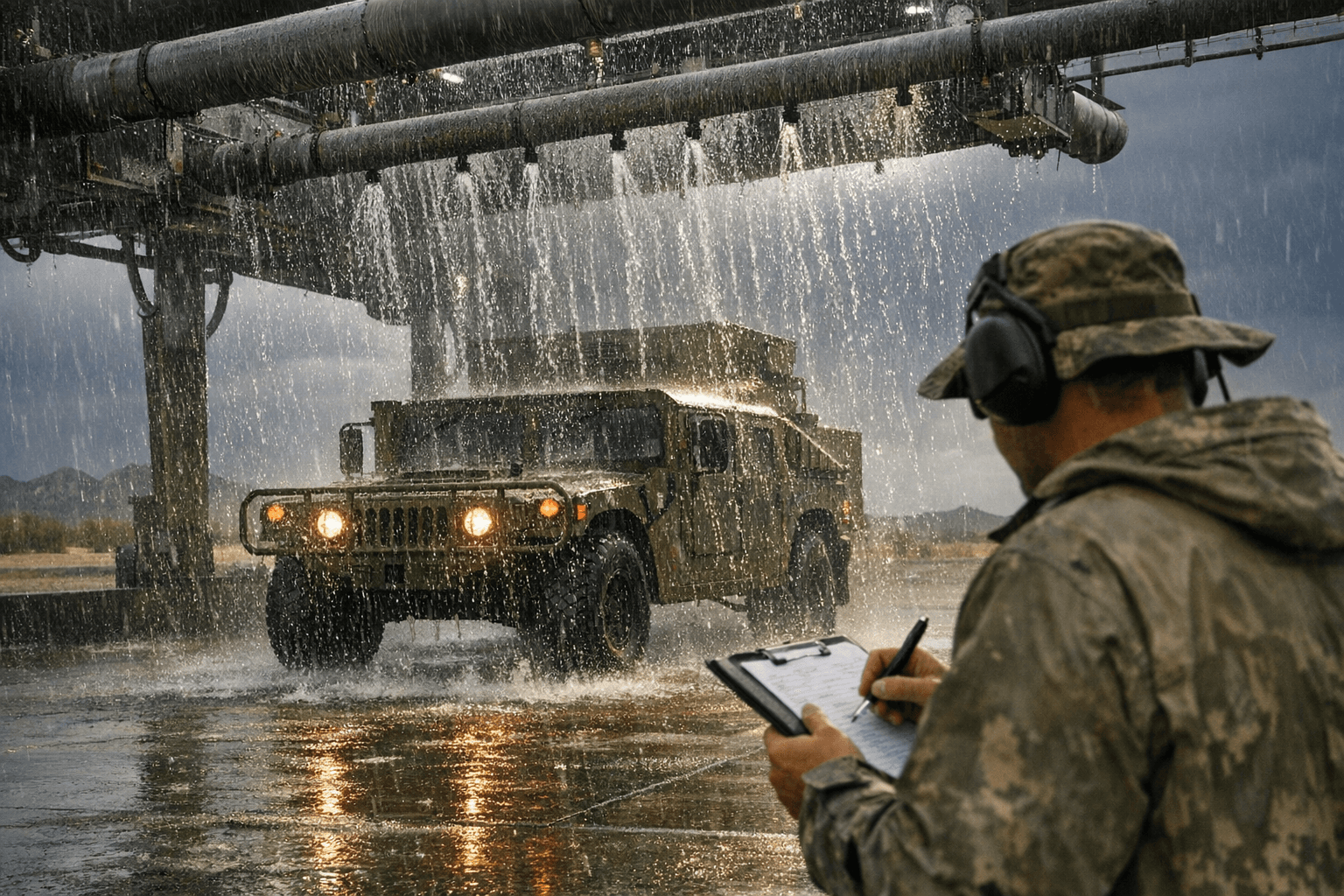
Yuma's famously dry climate, which averages roughly three inches of rain annually, is less a limitation here than an engineering asset. Because natural precipitation is rare and unpredictable, the absence of ambient moisture gives test teams precise control over their variables. When rain is a requirement, ERAS or MRAS can supply it. When a test demands dry conditions, the desert obliges on its own.
For contractors, engineers, and support vendors operating within YPG's test ecosystem, the capability removes a significant scheduling constraint. Wet-weather testing slots no longer hinge on seasonal monsoon patterns or rare winter storms, which translates directly to faster development cycles for Army, joint-force, and allied military programs moving through YPG's pipeline. The Metrology and Simulation Division's investment also points to continued demand for local fabrication, instrumentation, and logistics work tied to the installation's growing test infrastructure.
This article was produced by Prism’s automated news system from verified source data, official records, and press releases, then run through automated quality and moderation checks before publishing. The system is built and supervised by the people who set the standards it runs under. Read our full AI policy.
Did this article answer your question?