Yuma Territorial Prison Museum brings frontier justice history to life
Original cell blocks, a restored guard tower and 104 buried inmates make Yuma's former territorial prison a vivid stop on the Colorado River.
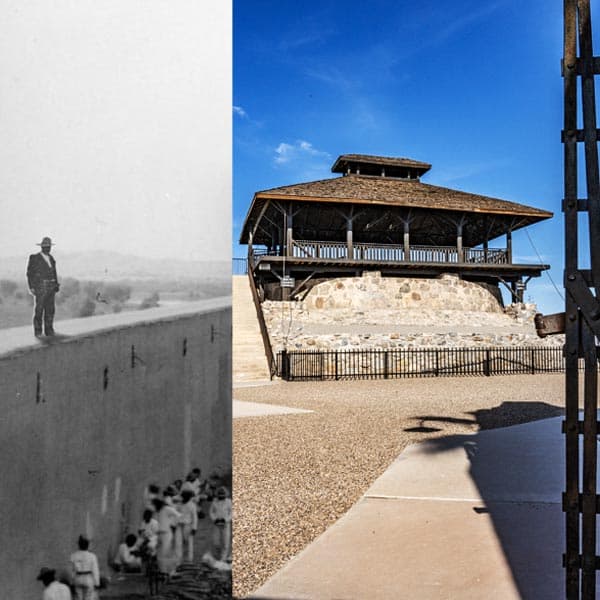
The Yuma Territorial Prison Museum lets you walk through one of Arizona’s most important frontier sites instead of just reading about it. Built in 1876 on a bluff above the Colorado River, the prison held more than 3,000 inmates before closing in 1909, and its preserved cells, tower and cemetery still show how territorial justice worked in the desert.
From frontier prison to public museum
The prison opened when Yuma was still a territorial outpost shaped by river crossings, military supply lines and hard travel across the Southwest. Arizona State Parks places the site three miles west of the confluence of the Colorado River and the historic Gila River, a location that made the prison visible, isolated and strategically placed above the river corridor. Ground was broken in 1876, and some prisoners were pressed into service to help build their own cells before the first seven inmates moved in on July 1, 1876.
That timeline matters because it shows how quickly the site became part of Yuma’s identity. The prison operated for 33 years, then inmates were moved to a larger facility in Florence in 1909. After closure, the building stopped being a correctional institution and became a museum and state historic park, turning a place of confinement into one of Yuma County’s most recognizable heritage stops.
The prison’s setting helps explain why it still draws attention. Perched above the river, it sits close to the old transportation routes that helped shape the city, and it is linked historically to the nearby Yuma Quartermaster’s Depot, the Army supply depot that operated from 1865 to 1883. Taken together, the prison and depot show how military logistics, river travel and territorial law enforcement overlapped in one compact corner of Arizona.
What you actually see on a visit
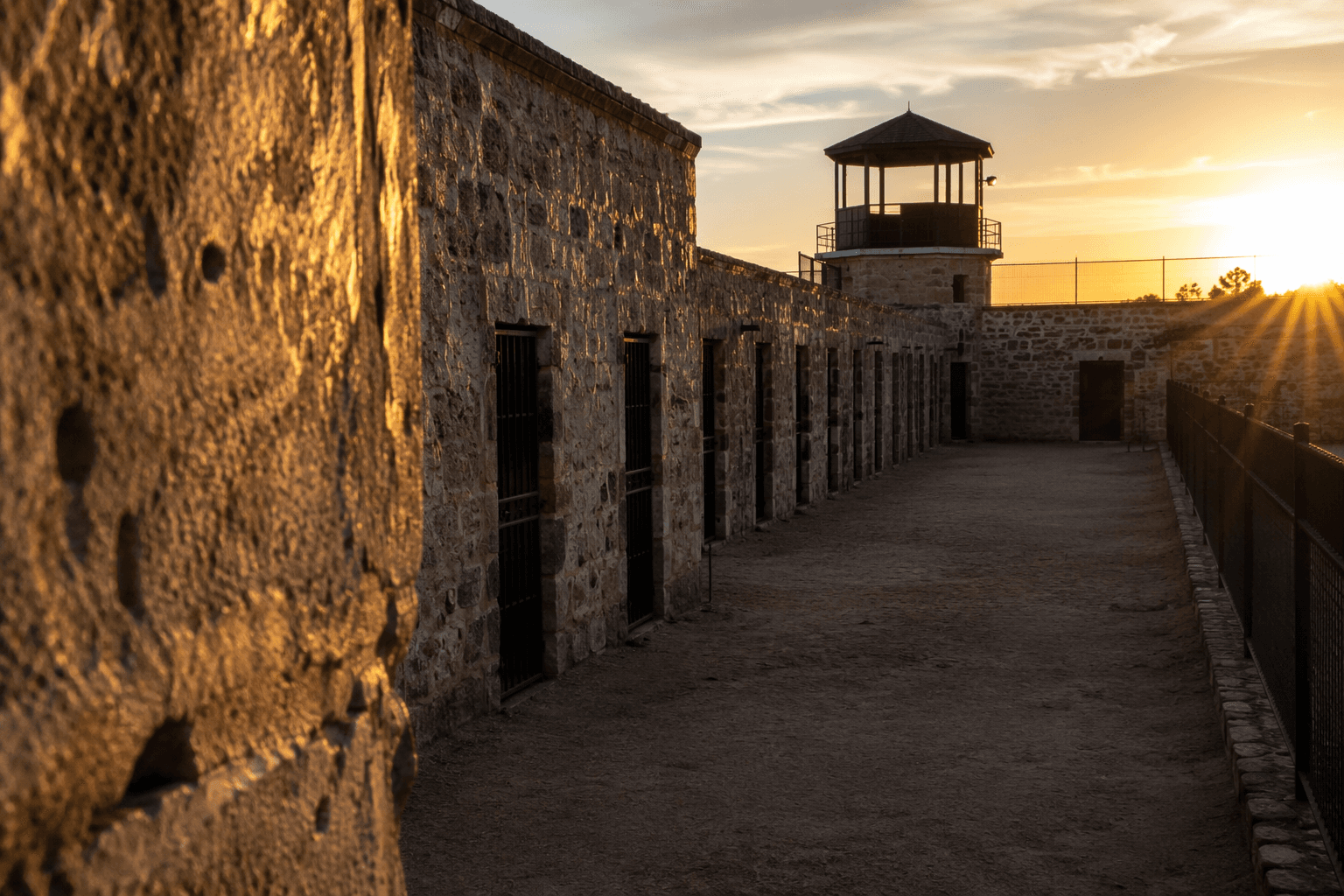
First-time visitors should expect a site that feels like a lived-in historic landscape, not a single building with a plaque. The museum and state park preserve original cell blocks, a restored guard tower and the prison cemetery, where 104 inmates are buried. The outdoor grounds matter as much as the structures because they make the prison’s isolation, scale and desert conditions easy to understand.
You can move through the site as a sequence of spaces that tell different parts of the story:
- original cell blocks that show how tightly inmates were housed
- a restored guard tower that frames the prison’s security system
- exhibits that explain daily life, punishment and prison operations
- outdoor grounds that reveal the bluff-top setting over the Colorado River
- the cemetery, where 104 inmates remain buried on site
That mix is what gives the museum its strength as a local-history stop. It is not just about famous escape stories or outlaw imagery; it is about how a real territorial institution functioned in a harsh landscape. The prison’s physical layout, from the cells to the cemetery, lets you see the distance between the myth of the Wild West and the actual machinery of confinement.
Which parts of the legend are real
The prison’s reputation grew in a region that still trades on frontier lore, but some of the most colorful details are documented history rather than campfire exaggeration. A museum page highlights Pearl Hart among the prison’s notable inmates, giving the site one of the best-known names in Arizona prison history. Another historical account says the prison once held the largest library in the Arizona Territory, with about 2,000 books, a detail that complicates the idea that frontier prisons were only rough, lawless places.
The harder truth is even more striking. More than 3,000 inmates passed through the prison over its 33 years, and many of them lived in conditions defined by heat, isolation and labor. Arizona State Parks says prisoners were even used in the construction process after ground was broken in 1876, which makes the prison a rare example of a facility literally built with inmate labor at the edge of the territorial settlement.
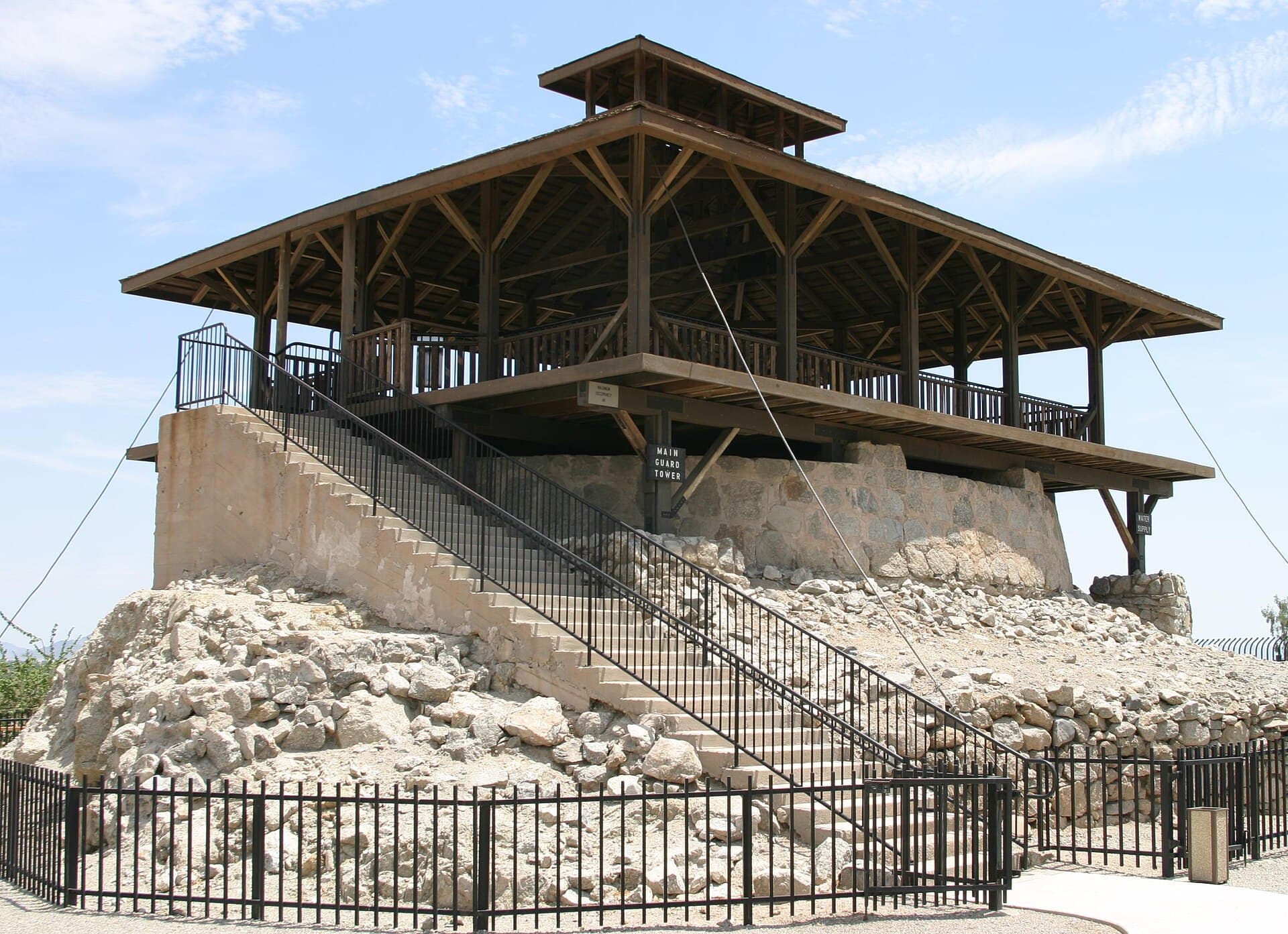
That mix of documented facts and colorful characters is why the site still works so well for visitors. It gives you a recognizable Old West story, but then grounds it in records, structures and named people. The result is more interesting than nostalgia: a place where the historical record is vivid enough to stand on its own.
Why the prison still matters to Yuma
The museum remains important because it gives Yuma a physical anchor for its civic story. This is where the city can point to a real, preserved landmark that connects river geography, military history and territorial law in one visitable place. It also helps sustain Yuma’s tourism profile by giving travelers a reason to spend time in a site that is both easy to understand and rooted in local history.
That matters in a county where heritage tourism is part of how the community presents itself to outsiders and remembers itself internally. The prison museum sits near the city’s other historic layers, including the river corridor and the old depot landscape, so a visit does more than fill an afternoon. It shows how Yuma grew from a frontier crossing into a place that now treats its territorial past as one of its most visible public assets.
This article was produced by Prism’s automated news system from verified source data, official records, and press releases, then run through automated quality and moderation checks before publishing. The system is built and supervised by the people who set the standards it runs under. Read our full AI policy.
Did this article answer your question?