Yuma wins $300,000 grant to study ag-tech incubator
A $300,000 federal grant could help Yuma turn its desert-ag expertise into a startup incubator, with jobs and investment on the line.

Yuma County’s farm economy could be getting a new growth engine: a $300,000 federal planning grant to study an ag-tech incubator that would give startups a place to build, test and validate new desert-farming technologies before taking them to market.
The Yuma Center of Excellence for Desert Agriculture, working with the Greater Yuma Economic Development Corporation and the University of Arizona Yuma Agricultural Center, will use the money to determine whether demand is strong enough to justify dedicated space at the Yuma Ag Center. If the effort advances, the incubator could become a home for companies working on precision irrigation, harvest automation, remote monitoring, crop protection and other tools designed for harsh desert conditions.
The pitch lands in a region already deeply tied to agriculture. Greater Yuma says the area supports more than 170 crops and about 15,000 food-production workers, and supplies 90% of the nation’s winter leafy vegetables. That scale gives Yuma a built-in market for companies that need real-world conditions, large growers and immediate feedback from the field. A successful incubator could keep more high-value research, validation and business formation inside Yuma County instead of sending that work elsewhere.
Tanya Hodges, who became executive director of the center in April 2024, said the region still lacks a place where young companies can move through early development and validation in the desert-ag setting. Hodges brings 16 years of agricultural industry experience and 16 years in agricultural academia, a background that fits a project meant to connect growers, researchers and entrepreneurs. The center itself launched in 2014 as a public-private partnership focused on high-priority desert-ag issues, including disease, water management, crop yield, food safety and new technology.
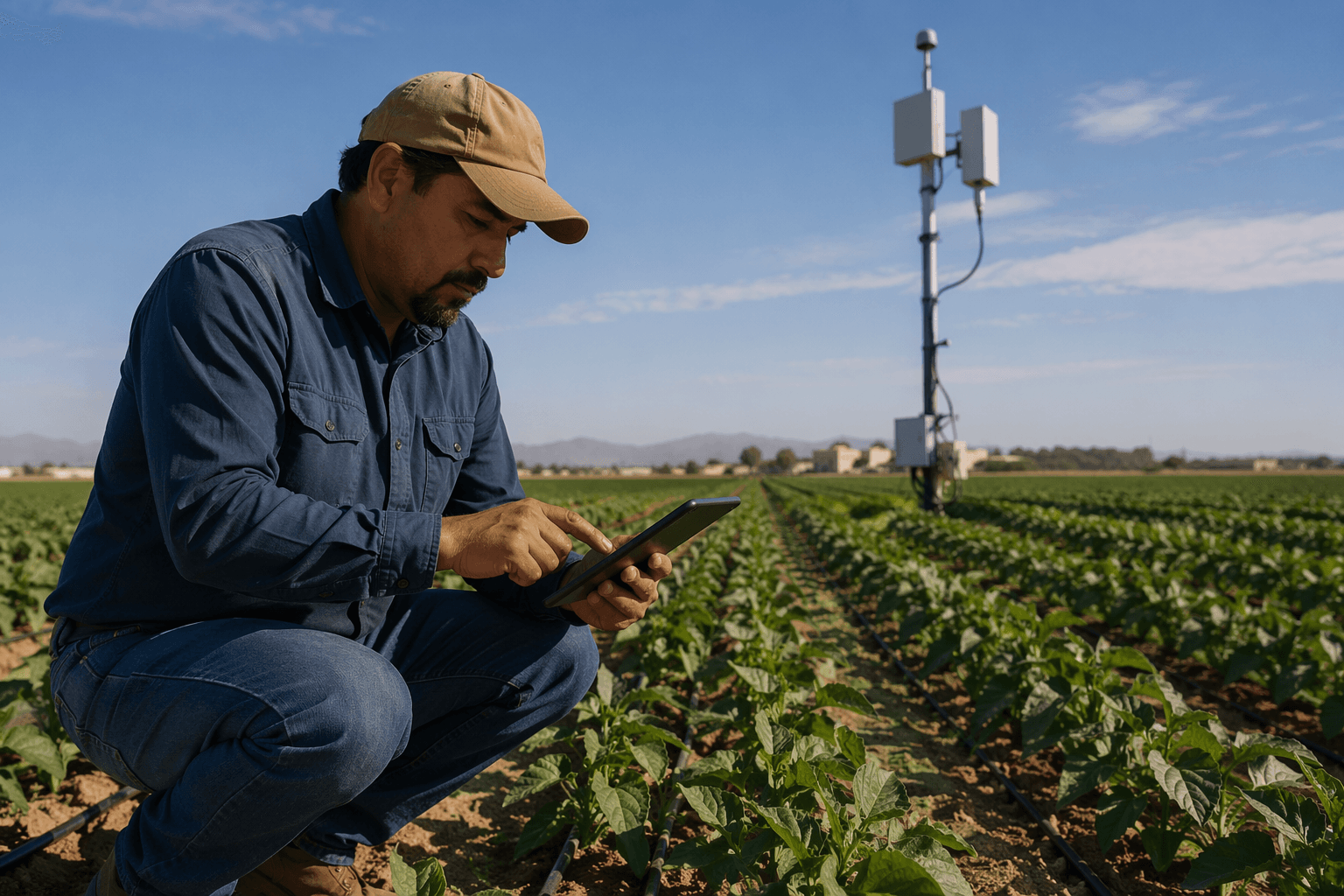
The planning effort also builds on earlier investments. The center’s 2023 annual report said it received National Science Foundation funding to bring end-to-end broadband connectivity to the Yuma Ag Center, and that broadband towers across Yuma County are intended to make the region an ideal proving ground for new desert-ag technologies. That same report pointed to work on Fusarium wilt of lettuce, a disease first identified in California in 1990 and Arizona in 2001, underscoring why local testing matters.
Yuma has already been positioning itself as an ag-tech showcase. The Desert Difference event was held in Yuma in November 2024, and the follow-up Desert Difference: FarmTech Connect took place November 13-14, 2025 at the University of Arizona Yuma Agricultural Center. If the new planning study leads to a full incubator, the partnership could seek as much as $3 million more to bring the project to life, turning a grant into a concrete step toward more startups, more skilled jobs and a more diversified year-round economy.
This article was produced by Prism’s automated news system from verified source data, official records, and press releases, then run through automated quality and moderation checks before publishing. The system is built and supervised by the people who set the standards it runs under. Read our full AI policy.
Did this article answer your question?