Yuma’s early economy grew by supplying nearby gold mines
Yuma’s first business model was built on gold mine supply lines, not nostalgia. The same river crossing that moved freight then still explains why logistics matter here now.
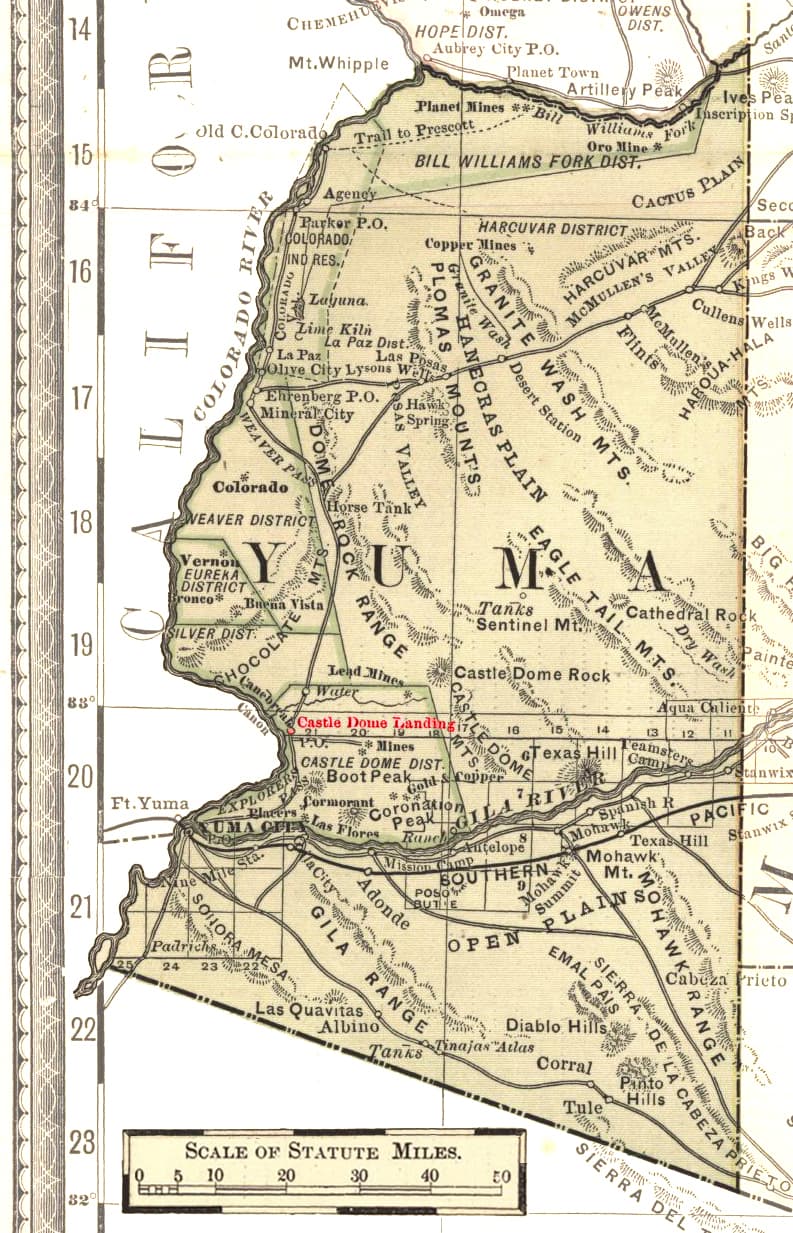
Yuma’s early economy was built less on what came out of the ground than on what moved toward it. Gold drove demand across the lower Colorado frontier, and local merchants made their living by supplying nearby mines, turning Yuma into a commercial hub tied to a much larger mining economy.
Gold created the first local market
The Yuma County Historical Society’s “Dust, Gold and Grit” makes the core point plainly: in Yuma’s early days, gold was the primary driver of the local economy. That mattered because the real money was not only in mining claims, but in the freight, food, tools and other supplies that kept miners working.
The historical society says much of the lifeblood for local merchants came from servicing the North Star Mine and the Castle Dome Mine, each of which supported populations of several thousand. That scale is important. It shows Yuma was not a sleepy stop on the river waiting for later growth; it was already connected to a regional market with enough people to sustain a web of suppliers, transporters and traders.
The California Gold Rush, which began in 1848, helped set that system in motion. As people moved through the Southwest in search of ore and opportunity, Yuma became part of the commercial chain feeding mining camps beyond town. The early economy was not isolated to one boom site. It was a frontier trade network, and Yuma benefited because it sat where goods, labor and river travel converged.
Why the river crossing mattered
Yuma’s role as a supply center only makes sense when you look at geography. The National Park Service identifies Yuma as sitting at the narrow crossing of the Lower Colorado River and calls it the “Gateway to the Great Southwest.” That crossing made the city a natural point for people and goods moving through the region, especially when overland travel was difficult and every shipment had to count.
The Yuma Crossing National Heritage Area adds another layer: the area mattered because of water, the river crossing and the movement of people and goods through Yuma. Those conditions helped turn the city into a working link in the supply chain. When mines inland needed provisions, the route through Yuma was part of the answer.
That old freight logic still echoes in the county’s economy today. Yuma remains shaped by movement, storage and distribution, even as the cargo has changed from mining supplies to agricultural products, border trade and regional logistics. The underlying advantage is the same: Yuma’s location makes it useful to industries that depend on getting goods where they need to go.
Castle Dome turned mining into a regional business
Castle Dome is one of the clearest places to see how that frontier economy worked. The Castle Dome Mining District historical marker identifies it as an important mining district in Yuma County, and local-history material places its active development around 1863 as a mining camp and transport depot. That combination tells the story: Castle Dome was not just a place where ore was dug up, but a place where mineral wealth and transport met.
Mining-reference material describes the district as one of the oldest and most productive mining districts in Yuma County. By 1878, Castle Dome City’s population rivaled nearby Yuma, and one historical account says it was larger than Yuma that year. Those figures underline how quickly mining activity could reorder the local economy. A camp built around extraction and transport could grow into a place that challenged the county’s main town for size and influence.
Castle Dome also shows why Yuma’s frontier economy cannot be reduced to a single industry. Mining created demand for freight, labor and services, while those services made larger settlement possible. The town, the mines and the transport routes were parts of the same system.
What remains at Castle Dome today
Castle Dome still gives the county a visible link to that economy. Visit Yuma says the site has more than 50 restored or reconstructed buildings, making it one of the most tangible reminders of the mining era in the region. That preservation matters because it shows how much of Yuma County’s early development depended on mining-linked commerce, even when the mines themselves sat outside the central downtown core.
For local history, Castle Dome is more than a ghost-town name. It is evidence that Yuma County’s economy was built through a mix of extraction, transport and trade. The district’s survival as a historic site keeps that commercial story visible, not as a museum piece alone, but as part of the county’s longer economic record.
How the old model still shows up now
Yuma’s frontier business model was based on a simple advantage: serve the route that other people need. In the 19th century, that meant supplying mines like North Star and Castle Dome through a river crossing that moved goods across the desert. Today, the county’s major economic strengths still depend on that same logic of movement and connection.
Agriculture depends on logistics. Border commerce depends on throughput. Freight depends on routes that can absorb and redirect demand. Yuma’s early economy, built around mining supply lines, offers the clearest explanation for why the county later became so tied to transportation and trade. The details are different now, but the structure is familiar: Yuma prospers when it sits in the path of what the region needs next.
This article was produced by Prism’s automated news system from verified source data, official records, and press releases, then run through automated quality and moderation checks before publishing. The system is built and supervised by the people who set the standards it runs under. Read our full AI policy.
Did this article answer your question?